
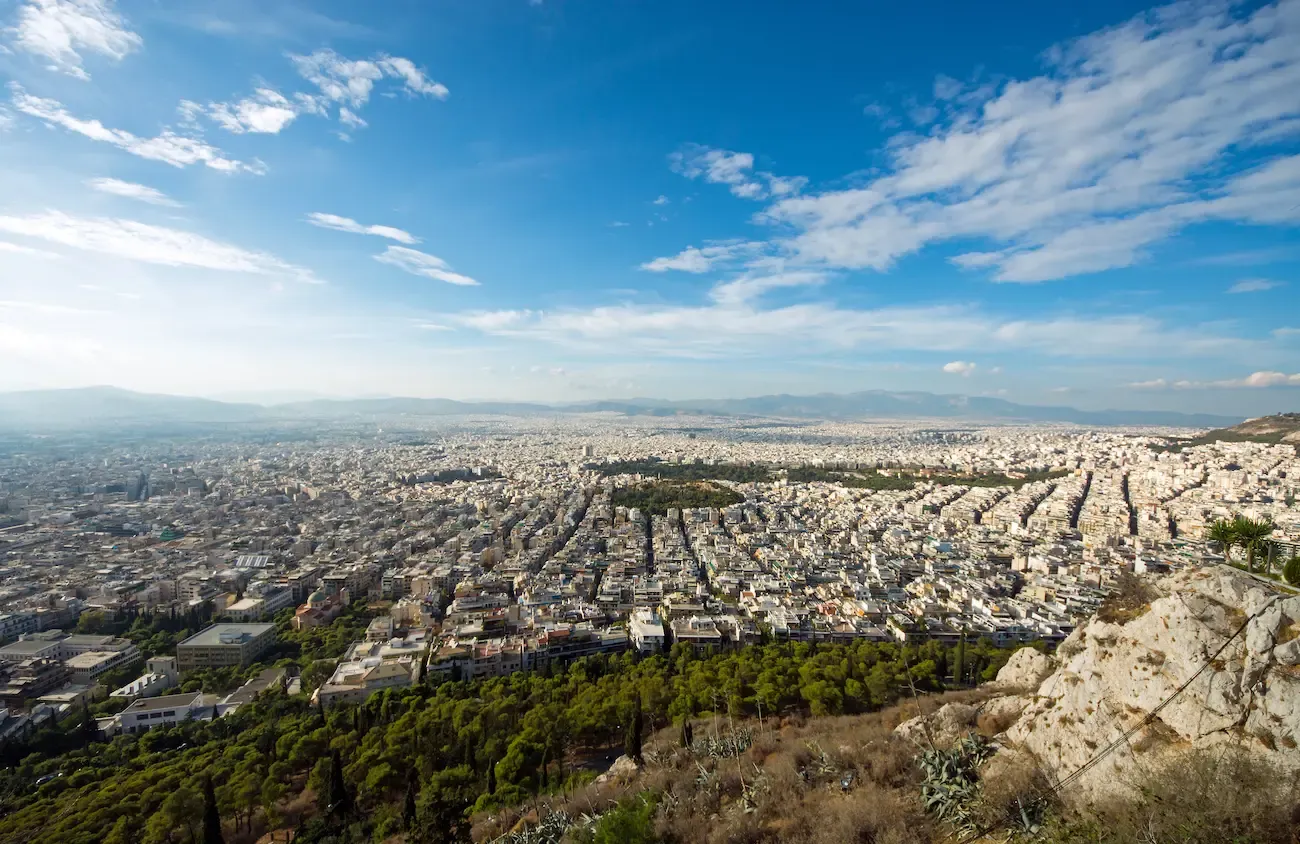
Athens itinerary 6 days
Six days. Athens, two day trips, and time left over. The plan below stretches across the Acropolis and its museum, the Ancient Agora, Cape Sounion at sunset, either Delphi or a hop to the Saronic islands, and two old-town walking loops. Transport, where to stay, and what to eat sit alongside each day.
Why six days work well in Athens
The math is simple: push it to four day trips, and most visitors burn out. Skip day trips entirely, and you'll find the historic core wraps up right around day three. A six-day, half-and-half split is the perfect formula for an enriching, unhurried trip.
Athens' geography works in your favor here. It is roughly a 20-minute stroll from Syntagma Square to the Acropolis, weaving right through the heart of Plaka. The vast majority of the marquee sights are neatly clustered inside a golden triangle defined by Monastiraki, Koukaki, and Kolonaki. For anything that falls outside those lines, the metro has you covered.
Three takeaways shape the rest of this plan:
- Three city days are enough for the headline monuments without rushing.
- Two day trips fit the remaining time with no backtracking.
- Day 6 works best as a slow neighborhood loop, not another monument.
For more inspiration beyond this itinerary, our guide to what to see and do in Athens covers the complete picture.
Day 1: arrival, Plaka, and a first view of the Acropolis
Day one is kept deliberately soft. Long-haul arrivals at Athens International Airport often land exhausted, so you want to ease into the city. The smartest first move is catching Metro Line 3 straight to Syntagma or Monastiraki, followed by a slow, atmospheric walk into the old town. Trains run every 30 minutes, and the ride takes about 40 minutes.
Make Plaka your afternoon anchor. Sitting just east of the Acropolis, this neighborhood is an enchanting maze of low pastel houses, elegant neoclassical balconies, and winding pedestrian alleys. A leisurely loop taking in Adrianou Street, the Roman Agora, and Mitropoleos Square covers the main beats in roughly two hours. Just ten minutes up the hill from central Plaka, you will find Anafiotika. Tucked directly under the towering Acropolis rock, this tiny cluster of whitewashed houses feels like a secret piece of Cycladic island architecture hidden in the capital.
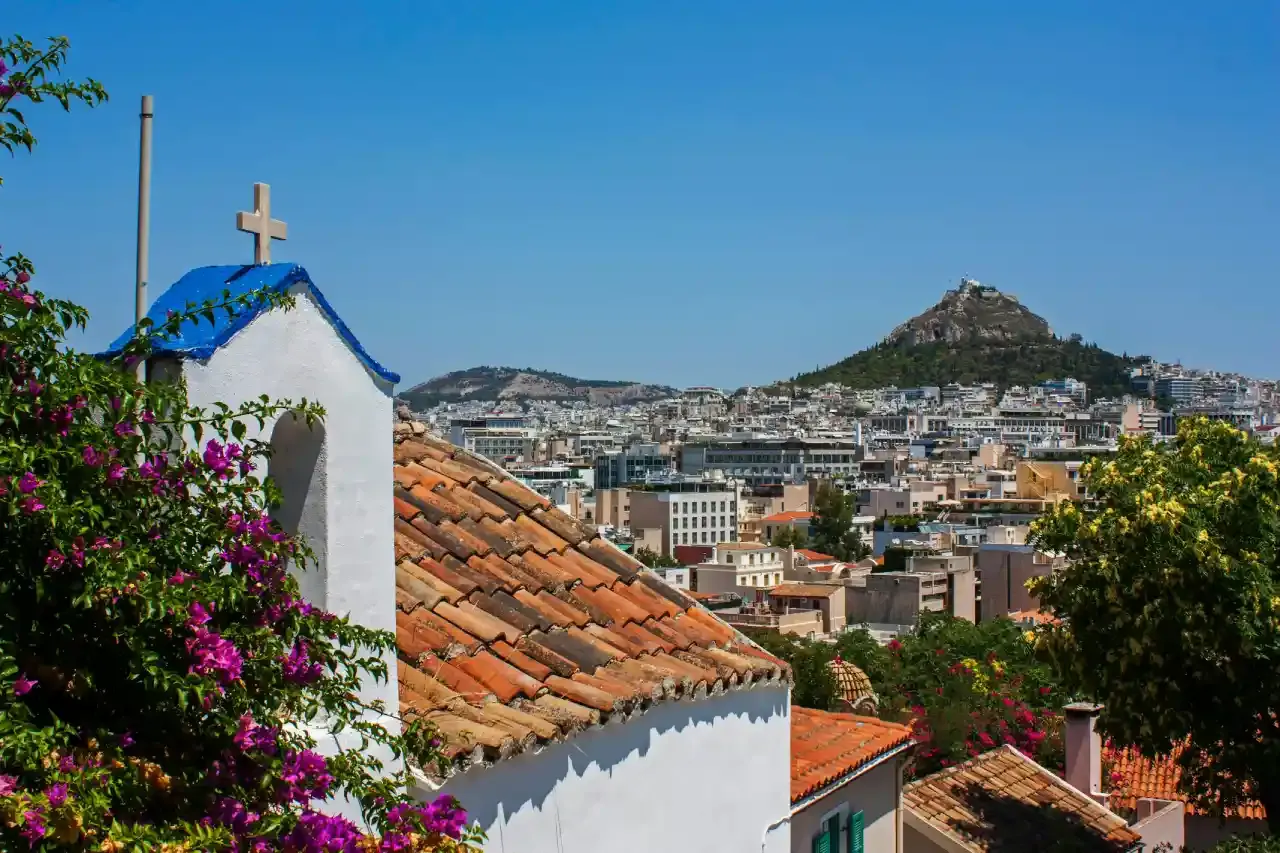
As late afternoon sets in, skip the paid monuments and aim for a free sunset viewpoint. You have two excellent options sitting close to Plaka:
- Areopagus Hill: Located just below the Propylaea, this requires a fast, 15-minute climb over slippery rock, but rewards you with a striking, head-on look at the Acropolis.
- Filopappou Hill: This requires a longer walk, but offers a much wider, sprawling panorama that catches Mount Lycabettus on the opposite side of the city.
A quick note on Mount Lycabettus: Reaching 277 meters, it is the highest natural point in Athens. While the funicular at the top of Aristippou Street whisks you up in just a few minutes, the view demands a brilliantly clear day. Most travelers are better off saving this peak for day three or six of the itinerary.
Keep dinner close. Psiri, north of Monastiraki Square, has the densest cluster of tavernas and mezze bars within ten minutes on foot from most central hotels.
Day 2: Acropolis, Acropolis Museum, and the Ancient Agora
Get ready for an epic archaeology day where sequence is everything. The Acropolis opens at 08:00 year-round, with the last entry 30 minutes before closing. During summer, the gates close at 19:30 or 20:00, while winter hours drop to 17:00 with the last entry at 16:30. Since cruise crowds swarm the site between 09:00 and 11:00, you have two golden windows to choose from. You can arrive right at 08:00 for a quiet first hour, or wait until after 15:00 in the summer when the crowds thin out and the late-afternoon light perfectly illuminates the ancient marble.
When you are ready to ascend the rock, you will find two main entrances. Skip the main west gate near the Propylaea and opt for the south entrance on Dionysiou Areopagitou Street. It is closer to the museum and usually boasts much shorter lines. Your circuit will cover the Parthenon, the Erechtheion with its stunning Caryatid porch, the Temple of Athena Nike, the Propylaea, and the Theatre of Dionysus on the south slope. Expect the full walk to take 2 to 2.5 hours at a normal pace, and a bit longer in the heat. Because shade is scarce and the ancient marble is notoriously slippery, wearing non-slip shoes and bringing a refillable water bottle is essential.
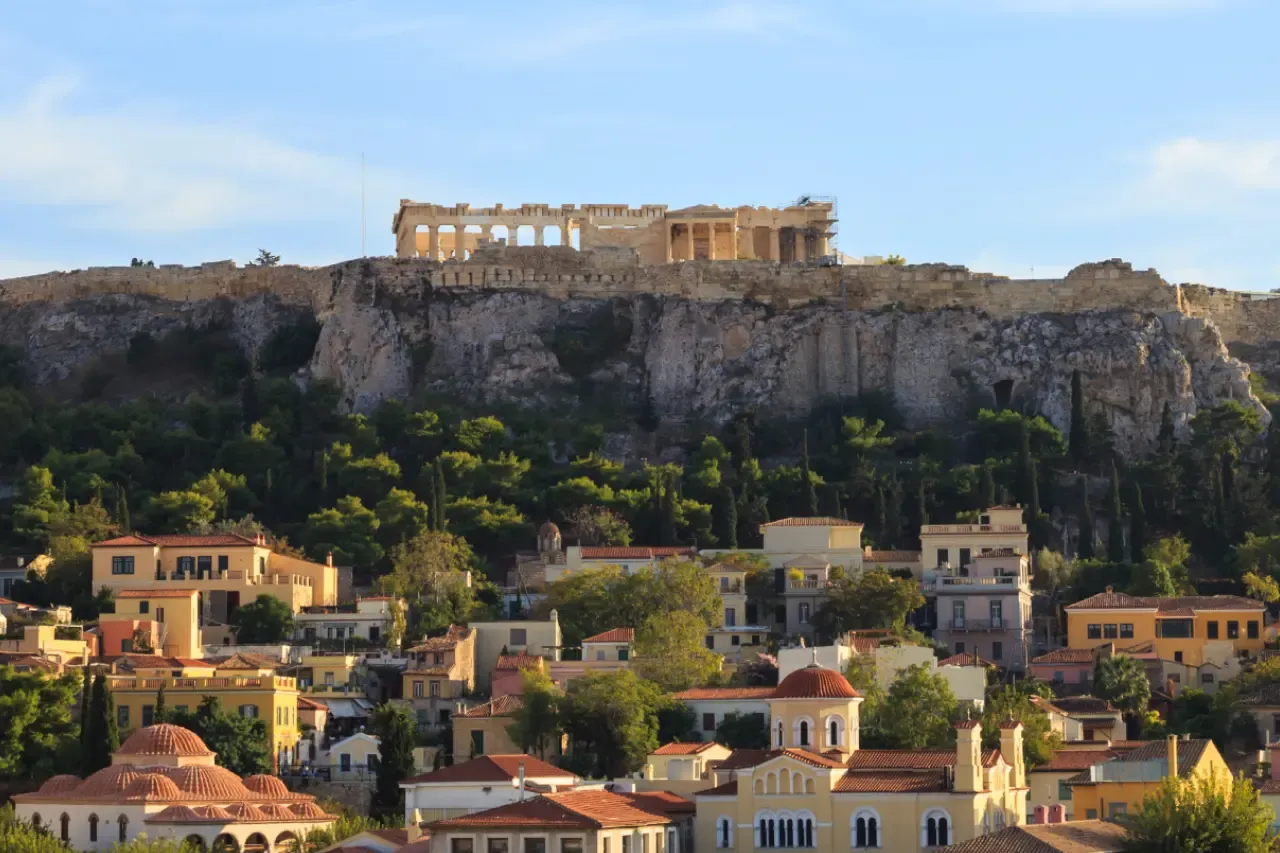
Just a five-minute walk across the street from the south entrance sits the spectacular Acropolis Museum. Head straight to the top-floor Parthenon Gallery, which perfectly mirrors the temple's orientation, allowing you to leave the rock and immediately view the surviving marbles in their original sequence. Plan for about 90 minutes inside. The museum opens a bit later than the archaeological site, starting at 08:00 in the summer from April to October, and at 09:00 in the winter. If you are visiting on a Friday, you can take advantage of evening hours that extend to 22:00 year-round.
Your afternoon belongs to the Ancient Agora, located just a 10-minute walk down from the Acropolis through the vibrant neighborhood of Monastiraki. The star of the show here is the Temple of Hephaestus, also known as the Hephaisteion. It is one of the best-preserved Greek temples standing today, remaining far more intact than the Parthenon. While you are there, do not miss the Stoa of Attalos, which houses a small but fascinating museum dedicated to the daily life of classical Athens. To save money, grab the 5-day combined ticket. It covers seven ancient sites in central Athens, including the Acropolis, Ancient Agora, and Roman Agora, making it perfect if you cluster your visits for days 2, 3, and 6 within that validity window.
Cap the day with dinner in Monastiraki or Thissio. Both neighborhoods sit at the base of the Acropolis hill. Both have rooftop restaurants with direct Parthenon views after dark.
Day 3: Olympieion, Panathenaic Stadium, and the National Archaeological Museum
Today, we step outside the ancient citadel to explore the monumental ring of classical and Roman Athens. Start your morning at the Temple of Olympian Zeus, known as the Olympieion. Located just a five-minute walk south of Syntagma Square below the National Garden, the temple's 15 surviving columns soar to an impressive 17 meters. From there, stroll past Hadrian's Arch and head toward the Panathenaic Stadium. The entire walk takes under 20 minutes along beautifully shaded boulevards.
The Panathenaic Stadium, known to locals as Kallimarmaro, is a breathtaking venue built entirely from Pentelic marble, sourced from the exact same quarry as the Parthenon. This historic site famously hosted the first modern Olympic Games in 1896. Allow about an hour to walk the track, explore the underground tunnels, and cross the marathon finish line. Definitely grab the audio guide, as it adds vital context that brings the bare marble structure to life.
Next, take a quick metro ride from the Akropoli station to Victoria, the stop closest to the National Archaeological Museum. Simply take Line 2 north to Omonia, then make a one-stop transfer to Line 1 toward Kifissia. The museum dives deep into pre-classical, classical, and Hellenistic Greece, featuring spectacular highlights like the gold Mask of Agamemnon, the bronze Antikythera Mechanism, and the Jockey of Artemision. Dedicating about two hours covers the Mycenaean, Cycladic, and bronze galleries comfortably. The museum adjusts its hours seasonally and closes on certain national holidays, so arriving early in the morning is the best way to beat the crowds and navigate any same-day closures.
Step out into Exarchia, the museum's surrounding neighborhood. It is Athens’ historic student and alternative quarter, densely packed with incredible street art. An afternoon walk through this area is a great way to experience the city's modern edge, but if you are uncomfortable with a grittier urban texture, you can simply hop the metro back south. For dinner, return to the charming streets of Plaka, or elevate your evening in upscale Kolonaki. Nestled at the foot of Lycabettus Hill, Kolonaki Square boasts the highest concentration of polished, modern Greek restaurants and bars in central Athens.
Day 4: Cape Sounion and the Temple of Poseidon
Time to swap the city streets for a coastal breeze by swinging south to Cape Sounion. Located 70 km from central Athens at the southern tip of the Attica peninsula, this destination requires a bit of travel time. A public KTEL bus takes around 2 hours each way. While the line originates at the Mavromateon Street terminal near Pedion tou Areos park, most visitors easily board at central pickup points on Filellinon Street off Syntagma Square, or at the Syngrou-Fix metro station. Buses run hourly during the day and every two hours later on. Alternatively, taking a taxi or rental car cuts the drive down to about 1 hour and 15 minutes, depending on traffic.
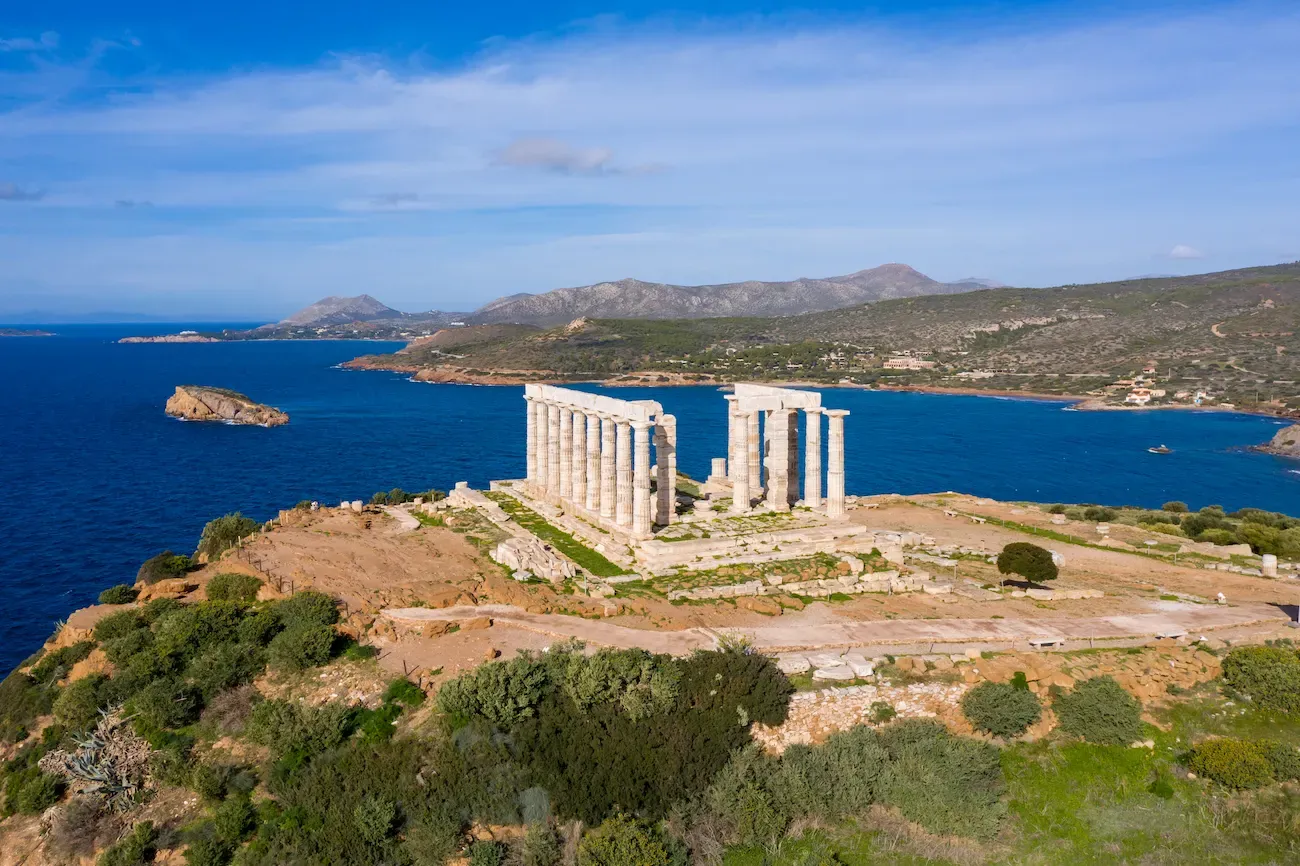
Your destination is the Temple of Poseidon, a dramatic 5th-century BC Doric temple that is a contemporary of the Parthenon. Perched on a cliff above the Aegean, about 15 of its original 38 columns still stand. Look closely at the north side to spot where Lord Byron carved his name in 1810! The site stays open until sunset year-round, and timing your visit is the most crucial part of your planning. Arriving 60 to 90 minutes before sundown gives you ample time to walk the cape, explore the temple in daylight, and watch the spectacular colors of the sunset unfold over the sea.
The perfect practical plan involves enjoying a long lunch in Athens, then leaving the city by bus around 14:00 or 15:00. You will have plenty of time to see the temple and watch the sunset before catching the return bus. However, a crucial warning applies here: the last bus to Athens leaves 60 to 90 minutes after sunset, depending on the season. Always confirm the return timetable before your outbound trip, as missing the last bus means paying for a very expensive taxi ride back to the city.
If you prefer to avoid timetable stress, plenty of operators offer round-trip Sounion sunset coaches from central pickup points around Syntagma and Akropoli. While you lose a bit of stop-flexibility, you gain total peace of mind. Alternatively, if Cape Sounion does not appeal to you, take a short ferry from Piraeus to Aegina or Salamis. Both are reachable in under 90 minutes round trip. Aegina is the standout half-day option, offering the Temple of Aphaia and a beautiful old town wrapped around a small harbor.
Day 5: day trip to Delphi or a Saronic island
You have two incredible directions competing for your time: layered ancient drama in a mountain setting, or a breezy Saronic island hop offering sea time without the long transit penalties of the Cyclades. Whichever you choose, avoid Mykonos and Santorini today, as a round trip to those islands will completely eat up both Days 5 and 6.
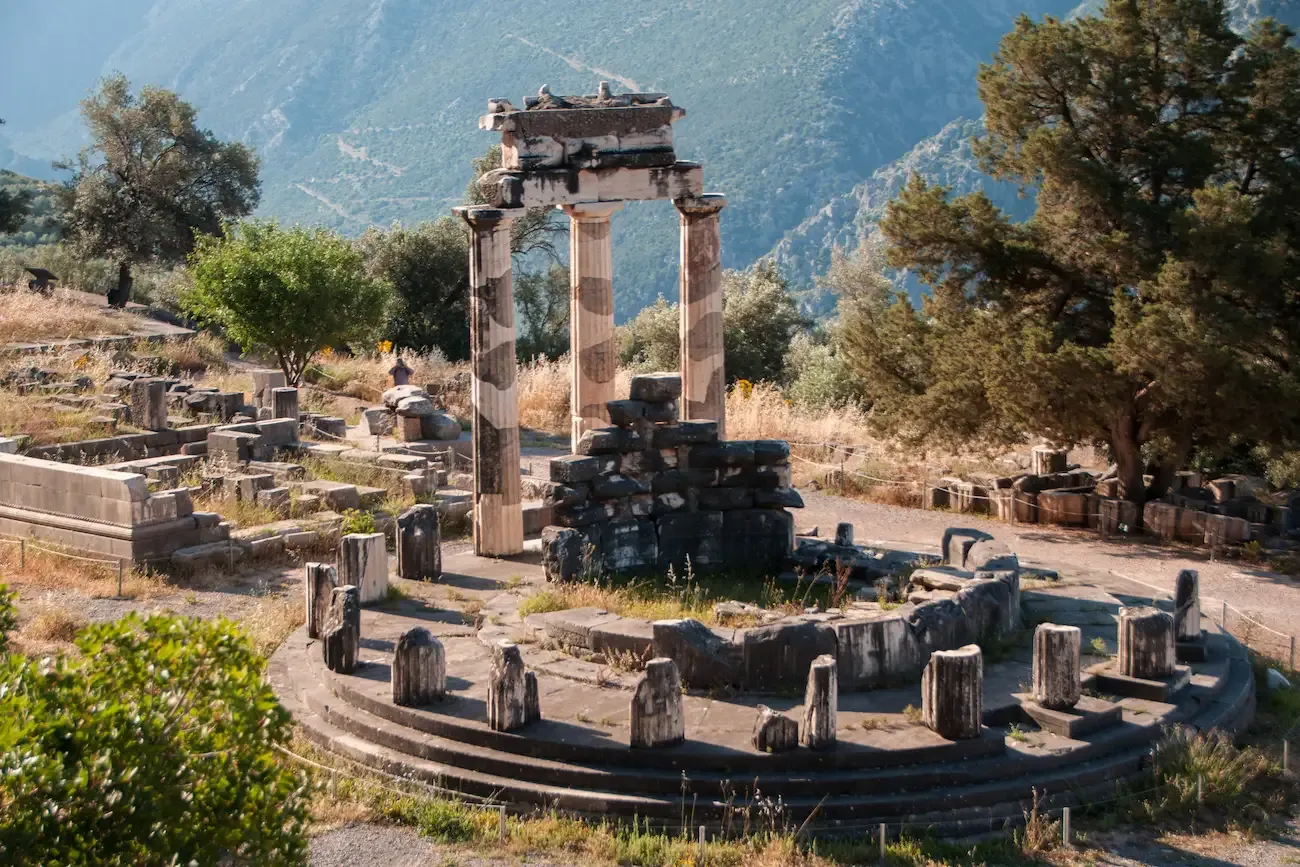
If you crave dramatic ancient history, choose Delphi. Located 180 km northwest of Athens at the foot of Mount Parnassus, this sprawling site holds the ancient oracle, the Temple of Apollo, the Treasury of the Athenians, a preserved theater, and a stadium. Inside the on-site museum, you will find the bronze Charioteer of Delphi and the omphalos stone, marking the ancient "navel of the world." The drive takes 2.5 to 3 hours each way, making for a tight schedule. Plan to leave Athens at 07:00 to arrive by 10:00. You can explore the site and museum for 3 to 4 hours, grab lunch in the modern village of Arachova on the way back, and return to Athens by evening. Organized tours from central Athens handle all the logistics for a fixed price, and small-group options often add a stop at the Hosios Loukas monastery. You can also take a public KTEL bus from Liosion Terminal, which takes about 3 hours one way, but this requires very careful timetable planning since the late-afternoon return is your only option.
For a more relaxed pace and plenty of sea breeze, the Saronic island route is perfect. Catch a Hellenic Seaways Flying Cat or Blue Star ferry from Piraeus Port, easily reachable via metro Line 1 from central Athens. Crossings take 40 minutes to Aegina, 1 hour to Poros, and 1.5 hours to Hydra. A popular option is a one-day island hopping cruise that visits all three locations with a guided lunch on board, departing Piraeus in the morning and returning around 19:00. Independent travelers can also pick a single island for a slower day. Hydra is incredibly photogenic, featuring a completely car-free environment and a charming stone harbor lined with tavernas. Aegina offers more archaeology, including the impressive Temple of Aphaia, while Poros is the closest to the mainland and provides the easiest, most relaxed day trip.
Day 6: neighborhoods, food, and a slow finish
Keep today exceptionally light. Six days of ancient monuments leave most visitors with sore feet, so your last morning works best as a leisurely neighborhood wander rather than another heavy archaeological visit. You can choose from three loops that cover the most rewarding textures of the city.
The first loop takes you through Anafiotika and the upper Plaka alleys. Starting from Monastiraki Square, take a 30-minute uphill stroll via Mnisikleous Street. You will climb directly into the whitewashed, island-style cluster of Anafiotika and circle around the north slope of the Acropolis rock back toward the Roman Agora. Along the route, you will pass the Library of Hadrian and the Tower of the Winds, which stands as the world's oldest known meteorological station.
The second loop covers Psiri, a neighborhood just north of Monastiraki known for its vibrant street art, small workshops, and buzzing mezze bars. Starting with a late breakfast or brunch around Iroon Square sets the perfect tone for the day. A wander through Aischylou Street and Miaouli Street covers the best visual highlights, and by mid-afternoon, you can watch the whole area shift seamlessly into a lively bar scene.
The third loop is for travelers who still have energy to burn. Walking from Syntagma along Voukourestiou Street takes you past the city's premier fashion strip, leading up to Kolonaki Square. This upscale area boasts the densest cluster of modern Greek restaurants and cafes. From the square, Lycabettus Hill rises directly behind you. Catch the funicular up from Aristippou Street to reach the summit chapel in just a few minutes. This spot provides an unforgettable final sunset over the city and is the only place where the Acropolis sits below you, making it the most striking last image of Athens you could ask for.
For your final dinner, celebrate in upscale Kolonaki or drop back down into Plaka for a fantastic feast of grilled fish, mezze, and a crisp glass of retsina. If you have an early-morning flight the next day, make sure to pre-book an airport transfer or check the Metro Line 3 timetable, as the airport line starts running from central stations around 05:30.
How to choose between Delphi, Meteora, and the Saronic islands?
The three most-asked day trips from Athens trade off in different directions. Day 5 in this plan defaults to Delphi or the Saronic islands. Meteora is the third common option, but it stretches the day past its useful limit. The table below summarizes the trade-offs.
| Day trip | Cape Sounion |
|---|---|
| One-way travel | 1h 15min - 2h |
| Best for | Sunset views, single-site visitors |
| Pace | Light |
| Mountain or sea | Sea cliff |
| Day trip | Aegina (Saronic) |
|---|---|
| One-way travel | 40 min ferry |
| Best for | Mixed history and beach |
| Pace | Light |
| Mountain or sea | Sea |
| Day trip | Hydra (Saronic) |
|---|---|
| One-way travel | 1h 30min ferry |
| Best for | Photogenic harbor, no cars |
| Pace | Light |
| Mountain or sea | Sea |
| Day trip | Three-island ferry tour |
|---|---|
| One-way travel | Full day |
| Best for | Sea time, organized lunch |
| Pace | Medium |
| Mountain or sea | Sea |
| Day trip | Delphi |
|---|---|
| One-way travel | 2h 30min - 3h |
| Best for | Layered archaeology, mountain landscape |
| Pace | Heavy |
| Mountain or sea | Mountain |
| Day trip | Nafplio |
|---|---|
| One-way travel | 2h - 2h 30min |
| Best for | Romantic seaside town, Mycenae nearby |
| Pace | Medium |
| Mountain or sea | Sea + ancient |
| Day trip | Meteora |
|---|---|
| One-way travel | 4h - 5h |
| Best for | Monasteries on rock pillars |
| Pace | Very heavy (overnight friendly) |
| Mountain or sea | Mountain |
Meteora has the strongest visual payoff of the seven. But the round trip from Athens is 8 to 10 hours of pure transit, which leaves only a few hours on site. Visitors set on Meteora are better served by an overnight in Kalambaka rather than a day trip, which is why this 6-day plan deliberately does not put it on Day 5.
Nafplio is the dark horse alternative. The harbor town on the Peloponnese coast served as the first capital of modern Greece. The Mycenae and Epidaurus archaeological sites sit within a half-hour drive. As a day trip, Nafplio competes with Delphi for the visitor who wants ancient layers plus a charming town to wander.
The shortest decision tree:
- Want sunset payoff with minimal effort? Sounion.
- Want sea time and a low-stress day? Saronic islands.
- Want ancient history with mountain scenery? Delphi.
- Want a charming town plus extra ruins? Nafplio.
- Want monasteries on rock pillars? Add an overnight, not a day trip.
How does Athens public transport work for visitors?
Athens transport runs as a unified system across metro, bus, trolleybus, and tram, all under the Athens Urban Transport Organisation, OASA. A single 90-minute ticket covers any combination of these on one journey, including transfers. Visitors typically need only the metro and the occasional bus to ride the entire itinerary.
The metro has three lines, each color-coded:
- Line 1, Green - the oldest line. Runs north to south from Kifissia through central Athens to Piraeus Port. The Piraeus stop is the gateway to the Saronic island ferries.
- Line 2, Red - runs through Syntagma, Akropoli (the Acropolis stop), and out to the Stavros Niarchos cultural complex in the south. Akropoli is the natural metro stop for Days 2 and 3 of this plan.
- Line 3, Blue - runs east-west, connects Syntagma to Monastiraki, and continues out to Athens International Airport. The airport branch runs every 30 minutes and reaches the city center in around 40 minutes.
Many central stops, especially Syntagma, Monastiraki, and Akropoli, double as small archaeological museums. Construction of the metro exposed dense ancient layers. The stations now hold display cases of finds.
Buses and trolleybuses fill in routes the metro does not cover. The most visitor-relevant route is the KTEL line to Cape Sounion. The origin terminal is on Mavromateon Street, but central pickups on Filellinon Street, off Syntagma Square, and at the Syngrou-Fix metro station save the trip up to the terminal. Buses to Delphi and Nafplio leave from the KTEL terminals on Liosion Street (Delphi) and Kifissou Avenue (Nafplio).
The tram runs along the southern coast from central Athens toward the seaside neighborhoods of Faliro and Glyfada. A summer afternoon swap of the metro for the tram makes a relaxed alternative for travelers who want a beach pause.
Walking covers more of Athens than first-time visitors expect. The pedestrian boulevard Dionysiou Areopagitou wraps the south side of the Acropolis and links the main archaeological sites end to end. A loop from Syntagma to the Acropolis to the Ancient Agora and back can be done entirely on foot in around 90 minutes of slow walking.
A few practical notes:
- Tickets must be validated on entry to any vehicle. Random checks happen, and the fine for an unvalidated ticket runs many times the ticket itself.
- The ATH.ENA reloadable card and disposable paper tickets both work across all transport modes.
- Taxis are common, painted yellow, and metered. Apps like Beat, now FreeNow, work as the local equivalent of Uber and tend to be cheaper than hailing.
Where should visitors stay for a 6-day Athens trip?
The right base in Athens depends more on neighborhood character than star rating. Six nights give visitors enough time to live in one place, so distance from the Acropolis matters less than walkability and a working metro stop. Six neighborhoods cover the realistic options:
- Plaka is the historic old town at the foot of the Acropolis. Narrow lanes. Neoclassical houses. Direct walking access to the rock. The trade-off is tourist density, prices that match the location, and limited evening atmosphere after midnight. Best for first-timers and walkers.
- Monastiraki and Thissio sit at the western edge of Plaka, slightly grittier and livelier in the evening, with rooftop bars facing the Acropolis. Closer to the Psiri food scene. Good for travelers who want central but with more local rhythm.
- Koukaki sits south of the Acropolis, around the Syngrou-Fix metro stop. The neighborhood is quieter and more residential, with newer cafes and walkable distance to the Acropolis Museum. Good value for the same proximity to monuments.
- Syntagma is the political and commercial heart of modern Athens. Parliament. The National Garden. Direct metro lines to everywhere including the airport. Best for travelers prioritizing transit convenience.
- Kolonaki climbs north from Syntagma toward Lycabettus Hill. The neighborhood is the polished one. Designer shops. Modern restaurants. Museums like Benaki and Cycladic Art. Slightly further from the Acropolis but the most refined evenings.
- Pangrati is the under-rated option. East of the National Garden, around the Panathenaic Stadium. The neighborhood has the local-life feel of Koukaki with even better food. A 20-minute walk or one metro stop from the major sights.
Two neighborhoods are best avoided as a base.
- Omonia has improved over the last decade but still feels uneven after dark, particularly for solo travelers.
- Exarchia has a strong personality and rewards a daytime walk for the street art and political graffiti. At night, the streets get noisier and edgier in ways that surprise first-time visitors. Walking through is rewarding. Sleeping there is harder to predict.
Two practical filters cut the rest. Look for a building with an elevator (a lot of central Athens stays still occupy fourth-floor walk-ups). Avoid streets right on top of a noisy taverna terrace.
What to eat and drink without overpaying?
Greek food in Athens divides into three rough tiers: street food, taverna meals, and modern Greek dining. Six days are enough to sample all three, and the neighborhoods do most of the sorting.
Street food anchors lunches. Souvlaki is the small skewer of grilled pork or chicken, often served on a wooden stick or wrapped in pita with tomato, onion, and tzatziki. The wrapped version is a gyros. Both are cheap, fast, and almost universally good. Spanakopita (spinach and feta in phyllo) and tiropita (cheese in phyllo) round out the bakery options. Loukoumades are small honey doughnuts, best fresh at one of the dedicated shops in Psiri or Plaka.
Tavernas anchor dinners. The classic plate range:
- Moussaka, layered eggplant, potato, lamb, and bechamel.
- Pastitsio, Greek-style baked pasta.
- Stifado, slow-cooked beef in red wine and pearl onions.
- Grilled octopus, with olive oil and oregano.
- Greek salad, horiatiki, with a slab of feta on top, never the leafy salad.
Mezze culture is its own meal. Ordering many small plates - fava (yellow split pea puree), tzatziki, dolmades, taramasalata, grilled cheese (saganaki), and small fried fish - fills a long evening and shares well across a table.
Three neighborhoods do most of the dining work:
- Plaka, convenient for the first or last night, with the most touristed but reliably solid tavernas, especially on the side streets off Adrianou.
- Psiri, the most concentrated food and bar district in central Athens, with the best mix of tavernas, modern mezze restaurants, and late bars.
- Kolonaki, with the most modern Greek restaurants, the most polished room, and the higher-end wine lists.
A note on drinks. Greek beer (Mythos, Alpha, Fix) is the default casual option. Greek wine has improved dramatically over the past two decades. Assyrtiko (white, from Santorini) and Agiorgitiko (red, from Nemea) are the easy starting points. Ouzo and tsipouro are the local spirits, both anise-leaning, both meant to be sipped slowly with food. Frappe, cold instant coffee shaken with foam, is the morning fuel almost everywhere.
What practical tips help during six days in Athens?
A short list of practical notes that smooth out the trip:
- The best months are late April to early June and September to mid-October. Heat in July and August routinely passes 35°C, and the Acropolis has limited shade.
- Dress code at the Acropolis and ancient sites is informal. Shoulders covered helps inside churches.
- Greek plumbing has narrow pipes. Used toilet paper goes in the small bin next to the toilet, not the bowl. This rule applies almost everywhere in the country.
- Pickpockets work the metro Line 1, Line 3, and the airport route. Front pockets and a small bag worn across the chest are enough.
- Sundays move at a slow pace, and many smaller businesses close. Tavernas and museums stay open.
- The Acropolis closes on a few specific dates including 1 January, 25 March, 1 May, Easter Sunday, and 25-26 December. Days between these holidays follow the normal schedule.
- A few free admission days run during the year at most major archaeological sites, including 6 March, 18 April, 18 May, the last weekend of September, 28 October, and the first Sunday of each month from November through March. Plan around the crowds these days bring.
- Tap water in Athens is safe to drink. Carrying a refillable bottle saves both money and plastic.
- Hand gestures matter. The open-palm gesture, moutza, is an old insult. An open-palm wave reads differently in Greece than in most of Western Europe.
- Tipping in tavernas is appreciated rather than expected. Rounding up or adding 5 to 10 percent on a sit-down meal is the local norm.