Things to do in Athens in 2026
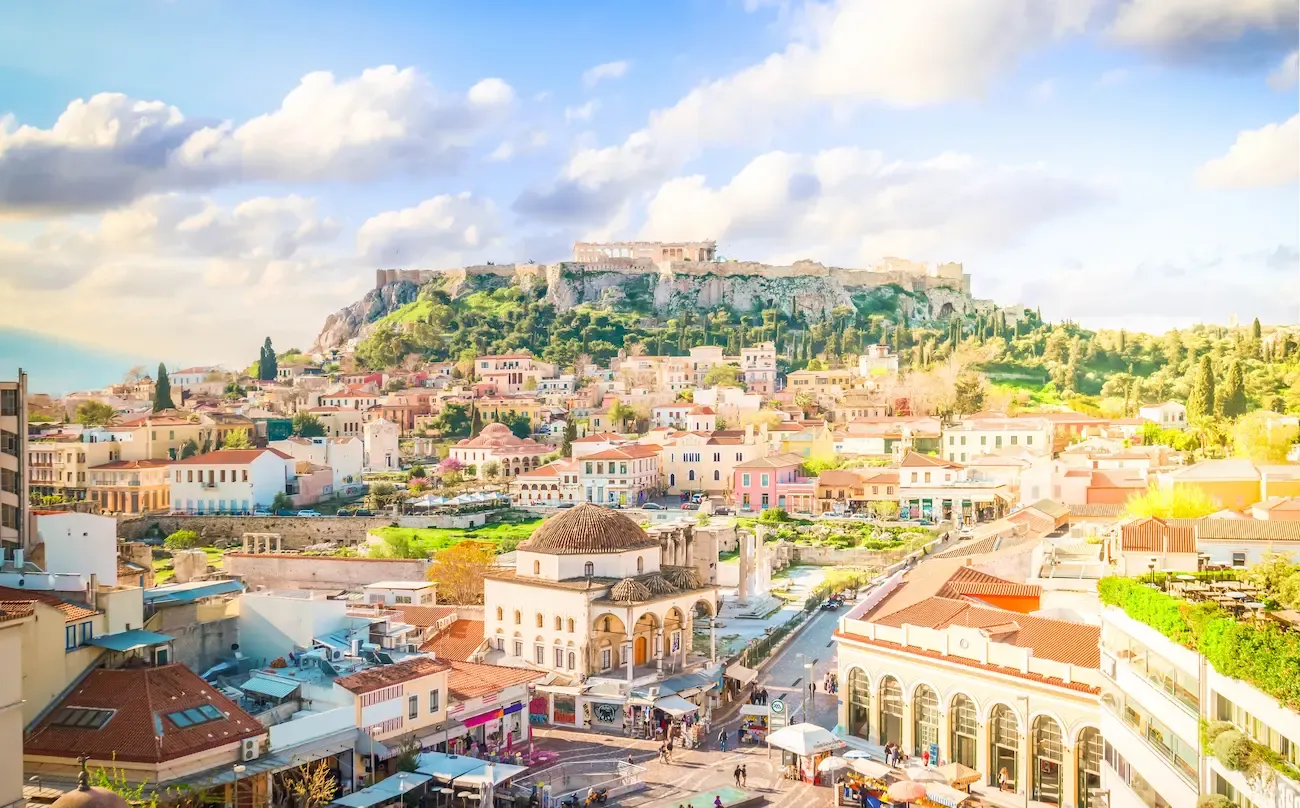
Greece's capital fits 2,500-plus years of history into a compact, walkable center, offering an incredible variety of things to do in Athens. The Acropolis looms above most street views, and you'll glimpse it from countless rooftops too. Exploring iconic neighborhoods like Pláka, Monastiráki, and Anafiótika reveals a different rhythm around every corner.
Top 6 historic sights every visitor should see
Why is Athens treated as a foundational site of Western architecture and political thought? The monuments below answer that. Most sit on or around the Acropolis hill, linked by pedestrian streets, so the entire inventory is walkable, even in a focused day. One detail worth knowing for 2026: the combined archaeological ticket that used to bundle the main sites? Gone since April 2025. Each monument now sells its own admission.

1. Acropolis and the Parthenon
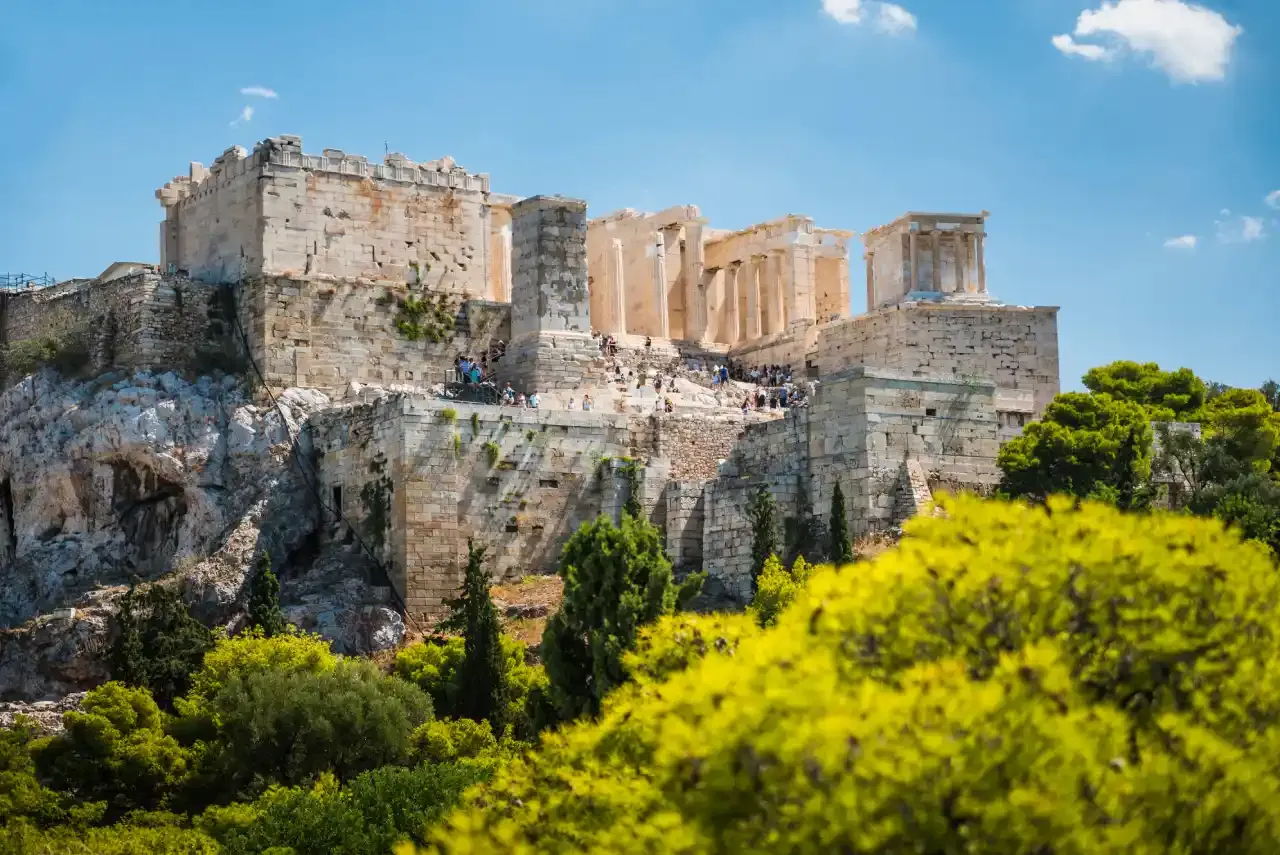
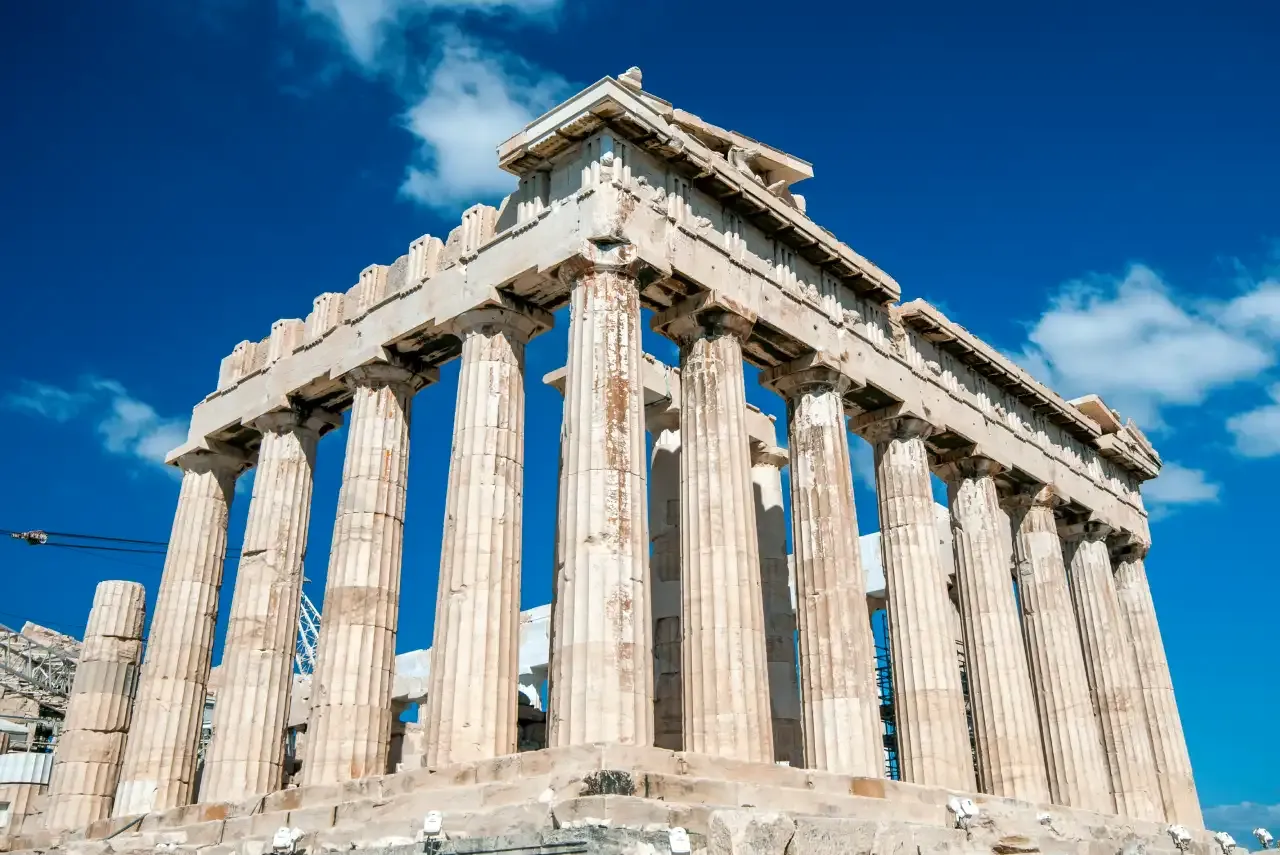
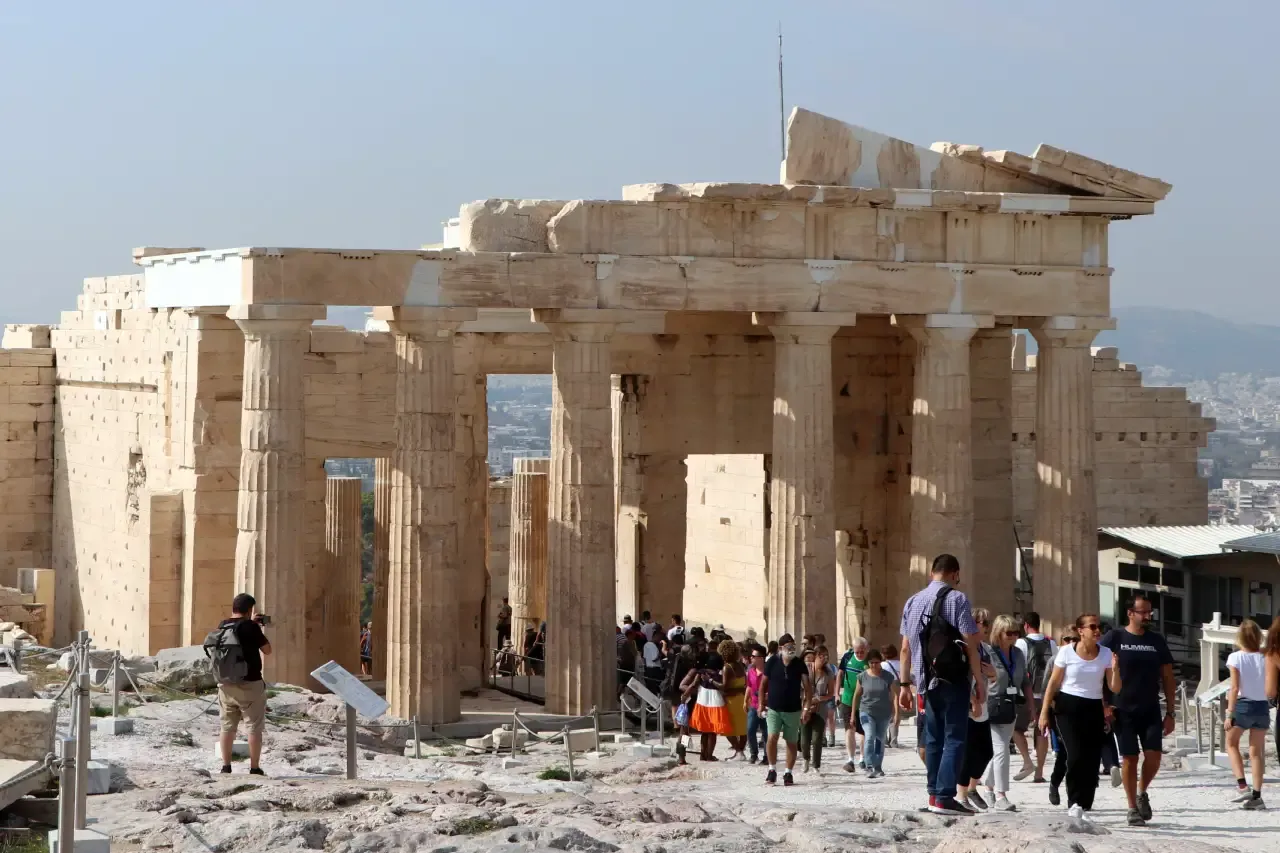
Perched on a limestone hill inhabited for over 5,000 years, the Acropolis features the Parthenon. Built between 447 and 438 BCE for Athena Parthenos, it is Greece's largest Doric temple and a cornerstone of Western architecture. This UNESCO World Heritage site, designated in 1987, also includes the Propylaea, the Temple of Athena Nike, and the Erechtheion. To visit, travelers must pre-book a strict 15-minute entry window, as walk-ups are forbidden once slots fill. Exploration requires at least two to three hours, or more to see the southern slope.

2. Acropolis Museum
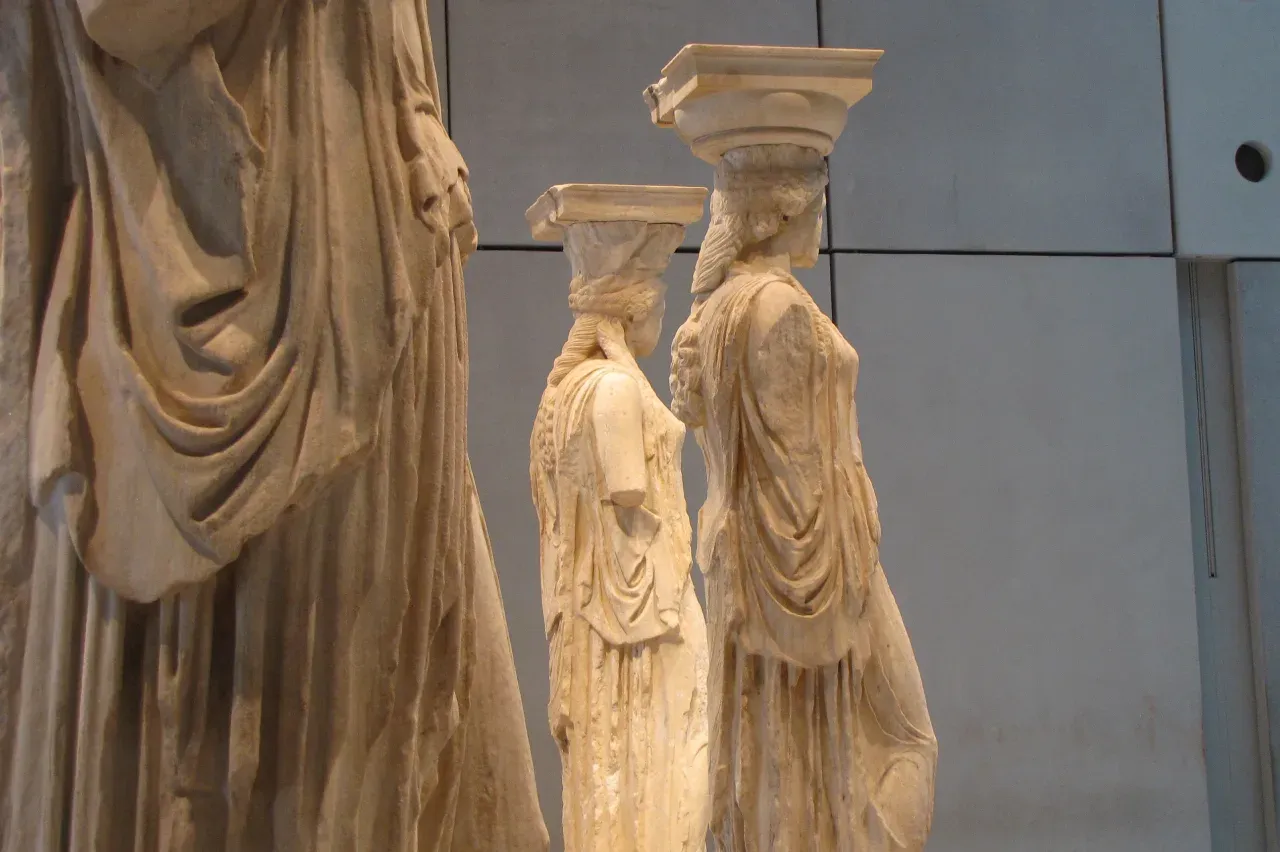
The Acropolis Museum is built into the slope below the rock. Opened in 2009. Over four thousand artefacts excavated from the Acropolis and around fill its halls. Glass floors over the entry plaza reveal an ancient Athenian neighbourhood beneath the building, which is worth lingering over. Upstairs, the top-floor Parthenon Gallery matches the temple's original inner-chamber dimensions and arranges the surviving frieze blocks at viewing height. One floor below, the original Caryatids stand in a dedicated room. Allow at least two hours; pair it with your Acropolis visit.

3. Ancient Agora and the Temple of Hephaestus
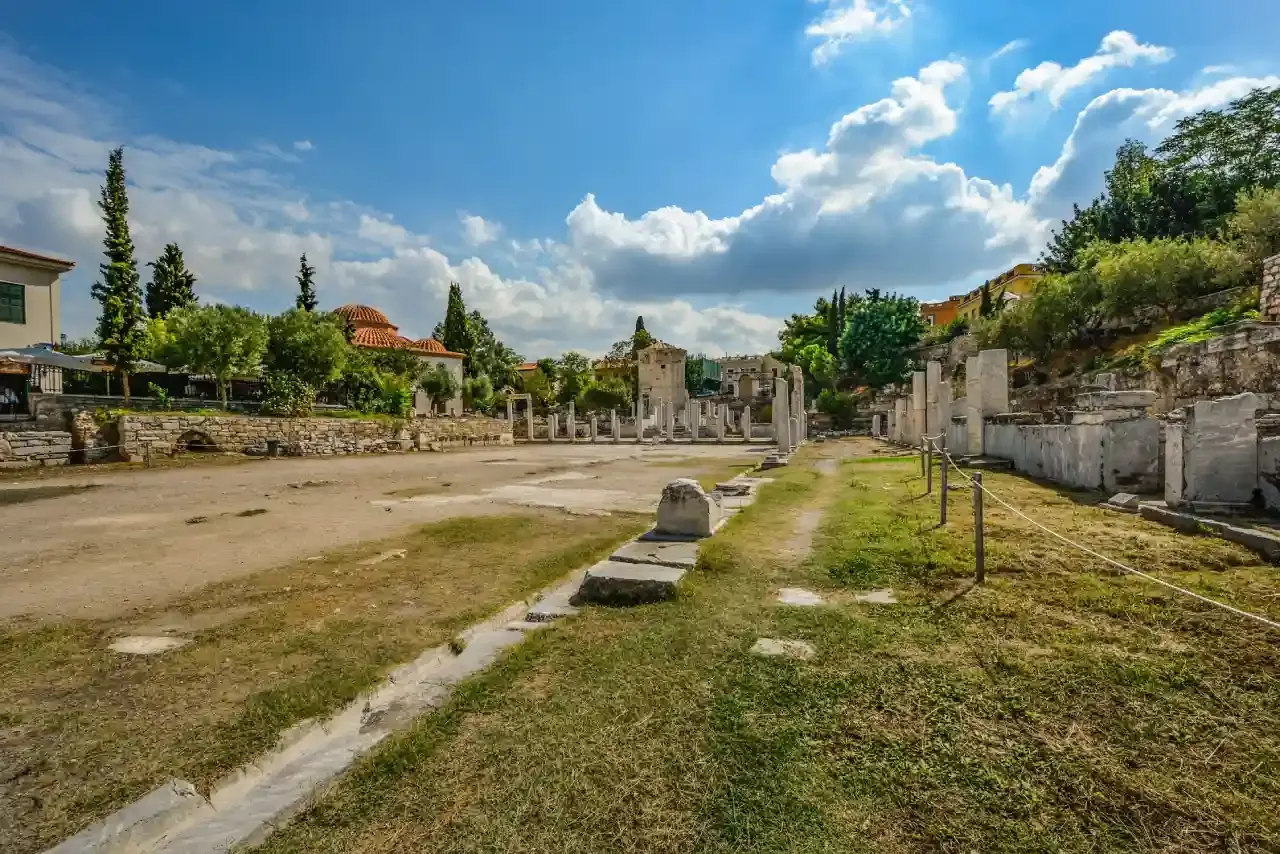
The Ancient Agora was where classical Athens did its talking, voting, and trading. Socrates and Plato argued here. Jurors voted in its courts. Merchants traded under its stoas. Now it's a quiet archaeological park with two standout buildings. The Temple of Hephaestus, finished in the mid-5th century BCE, is Greece's best-preserved Doric temple, with intact pediments and a near-complete colonnade. The Stoa of Attalos, faithfully rebuilt in the 1950s by the American School of Classical Studies, holds the Agora Museum and its everyday objects of ancient civic life.

4. Roman Agora and the Tower of the Winds
The Roman Agora lies a short walk east of the Ancient Agora. After Rome annexed Greece, this was the city's commercial centre. Its centrepiece, the octagonal Tower of the Winds, is a 1st-century BCE meteorological structure: carved wind reliefs, sundials on each face, an internal water clock. The remains of Hadrian's Library (completed around 132 CE) stand just steps further north.

5. Temple of Olympian Zeus and Hadrian's Arch
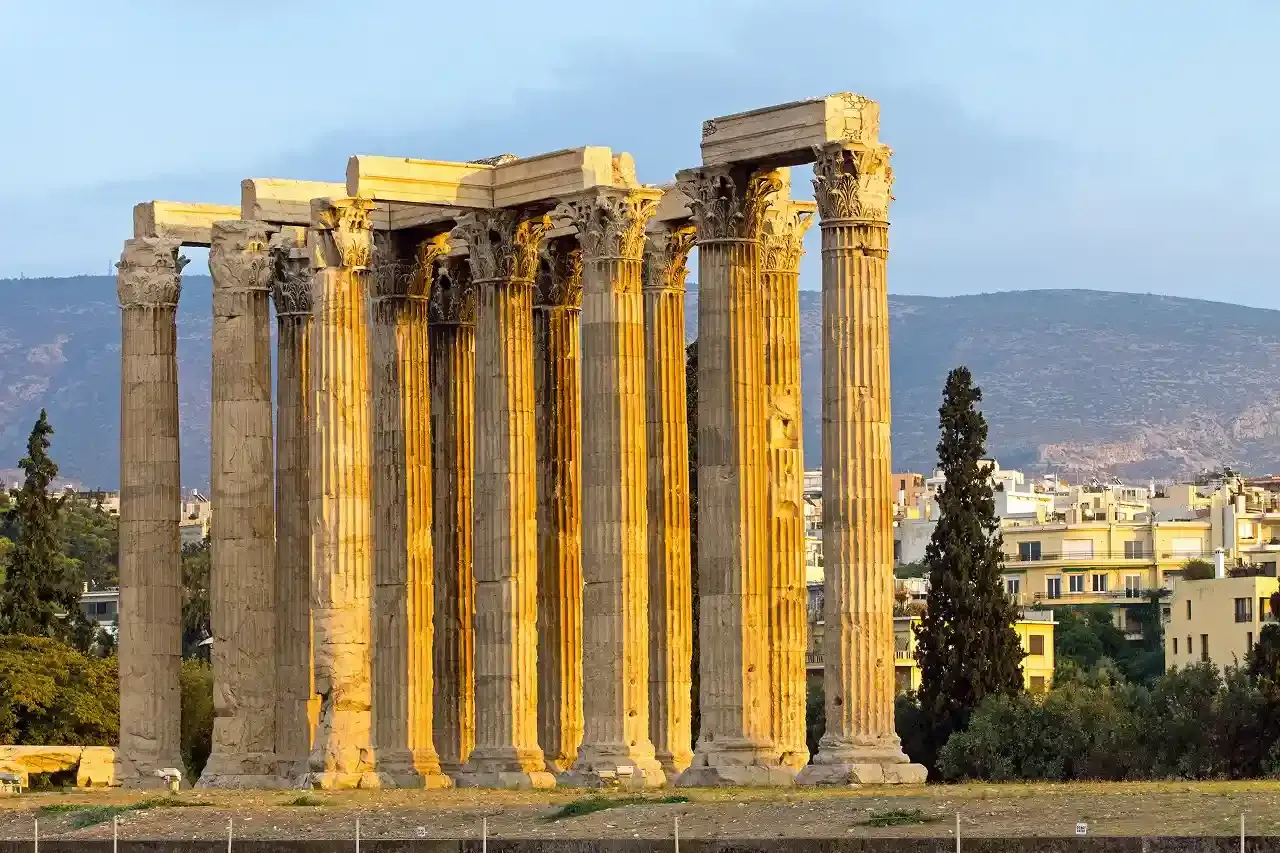
Started in the 6th century BCE and finished by Emperor Hadrian in 131 CE, the Temple of Olympian Zeus took around 700 years to build. It originally featured 104 massive Corinthian columns. Today, only sixteen survive: fifteen remain standing, while the sixteenth lies toppled on the ground after an 1852 storm. Hadrian's Arch, built the same year, marked the boundary between the ancient Greek city and the new Roman quarter. Both landmarks sit at the busy corner of Vasilíssis Amalías and Vasilíssis Ólgas, a five-minute walk from Syntagma Square.

6. Panathenaic Stadium
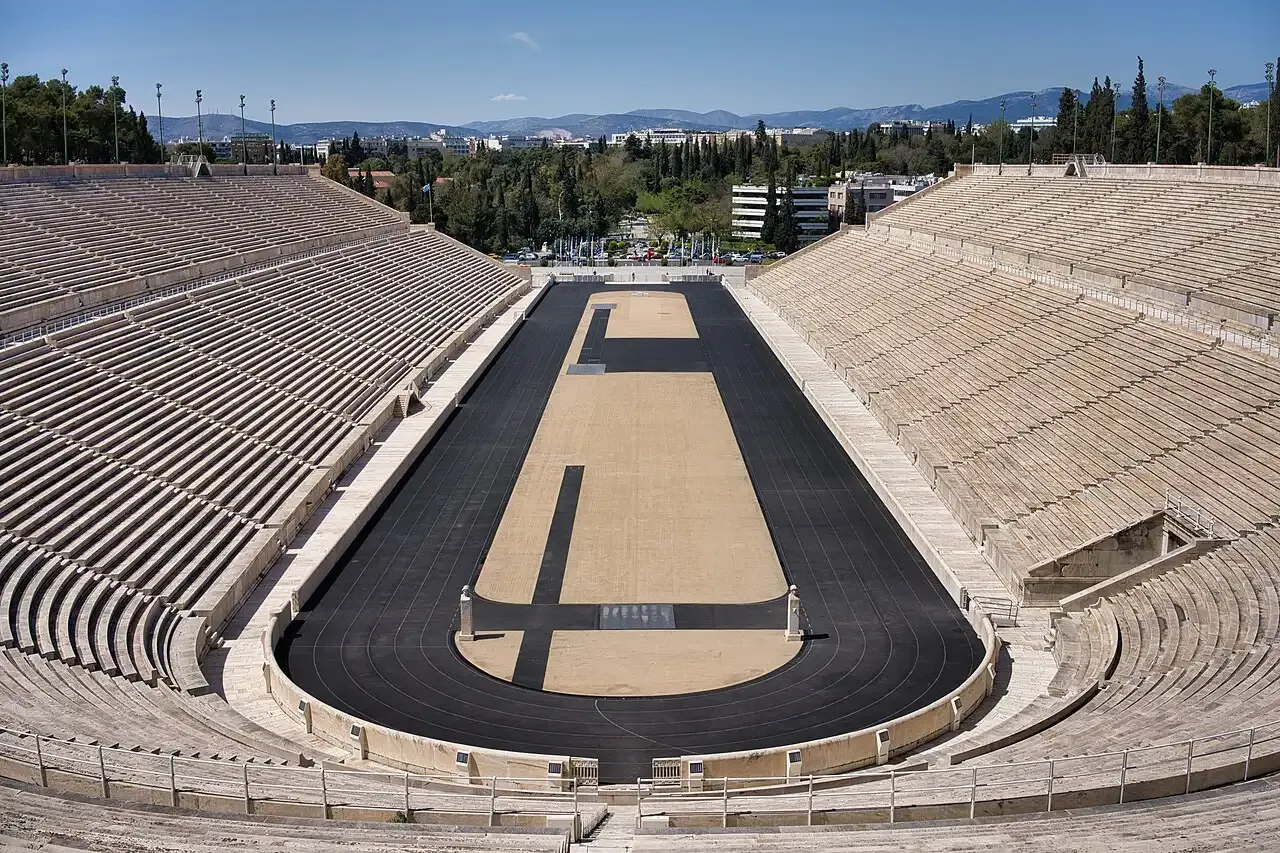
Marble, top to bottom. That's the Panathenaic Stadium, or Kallimármaro, the only such stadium in the world. Its original 4th-century BCE form held up to fifty thousand spectators for the Panathenaic Games. Excavated and rebuilt in the late 19th century, it hosted the first modern Olympic Games in 1896 and returned for the 2004 Olympic archery competition and the marathon finish. Visitors can walk the track, climb the seating tiers, and stand on the winners' podium.
Best 5 museums in Athens
Beyond the Acropolis Museum, Athens has a museum density that punches above its weight for a city this size. Five worth your time:
1. National Archaeological Museum
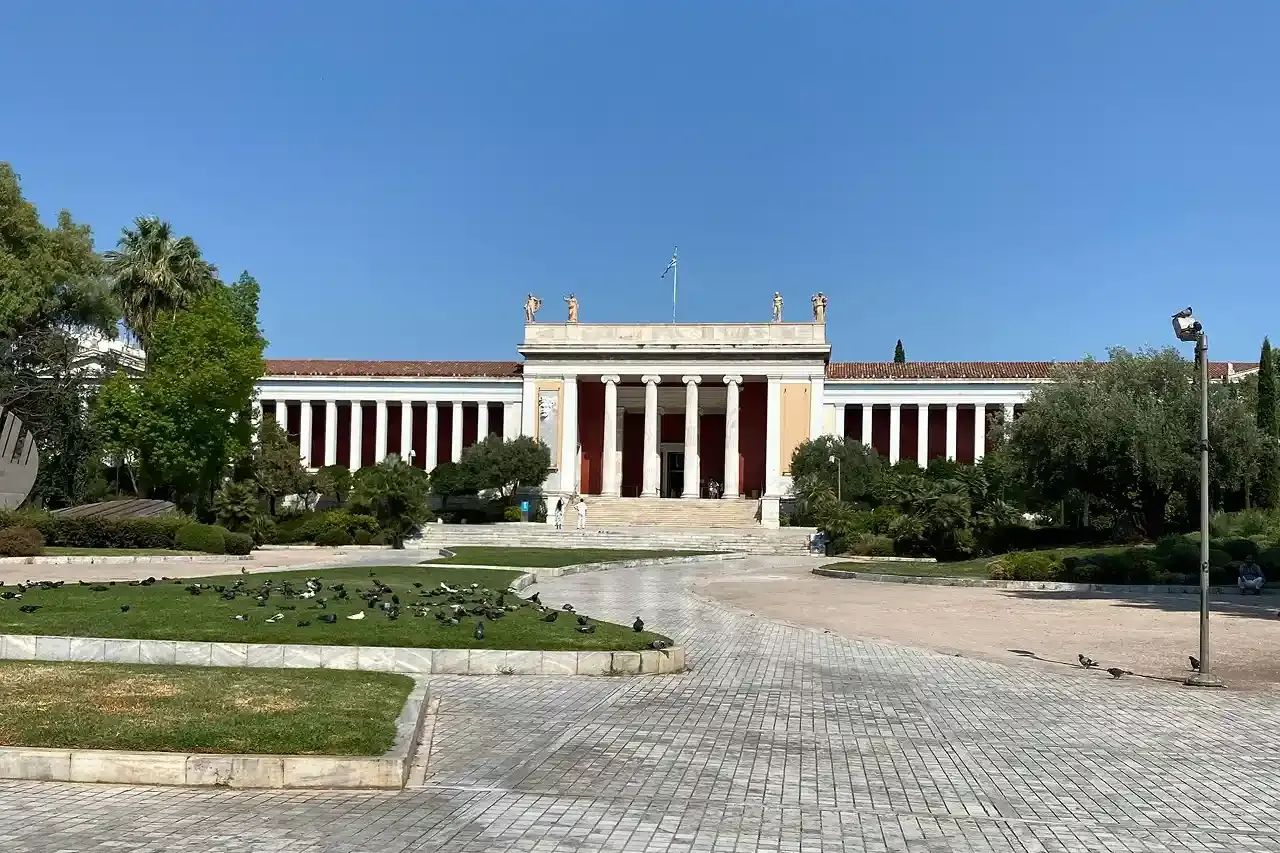
Greece's single most important archaeology museum. It holds one of the world's largest collections of Greek antiquities. The roster of highlights is long: the gold Mask of Agamemnon from Mycenae, the bronze Antikythera mechanism, the marble Poseidon of Artemision. Exhibits span almost nine thousand years, from Neolithic figurines to late Roman finds. Three hours minimum; for the full collection, give it half a day.
2. Benaki Museum of Greek Culture
In a neoclassical mansion near the National Garden, the Benaki traces Greek civilization across roughly all of recorded time, from prehistory through the 20th century, in a single coherent arc. Byzantine icons, Ottoman-era textiles, war-of-independence relics, modern Greek paintings: four floors of them. The wider Benaki network also runs a dedicated Islamic Art Museum and the Pireós Street annex for contemporary exhibitions.
3. Museum of Cycladic Art
The Cycladic Museum holds the world's finest collection of marble Cycladic figurines, those abstract, minimalist statuettes carved on the Aegean islands between 3200 and 2000 BCE. Their pared-down geometry shaped 20th-century sculptors from Modigliani to Brancusi. Other galleries cover ancient Cypriot and broader Greek art.
4. Basil and Elise Goulandris Foundation
A relative newcomer (2019), the Goulandris Foundation shows a private collection of modern and contemporary masters: Picasso, Bacon, Giacometti, de Chirico, in a purpose-built Pangráti gallery. Often quieter than the headline museums. A good break from antiquity.
5. National Museum of Contemporary Art (EMST)
EMST occupies the former Fix brewery on Syngrou Avenue. The space is industrial, refurbished, and hosts Greek alongside international contemporary art. Rotating exhibitions complement the permanent collection. Pair it with the Acropolis Museum for a one-day modern-against-ancient dialogue.
Things to do in Athens with kids

Things to do in Athens with kids
- The Acropolis with a short audio guide. Focus on the Propylaea entrance and the Caryatids rather than every single column.
- The Hellenic Children's Museum near Pláka, an interactive space designed for primary-school-age visitors.
- The Athens Riviera tram trip to Voúla or Glyfáda for an afternoon swim.
- The Lycabettus funicular ride for the panoramic top.
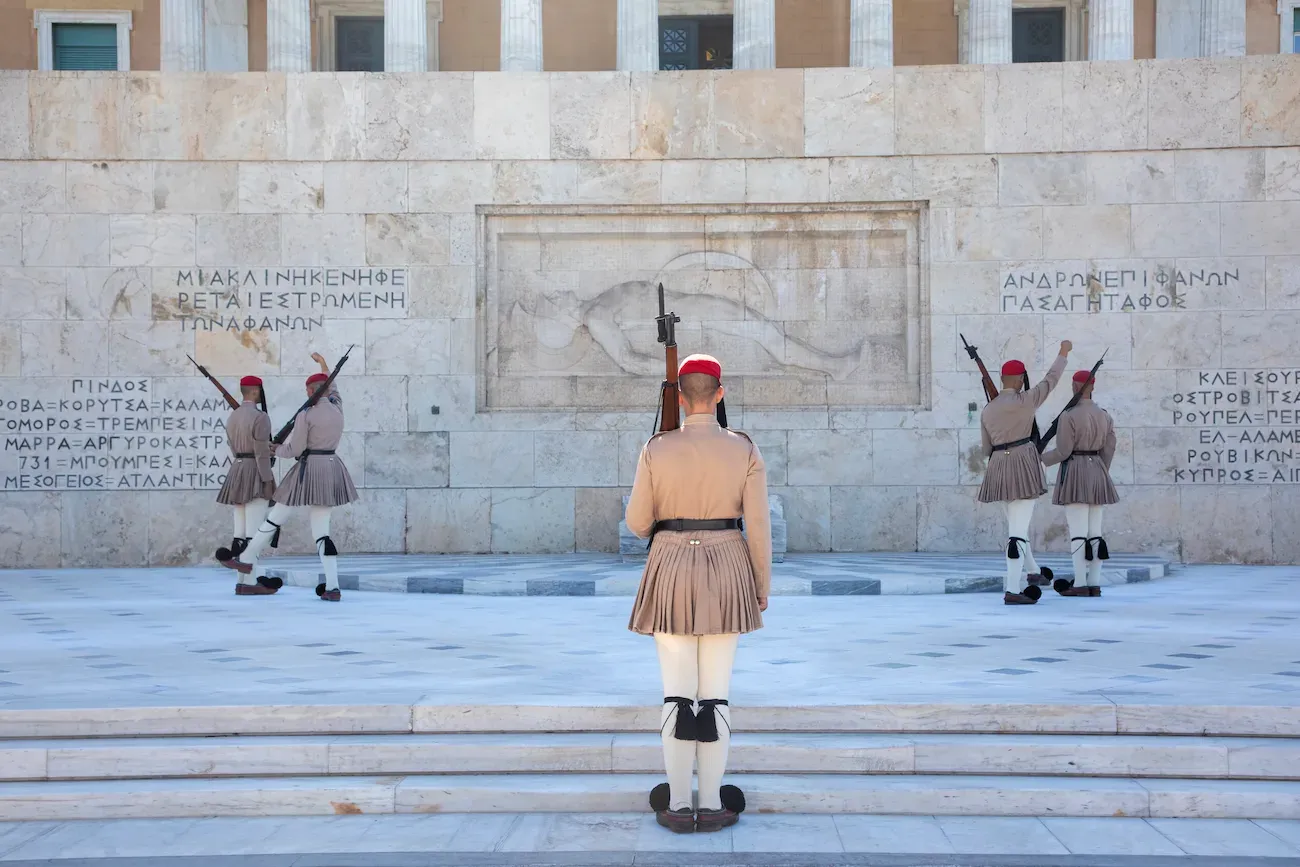
- The Changing of the Guard at Syntagma Square. Every hour on the hour; a full ceremonial change on Sundays at 11:00.
- The Stávros Niarchós park playground, the sprinklers, and the lighthouse climb.
Just keep in mind that strollers work, but cobbles in Pláka and the Acropolis ramp make a baby carrier easier on the hard surfaces.
Free things to do in Athens
Athens has more free experiences than its reputation suggests. None of these require an admission ticket:
- Wandering through Pláka and Anafiótika at any hour.
- Sunset from Areopagus, Filopappos, or Lycabettus.
- The Changing of the Guard at Syntagma Square.
- The National Garden (15.5 hectares of mature plantings, established in 1838).
- The Monastiráki Sunday flea market.
- The Stávros Niarchós park, its fountains, and many of its events.
Athens neighborhoods worth exploring on foot
The historic core is small and pedestrian-friendly. Each district has its own personality, and walking between them is half the experience. While the ancient monuments are the main draw, checking out the coolest neighborhoods in Athens allows you to experience the vibrant modern culture of the city.
| Neighborhood | Pláka |
|---|---|
| Character | Oldest quarter, neoclassical houses, cobbled lanes |
| Best for | Traditional tavernas, souvenirs, evening strolls |
| Nearest metro | Syntagma, Akropoli |
| Neighborhood | Anafiótika |
|---|---|
| Character | Tiny whitewashed island-style streets on the Acropolis slope |
| Best for | Photography, quiet wandering |
| Nearest metro | Akropoli, Monastiraki |
| Neighborhood | Monastiráki |
|---|---|
| Character | Ottoman-Greek blend, the flea market, lively squares |
| Best for | Shopping, casual meals, Acropolis-view rooftops |
| Nearest metro | Monastiraki |
| Neighborhood | Psyrrí |
|---|---|
| Character | Street-art murals, mezedopolia, late-night bars |
| Best for | Nightlife, contemporary food |
| Nearest metro | Monastiraki, Thissio |
| Neighborhood | Thissio |
|---|---|
| Character | Pedestrianised Apostólou Pávlou street, full Acropolis view |
| Best for | Sunset walks, outdoor cinemas |
| Nearest metro | Thissio |
| Neighborhood | Koukáki |
|---|---|
| Character | Quiet residential, hip cafés, close to Acropolis south side |
| Best for | Boutique hotels, slow mornings |
| Nearest metro | Syngrou-Fix, Akropoli |
| Neighborhood | Kolonáki |
|---|---|
| Character | Upscale, designer boutiques, contemporary art galleries |
| Best for | Shopping, brunch, Mount Lycabettus walks |
| Nearest metro | Evangelismos |
| Neighborhood | Gázi |
|---|---|
| Character | Former industrial gas works, big clubs, the Technopolis venue |
| Best for | Late-night culture, music |
| Nearest metro | Kerameikos |
| Neighborhood | Exárcheia |
|---|---|
| Character | Student and counterculture quarter, political murals |
| Best for | Bookshops, alternative cafés (daytime visits) |
| Nearest metro | Omonia |
Quick orientation about your visit

Quick orientation about your visit
- Athens, Greece (not Athens, Georgia) sits in the Attica region, on Eastern European time.
- It's the Hellenic Republic's capital.
- The historic core is tiny. Almost everything ancient lies within a 2.5 km square around the Acropolis.
- The euro is the currency.
- Greek is the official language. English is widely spoken in tourist areas.
- Spring and autumn are the best times to go. Summer gets blistering hot, but winter stays pretty mild.
Where to eat and drink in Athens?
Athenian food is straightforward, seasonal, and deeply social. A four-course taverna meal? Three hours. A souvláki on the street? Five minutes. Both belong on your itinerary, but leaving room to discover the top trendy restaurants in 2026 will also give you a taste of the city's modern culinary scene. Mixing classic street food with contemporary dining creates the perfect balance for your trip.
Central market and street food
The Varvákeios Market, founded in 1884 and named after the philanthropist Ioannis Varvákis, fills the blocks between Athinas and Aiólou streets. Fishmongers, butchers, cheese specialists, and producers of olives, herbs, and spoon sweets fill the indoor halls. The surrounding lanes hold fruit-and-vegetable stalls and a handful of celebrated meze tavernas. For a quick lunch, Mitropóleos Square and the streets around Monastiráki sell what may be the city's best souvláki, which is pork or chicken skewers wrapped in pita with tomato, onion, and tzatziki. Loukoumádes (honey-soaked dough fritters) and koulouri (sesame bread rings sold by street vendors) round out the day.
Tavernas and traditional dining
Pláka and Anafiótika carry the most concentrated taverna density, but smaller residential neighbourhoods like Thissio and Koukáki host equally good kitchens with calmer terraces. A traditional taverna meal opens with shared dishes (tzatziki, taramosaláta, fried courgette, grilled feta, dolmádes), moves into grilled fish or slow-cooked stews, and ends with watermelon or yogurt with honey. Ouzo and tsipouro work as typical aperitifs. House wine? Usually local, unfussy.
Rooftop restaurants with Acropolis views
A growing number of Pláka and Monastiráki rooftops frame the Acropolis as their dining-room backdrop. Reservations are essential for sunset slots in summer. The view is the experience. Food, generally good but secondary.
Coffee and sweets
Greek coffee culture takes its time. A frappé (cold, frothed instant coffee) or a freddo espresso typically lasts a full conversation. Best independent cafés? Kolonáki and Koukáki. Most postcard-friendly courtyards? Pláka. For pastries, look for bougátsa (semolina custard in phyllo) and galaktoboúreko.
Hidden gems and off-the-beaten-path experiences
The standard Athens sights list has hardened around ten or twelve names. The seven below add texture and quiet without sacrificing substance.
- Areópagus Hill at sunset. A smooth rock outcrop right below the Acropolis, reached from the same pedestrian boulevard. The view of the city, and of the rock face itself, arguably beats the one from the Acropolis. No admission. Slippery when wet, so mind your footing.
- Filopáppou Hill. Pine-shaded paths climb to the marble Monument of Filopáppos (114-116 CE) and a frontal viewpoint that captures the postcard angle of the Acropolis from the southwest. About a thirty-minute walk from Thissio.
- Stávros Niarchós Foundation Cultural Centre. A Renzo Piano complex in Faliro holding the Greek National Opera, the National Library, an artificial canal, and 170,000 square metres of public park. A free Sunday shuttle from Syntagma runs there and back, and free events happen almost every week.
- First Cemetery of Athens. Open to the public. A leafy 19th-century necropolis whose elaborate marble tombs were sculpted by leading Greek artists. An unexpected sculpture park in the middle of the city.
- Pireós Street. The industrial corridor connecting central Athens with the port of Piraeus has turned into an arts district. Onassis Stegi, the Benaki Pireós annex, and design studios cluster between Syngroú and Kallithéa.
- Lycabettus funicular at dusk. From Kolonáki, the funicular climbs 277 metres to the city's highest point. A small chapel and a café face an unobstructed 360-degree panorama. On clear days, sunset views reach Aegina and the Saronic Gulf.
- Athens Riviera. The tram from Syntagma reaches the southern coast in roughly forty minutes. Vouliagméni's saltwater lake, the beaches of Glyfáda and Voúla, and the upscale Astir complex turn a hot afternoon into a swim. A wholly different Athens.
Best day trips from Athens
Athens sits at the centre of Attica, with rewarding destinations in every direction. The five below cover the most useful one-day excursions:
| Destination | Cape Sounion |
|---|---|
| One-way travel time | ~1.5 hours by car or coastal bus |
| Highlights | Temple of Poseidon at the southern tip of Attica, sunset over the Aegean |
| Best with | Late-afternoon timing for sunset |
| Destination | Delphi |
|---|---|
| One-way travel time | ~2.5 hours by car, ~3 hours by KTEL bus |
| Highlights | UNESCO sanctuary of Apollo, oracle ruins, mountain setting |
| Best with | Full-day tour or rental car |
| Destination | Aegina |
|---|---|
| One-way travel time | ~1 hour by ferry from Piraeus |
| Highlights | Pistachios, fishing harbour, Temple of Aphaea |
| Best with | Saronic Islands cruise |
| Destination | Hydra |
|---|---|
| One-way travel time | ~1.5 hours by fast ferry (Flying Dolphin/Flying Cat), longer on conventional ferries |
| Highlights | Car-free island, stone harbour town, hiking trails |
| Best with | Saronic cruise with two-island stop |
| Destination | Mycenae and Epidaurus |
|---|---|
| One-way travel time | ~2 hours by car |
| Highlights | Bronze-Age citadel, the Lion Gate, ancient theatre with perfect acoustics |
| Best with | Full-day tour |
For visitors with a fourth or fifth day, Metéora and its cliff-top monasteries make a feasible overnight trip (about 4.5 hours each way by train; cheaper and slower than flying). One-day Saronic Islands cruises combining Aegina, Póros, and Hydra leave Piraeus daily in the high season.

Best time of year to visit Athens
Athens has a Mediterranean climate with hot, dry summers and mild winters. For the best balance of great weather and manageable crowds, aim for the shoulder seasons:
- April and May bring ideal temperatures (18°C to 26°C), full site hours, and blooming gardens, making midday sightseeing very comfortable.
- September and October mirror this pleasant weather with warmer evenings, though sites shorten their hours late in October.
- July and August are scorching, often exceeding 35°C; avoid the Acropolis midday, start early, and enjoy rooftops at night.
- Finally, November to March offers a mild off-season (12°C to 16°C) with occasional rain, perfect for exploring crowd-free museums and neighborhoods.
How to get around Athens

Metro and tram
Three metro lines cover central Athens. Line 1 (green) links Piraeus to the northern suburbs via Monastiráki and Omónia. Line 2 (red) connects southern districts to the city center through Akrópoli, the ideal stop for the Acropolis and its museum. Line 3 (blue) runs between Syntagma and Athens International Airport, stopping at Monastiráki. Additionally, trams travel from Syntagma down to Glyfáda on the Athens Riviera. Standard single tickets cost a flat rate and remain valid for 90 minutes across all modes of public transit, including transfers.

Buses and trolleybuses
Standard buses are particularly useful for traveling along the scenic southern coast toward the Athens Riviera or heading deep into the northern suburbs. Meanwhile, electric trolleybuses primarily serve the dense city center, navigating major avenues to connect central neighborhoods, museums, and key landmarks. Conveniently, these surface transit options share the exact same ticketing and validation system as the metro network, meaning a standard 90-minute single ticket allows seamless transfers between trains, buses, and trolleybuses without extra fees.

Walking the historic core
Almost every major sight sits within a 2.5 km square around the Acropolis. The pedestrianised Diónysos Areopagítou boulevard links the Acropolis south slope with Thissio, the Ancient Agora, and Kerameikos in one uninterrupted promenade. Comfortable shoes are non-negotiable. The marble underfoot gets slippery when wet.

Taxis and rideshare
Yellow Athenian taxis are metered and plentiful. FreeNow and Uber both operate in Athens, though Uber in Greece dispatches the same licensed yellow taxis rather than private cars. Airport flat-rate fares apply for trips between the airport and central Athens.

Airport to city
Athens International Airport (Eleftherios Venizelos, code ATH) sits east of the city. Three ways to reach the centre: the X95 express bus runs round the clock to Syntagma Square, roughly an hour, the metro line 3 covers Airport to Syntagma in about forty minutes during operational hours, or a standard taxi: thirty to forty-five minutes depending on traffic, with a fixed day or night rate.

Lycabettus Funicular
The Lycabettus Funicular is a unique underground cable railway that offers the easiest way to reach the summit of Mount Lycabettus, the highest point in Athens. Departing from the upscale neighborhood of Kolonaki, the brief three-minute ride saves visitors from a strenuous uphill climb. At the top, you are rewarded with breathtaking 360-degree panoramic views of the entire city, stretching all the way to the Aegean Sea.
Practical tips for visiting Athens
A short checklist for first-time visitors:
- Tipping is appreciated but not obligatory. Round up the bill or leave five to ten percent for good restaurant service.
- Pickpockets work the metro green line and crowded squares.
- The historic core stays well-patrolled.
- Older buildings have narrow plumbing. Bin used toilet paper rather than flushing where signage suggests.
- Pharmacies carry many over-the-counter medications that elsewhere need a prescription.
- ATMs are plentiful. Cash stays useful for tavernas, small market stalls, and tipping.
- A few useful Greek words: yia sou (hello), parakaló (please), efharistó (thank you), neh (yes), óhi (no).
- Sundays close many small shops, but most attractions and tavernas keep working.
Suggested Athens itineraries
The shape of an Athens visit shifts a lot between one, two, and three days. Blocks below assume an April-October pace.
One day in Athens
Start at the Acropolis at 08:00 opening to beat the heat and the busiest slots. Two to three hours on the rock, then descend through the south slope theatres. Coffee break in Pláka. Walk to the Ancient Agora for an hour. Late lunch at a Monastiráki rooftop or a Pláka taverna. Afternoon at the Acropolis Museum (three hours minimum). Sunset on Areópagus or Filopáppou. Dinner in Pláka or Psyrrí.
Two days in Athens
Morning at the National Archaeological Museum (three hours). Walk down to the Panathenaic Stadium, then Hadrian's Arch and the Temple of Olympian Zeus. Light lunch near Syntagma. Afternoon for the Changing of the Guard and the National Garden. Dinner in Thissio or Koukáki with an Acropolis-view rooftop bar after.
Three days in Athens
Days one and two as above. Day three depends on your travel preferences:
- Day trip option: Cape Sounion in the afternoon for sunset at the Temple of Poseidon, with lunch on the coast en route. Or a Saronic Islands cruise from Piraeus to Aegina, Póros, and Hydra.
- Slow-Athens option: Morning at Kerameikos and the Benaki Museum. Lunch at Varvákeios Market. Afternoon walk through Anafiótika and an hour at the Museum of Cycladic Art. Sunset from Lycabettus.
- Athens-Riviera option: Tram to Glyfáda or Voúla for a beach afternoon, back to the city for dinner in Psyrrí.
Staying longer in Athens?
While three days cover the classic highlights, dedicating more time to the capital unlocks a completely different experience. Travelers who follow a structured 5-day itinerary can easily incorporate day trips to Delphi or the Peloponnese alongside their urban exploration. If you want to include the Saronic islands and the coastal Riviera without feeling rushed, reading through our detailed 6-day itinerary provides the perfect blueprint for a balanced, extended vacation.