
The coolest neighborhoods in Athens
Athens packs a remarkable amount of city into a small footprint. Most named neighborhoods sit within a thirty-minute walk of the Acropolis, yet each one reads like its own village, with food, crafts and pace of its own. The choice usually comes down to mood. What follows covers nine of them.
Why Athens neighborhoods feel different from one another?
The city grew in distinct layers over millennia, with each era leaving behind its own unique street grid and local vibe. You have the ancient core right in the center, which is surrounded by the grand boulevards of a Bavarian architectural project from the 1800s. Later on, post-war refugee waves and island migrations from the 1970s and 80s reshaped the landscape, eventually paving the way for the vibrant creative renaissance happening today. Every historical wave left a distinct mark on the local streets, so having a solid plan for what to see in Athens will really help you appreciate the rich contrasts of each district. The amazing part is that this incredibly diverse mix remains remarkably compact. From Koukaki sitting just under the Acropolis to Kypseli up in the north, the entire arc spans only about four kilometers, meaning a comfortable pair of shoes is all you really need to explore it.
Koukaki
South of the Acropolis, in a grid of 1930s apartment blocks, Koukaki used to feel sleepy. It hums now. Across the street: the Acropolis Museum. Ten minutes on foot: the Acropolis south entrance. The other direction takes you uphill toward Filopappou Hill and the city's other classic viewpoint. The pedestrianised Olimpiou strip is where the neighborhood gathers in the evenings: tree-lined sidewalks, third-wave coffee shops, ouzo tavernas, bar-cafes spilling onto the pavement on summer nights.
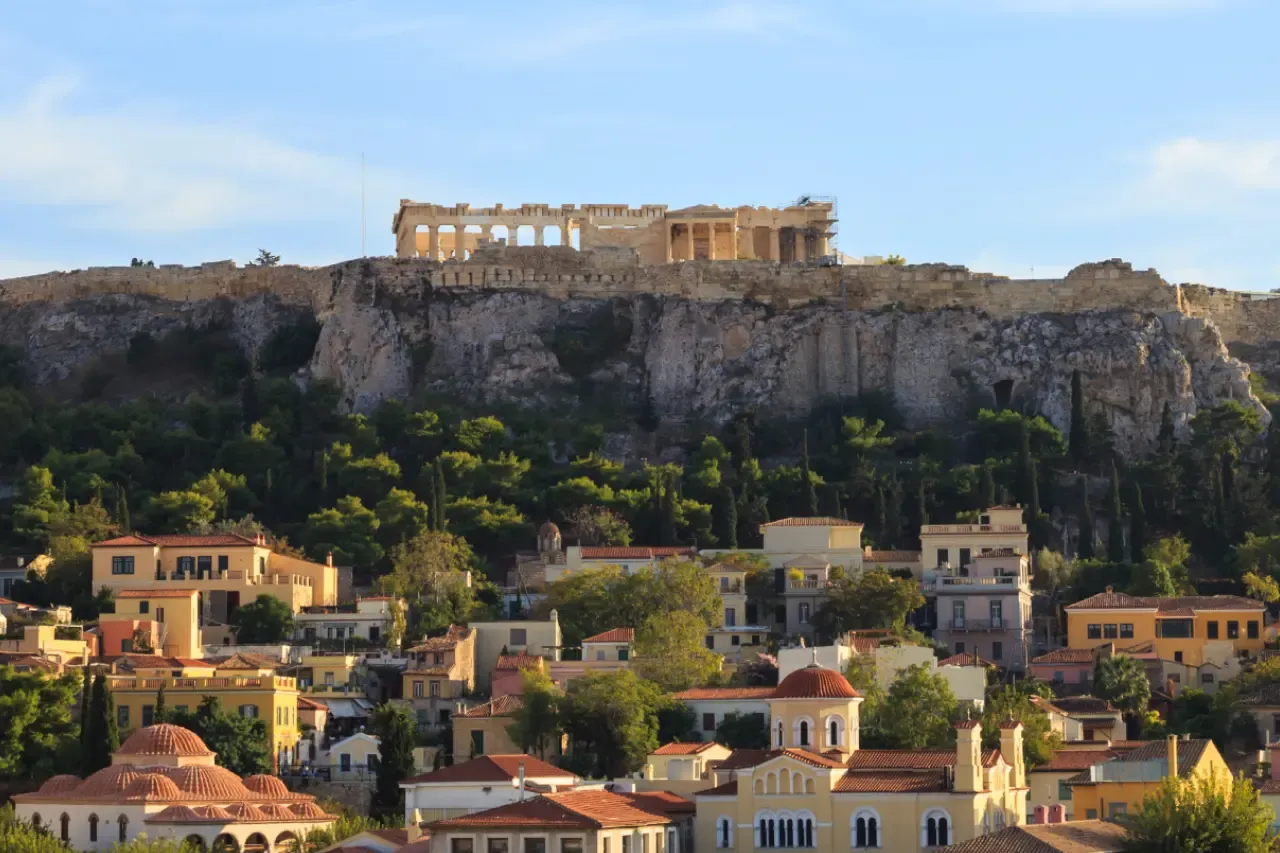
Local first. Traveler second. That is the character of the place. Independent art galleries crowd along Veikou and Drakou. Vintage shops and artisan stores hold the corners alongside bakeries and laundromats. The National Museum of Contemporary Art lives inside the old Fix brewery building on the Syngrou edge, and supplies the neighborhood with its style register. First-time visitors who want a residential base within walking range of every major site end up here.
Psyrri
Just behind Monastiraki Square, in a few short blocks that look chaotic at first, Psyrri quickly starts to make sense. Historically this was the city's quarter of workshops and small trades, and the bones of that history are still visible. Leather artisans, spice and antique dealers, and quiet old ouzeris occupy narrow streets that also hold contemporary cocktail bars and rooftop spots. A centenary stove repair shop sits one door. A neon-lit speakeasy sits next door.
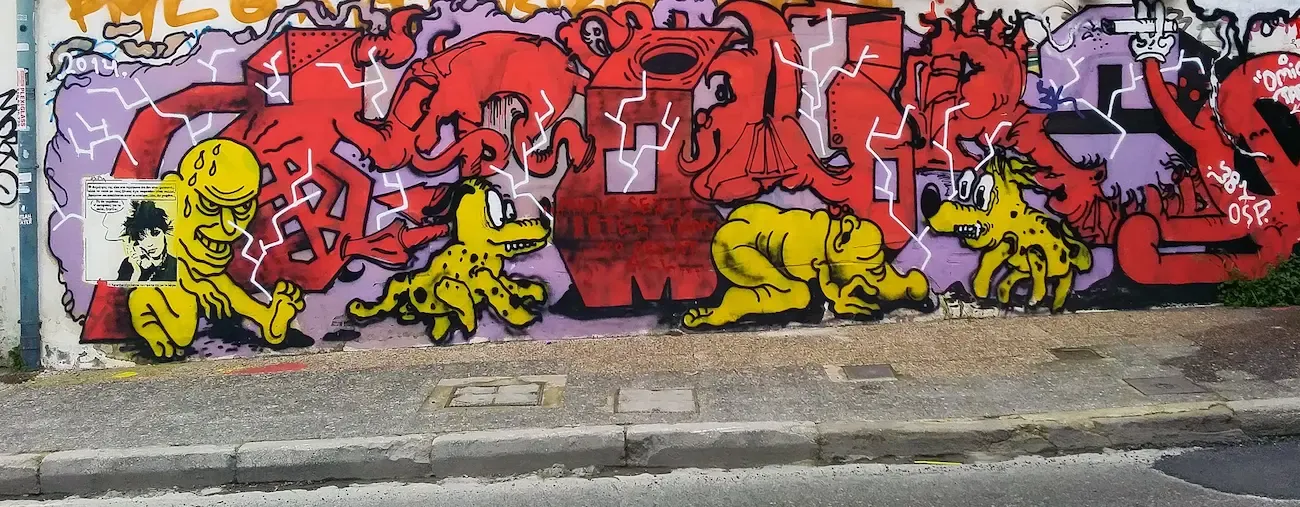
There is also the street art. Building facades carry layered graffiti, and a slow loop around Plateia Iroon, the small Heroes' Square at the centre of Psyrri, passes dozens of named murals. Old ouzeris (fried zucchini, small wines, marble-top tables) still operate alongside the design-forward arrivals. After dark the neighborhood gets loud, especially toward the weekend. The daytime version is calmer and rewards a slow look at the workshops.
Photo by “TheVRChris”
Exarchia
Wedged between upmarket Kolonaki to the east and residential Kypseli to the north, Exarchia sits north of Omonia. The historical anchor is the Polytechneion, the National Technical University building where the 1973 student uprising against the military junta started. That history feels close. Political murals layer over older ones, leftist cafes ring the central Exarchia Square, and the university energy keeps the streets busy with students well into the night.
The cultural fabric runs dense and specific. Independent bookshops stack the side streets. Vinyl shops and small concert venues feed the city's indie music scene, whose roots are here. On the northeast edge, the leafy Pedion Areos park forms a green pause between the noise and the residential blocks beyond. Yes, the protest reputation is real. The exaggeration is the part to push back on. A walk through during business hours reveals a working-class neighborhood with bookish corners, not the dystopia some guides suggest. After dark, normal city awareness covers it.
Pangrati
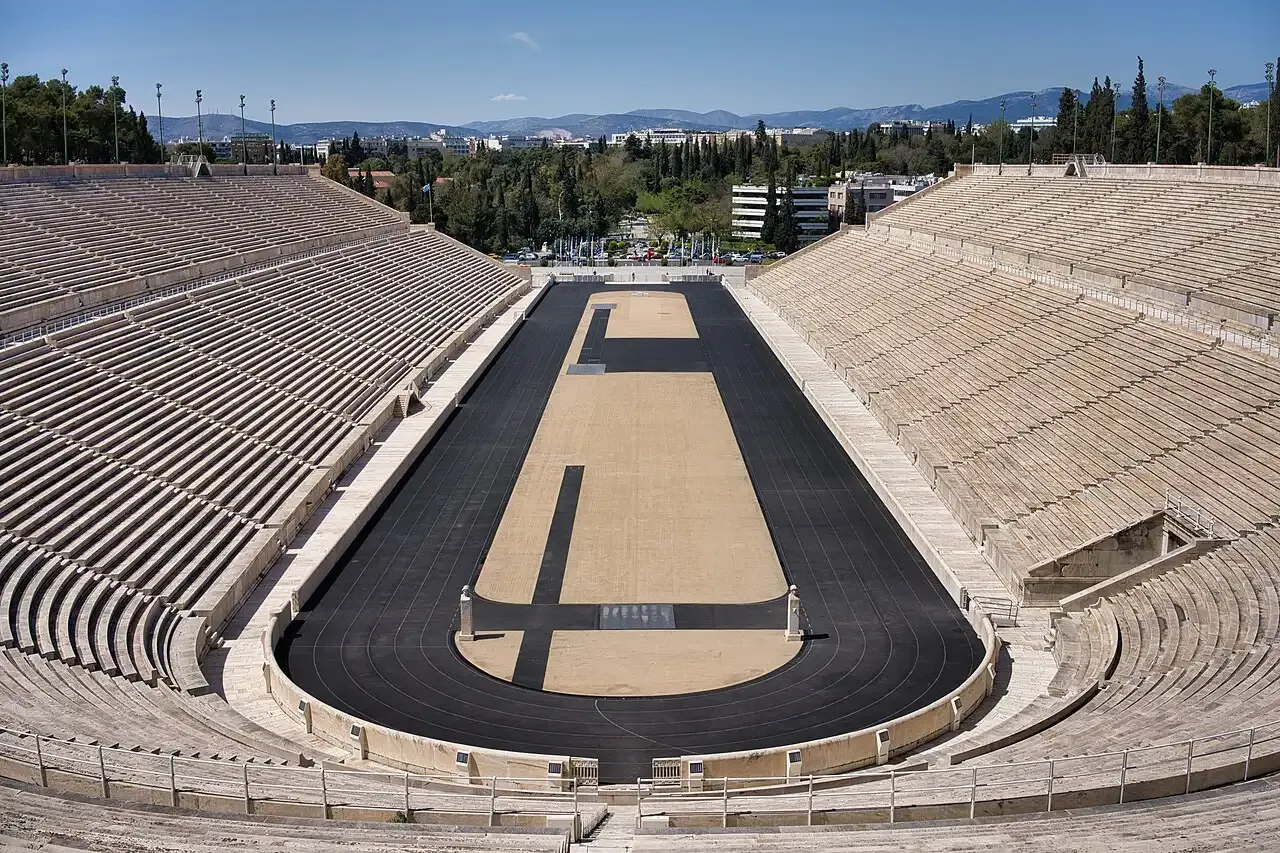
Southeast of Syntagma sits Pangrati. The National Garden borders one side, the marble Panathenaic Stadium the other. That stadium is the anchor of the area, the one that hosted the first modern Olympic Games in 1896. A short walk past it lands you in a neighborhood that runs on resident traffic rather than tourist flow. The food scene shifts completely as a result.
Mavros Gatos, the Black Cat, has worked as a meat tavern at 4 Polemonos Street since 1963. Three generations of ownership. Same neighborhood. Same plates done well. Karavitis a few blocks away turns out biftekia, fried courgettes, lamb chops, slow-cooked veal casserole with hand-cut fries. Modern mezze spots (Mavro Provato, launched in 2012 near Proskopon Square) sit alongside the older places without friction. From Proskopon Square, a fifteen-minute walk covers the arthouse Petit Palais and open-air Oasis cinemas, the Half Note jazz club, the Pleiades bookstore with its busy literary calendar, the counter-culture Skrow Theatre, the Twixtlab arts hub. Travelers who want the food of Athens without the tourist surcharge come here.
Photo by “George E. Koronaios”
Plaka and Anafiotika
Along the northern and eastern slopes of the Acropolis, Plaka snakes its way through the oldest neighborhood of the city. Cobblestones. Neoclassical buildings. Byzantine churches. Outdoor cafes that hand it the postcard look. Yes, it gets busy. The central streets fill quickly through the day. Go early or late, and go for the crafts.
Traditional Athenian crafts flourished here in the late 19th and early 20th centuries: weaving and fabric work, ceramics, leather goods, hats, musical instruments. The workshops are still working. Leather sandal-makers cut to size while travelers wait. Quiet lanes hide handmade Orthodox icon studios. One neoclassical mansion houses a contemporary jewellery gallery described as the country's only contemporary jewellery museum and store, with original pieces by Greek designers on display and for sale.
Above Plaka, tucked under the rock of the Acropolis, lies Anafiotika. Builders from the island of Anafi created this pocket in the 19th century.
Kerameikos and Gazi
West of Monastiraki, around the Kerameikos metro station, Kerameikos and Gazi sit together, two different industries gave the two neighborhoods their names. Kerameikos took its name from the ancient potters' quarter that occupied the area. Keramos is the Greek word for clay. The ancient cemetery of classical Athens, where Pericles delivered the funeral oration, lies inside the modern neighborhood. Gazi, next door, takes its name from the city gas plant. Today the old gasworks live on as Technopolis, a culture centre with concert halls, exhibition spaces, and a small industrial museum on the original site.
Twilight is the moment to walk through. The half-light catches the rusted railway lines on the industrial side of Ermou Street. Cooler hours bring the streets to life. Gazi runs as one of the densest concentrations of clubs and bars in central Athens. Kerameikos keeps a quieter, almost village-like atmosphere a few streets back. Design hunters find rewards here too. Anthologist, a curated design space inside a restored 1912 neoclassical building, draws aficionados. Gazarte beside Kerameikos metro pairs industrial-chic decor with panoramic city views. Ancient cemetery, repurposed gasworks, contemporary design space: the combination is unique to this corner.
Petralona
Petralona drops down the western foot of Filopappou Hill, southwest of Thissio. It splits in two: Ano Petralona on the upper slope, Kato Petralona below. Some guides call the neighborhood the example of contemporary Athenian gentrification. The simpler truth is that Ano Petralona has long been a residential pocket with its own dignity, and continues to be one. Older Athenians remember interwar stone fights between the children of upper and lower Petralona. The folklore stays intact.
Food carries the weight of the place. Oikonomou Tavern, on the corner of Troy and Kydantida streets opposite the open-air Zefyros summer cinema, ranks among the historic tavernas of Athens. Black Pepper Grocery in Ano Petralona (run by Vasiliki Moustaka) works as a small pantry-style shop dedicated to regional Greek products. Radiourgies fills a modern dining room at 33 Koilis Street, relaxed in feel. Morning cafes serve brunch on courtyards. Evening tavernas serve mezze and home-cooked dishes on side streets where neighbors still recognise each other. The Zefyros summer cinema, one of the few classic open-air screens left in central Athens, doubles as the cultural anchor.
Kolonaki
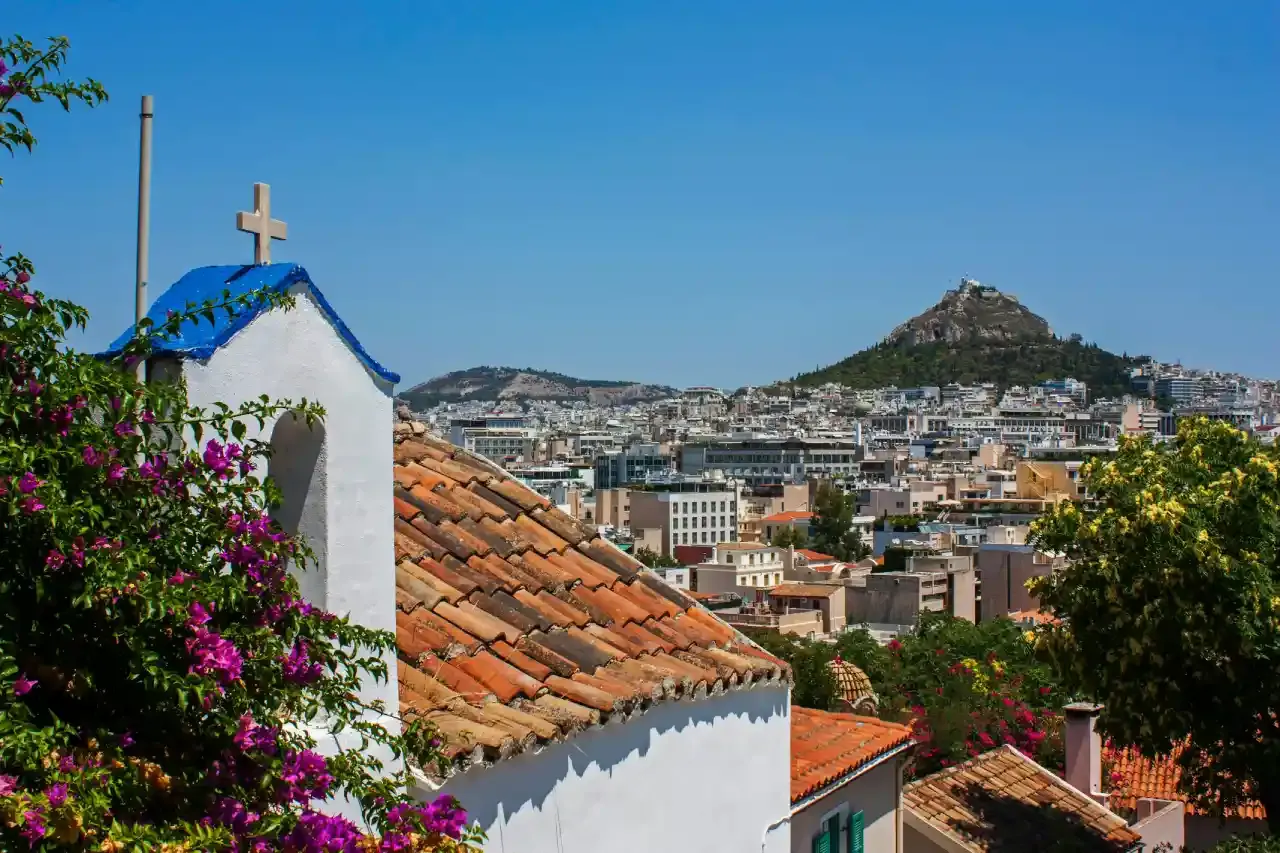
Kolonaki climbs the foot of Lycabettus Hill, the 277-metre rock that is the highest point in central Athens. The neighborhood was the haunt of the 1930s intellectuals: writers Nikos Kazantzakis and Angelos Sikelianos walked these streets, and a century later it remains where the city does elegance. Late afternoons, Plateia Filikis Etaireias, the small square that hands the neighborhood its informal name, kolonaki meaning little column, after the marble column that stood here, draws a well-dressed cafe crowd.
Design runs through everything. Voukourestiou Street carries the high-end shopping density. The jeweller Nikos Koulis chose it for his flagship. Around the corner on Akadimias, Bonendis Boutique opened its flagship at number 33 for the brand's tenth anniversary, focused on leather accessories. DOMO Design Gallery sits at 4 Leventi Street. Below Dexameni Square, Myran runs as a curated Scandinavian-design retail store. Nearby, the Marina Vernicos Store turns fine-art photography into wearable pieces and travel objects. The Benaki Museum, one of the city's great institutions, holds a corner not far away. To close the evening: a walk up the cable funicular or the stepped paths to the top of Lycabettus, with a panorama from the Acropolis to Piraeus.
Kypseli
Kypseli sits north of Exarchia, past the centre. For a few years now it has been moving from quiet residential pocket to one of the most quietly interesting neighborhoods in Athens. Architectural fabric is the draw. Few central neighborhoods carry as dense a stock of 1930s and 1960s modernist apartment blocks and neoclassical mansions, and many of them line Fokionos Negri, the pedestrianised central street that runs as the heart of the area. Cafes, neighborhood bakeries, a slow Sunday-afternoon energy. Nothing further south matches it.
The other anchor is the Kypseli Municipal Market. After decades of closure, restoration brought the historic market hall back. It reopened around 2018. Food stalls, craft sellers, and a packed calendar of community events fill the space now. A wave of new bars and restaurants arrived in 2025, drawn by the rents and the architecture. Travel writers regularly flag Kypseli as a rising contender for the city's most interesting neighborhood. The reason becomes obvious after a short walk along Fokionos Negri: buildings, trees, small market squares, all reading like an older European capital, hiding in plain sight a few metro stops from the Acropolis.
Which neighborhood should you pick?
For first-time travelers who want one base with everything close, Koukaki is the easiest answer. Nightlife: Gazi and Psyrri are the two strongest contenders, with Gazi the louder and Psyrri the more layered. Crafts and slow walks: Plaka and Anafiotika, especially early in the morning. Food without the tourist surcharge: Pangrati for the modern range, Petralona for the older taverna register. Elegance, design boutiques, evening view: Kolonaki, and the climb up Lycabettus to close the night. Bookshops, murals, a less polished kind of cool? Exarchia rewards a slow walk. Architecture and a comeback story? Spend an unexpected afternoon in Kypseli.