
Things to do in Athens in July
July in Athens, Greece is hot. Travelers therefore climb the Acropolis and the Parthenon early, duck into the Acropolis Museum at noon, walk Plaka and Monastiraki at sunset, and pick up an Athens Epidaurus Festival performance after dark. Cape Sounion or the Saronic islands fill the rest.
July days break into four windows. The middle of the day is too hot for ruins. Plan around it.
Mornings work for the Acropolis. Same for the Parthenon, the Ancient Agora, and the Temple of Olympian Zeus. None of those sites have much shade. Stones heat up fast once the sun climbs past 9. A short loop through the Plaka district before the cafés fill is a good warm-up.
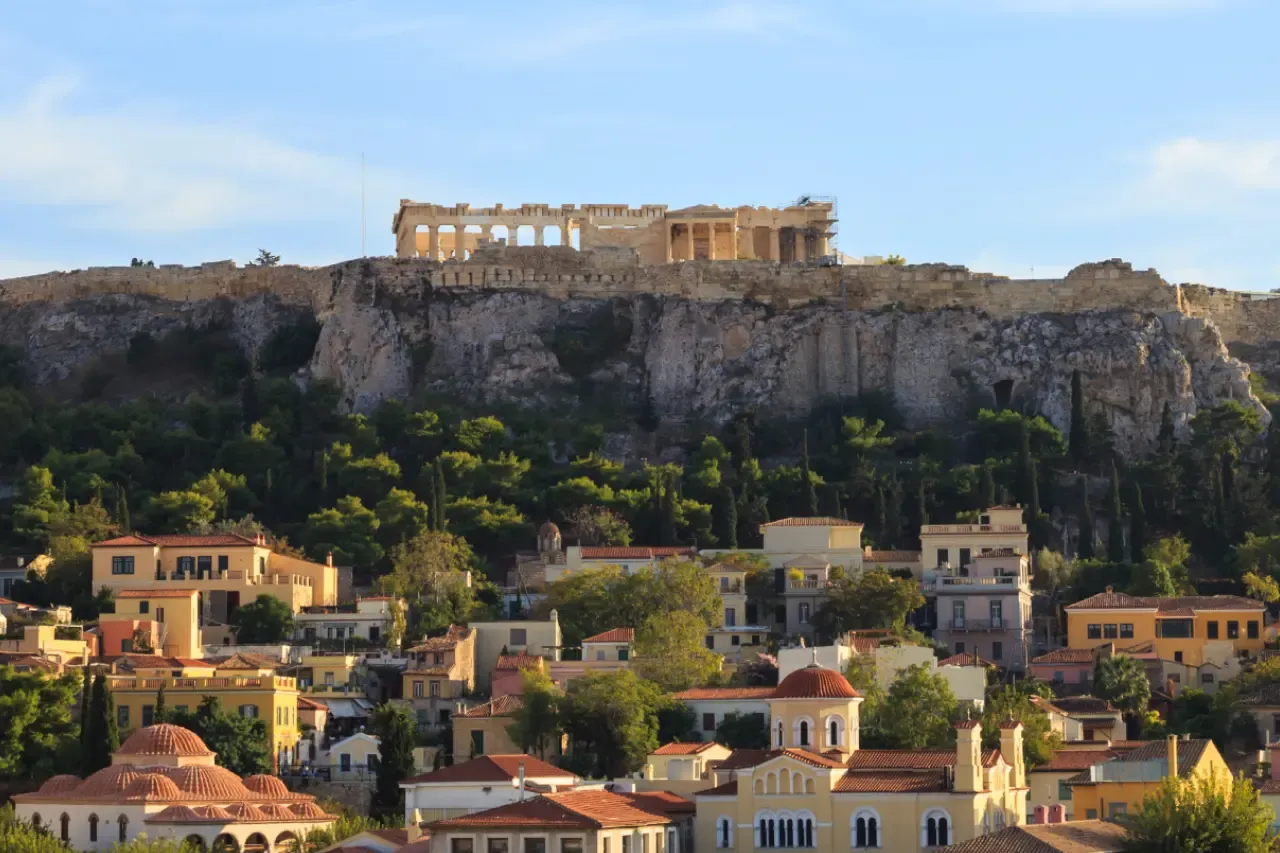
When the Mediterranean sun turns up the heat from 11 a.m. onward, it’s your cue to seek sanctuary indoors until about 4 p.m. If you’ve spent your morning marveling at the Acropolis, the magnificent Acropolis Museum is the perfect midday refuge—not least because of its glorious air-conditioning. Hungry for history? You can easily lose an entire afternoon exploring the National Archaeological Museum, home to Greece's most extensive collection. Prefer a more tranquil escape? The Museum of Cycladic Art in the upscale Kolonaki neighborhood offers a beautifully quiet alternative.
By 4 p.m., the fiercest heat begins to fade. As rooftops cast long, cooling shadows, strolling through the vibrant streets of Monastiraki and Psyrri becomes a genuine delight. Craving the sea? A 45-to-55-minute tram ride from central Athens whisks you straight to Glyfada on the glittering Athens Riviera. For a slightly more secluded dip, head out to Vouliagmeni; just take the red metro line to Elliniko, followed by a quick taxi or the 122 bus (about an hour total from the city center). Trust me, an afternoon swim resets everything. Later, hike up Mount Lycabettus or Philopappos Hill to watch the sun melt over the iconic Acropolis.
Athens truly comes alive after dark, and the evenings belong to open-air cinemas, rooftop dinners, and world-class festivals. The marquee experience is an Athens Epidaurus Festival performance, now staged at venues such as Peiraios 260 while the ancient Odeon of Herodes Atticus is closed for restoration. As the sun sets, grab a seat for an open-air movie on the rooftops of Plaka, Thiseio, or Kolonaki. Finally, crown your day with dinner on a rooftop in Monastiraki or Psyrri, dining under the stars with the brilliantly illuminated Acropolis towering above the city.
Staying three days or more? You have the perfect excuse to venture beyond the city limits. Head to Cape Sounion to witness a breathtaking sunset at the Temple of Poseidon, or hop on a Saronic Gulf ferry to island-hop through Aegina, Poros, and Hydra all in a single, unforgettable day.
For ideas beyond the July-specific picks above, browse our guide to what else there is to do in Athens.
How hot is Athens in July and how does it affect what to do?
In July, typical daytime highs in Athens hover between 30°C and 33°C, though intense summer heatwaves can certainly push the mercury higher. In fact, the midday sun can get so fierce that Greek authorities have recently begun temporarily closing the Acropolis and other outdoor archaeological sites during peak hours.
Radiant heat is the real problem, not humidity. Marble at the Parthenon, the Ancient Agora, and the Temple of Olympian Zeus throws back the midday sun with almost no shade overhead. The window from 11 a.m. to 4 p.m. is brutal. Most travelers therefore do their outdoor visits before 10 a.m. or after 6 p.m., treat museums as the midday shelter, and carefully organize their list of things to do in Athens around the sun.
When should travelers visit the Acropolis in July?
The first morning slot is the best one. The rock is exposed. The queue builds early. By 9 a.m. it is too warm for comfort. An early arrival cuts the wait, leaves time to reach the Parthenon before the marble starts radiating heat, and frees the rest of the day for shaded plans.
Late afternoon is the backup option. Heat eases after 6 p.m. and the low sun softens the ruins. Midday from roughly 11 a.m. to 4 p.m. is the slot to skip, pairing the Acropolis with the Acropolis Museum on the same day keeps the day simple. The climb happens in the cool because the museum absorbs the worst of the heat.
What summer festivals and events happen in Athens in July?
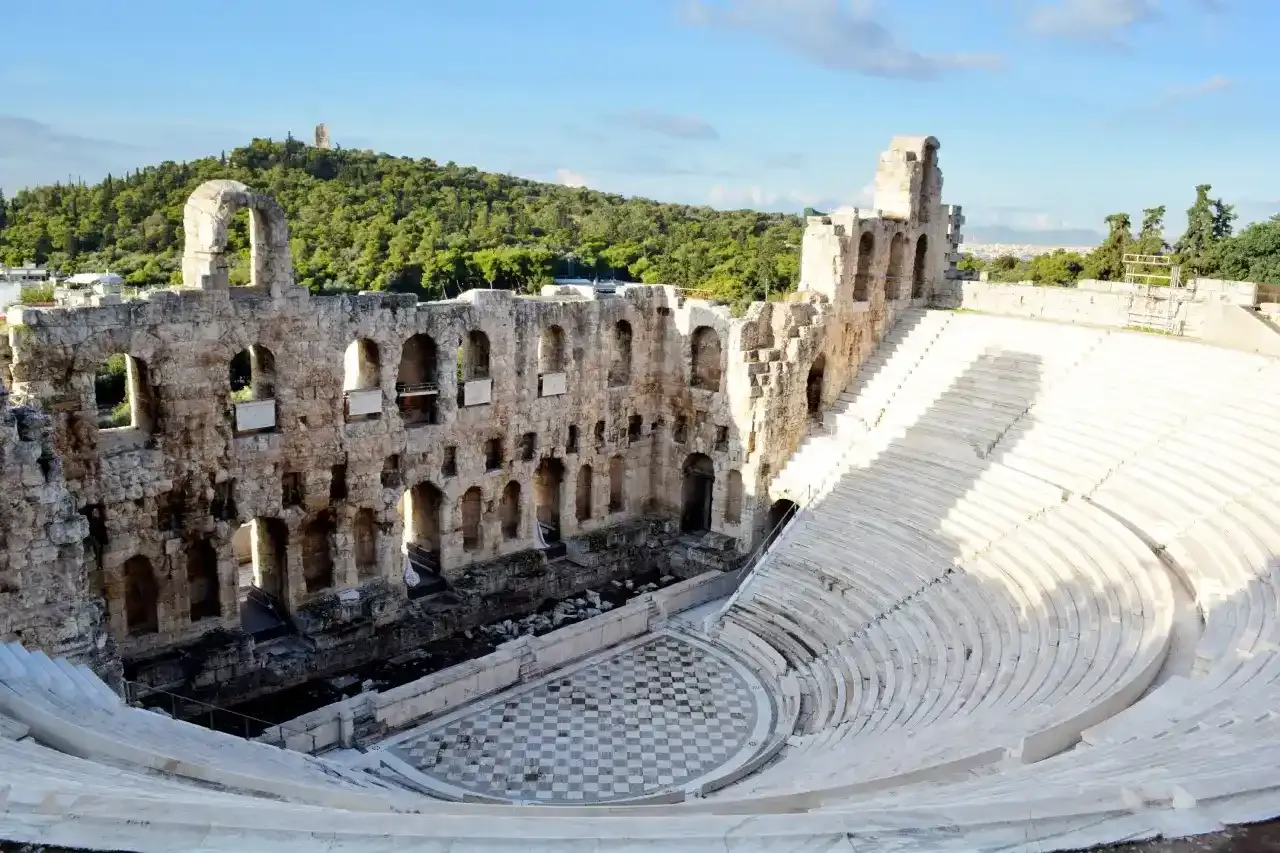
The Athens Epidaurus Festival is the undisputed heartbeat of the city's summer calendar. From late spring straight through the season, Athens buzzes with theater, dance, and live music almost every night, and July sits right at the dazzling peak of the action. For decades much of the magic happened at the Odeon of Herodes Atticus, a breathtaking Roman-era theater carved into the rocky slopes beneath the Acropolis, but it closed in summer 2026 for a restoration planned to last at least three years. In the meantime, the festival's Athens programme moves to Peiraios 260 and partner venues such as Megaron, the Athens Concert Hall, while the ancient theater of Epidaurus remains one of its open-air stages.
As the sun dips below the horizon, the city transforms. Open-air cinemas flicker to life, with screens popping up on breezy rooftops and in lush garden courtyards tucked away in the Plaka district, Thiseio, and the chic streets of Kolonaki. If you're looking for a different kind of rhythm, the rooftop bars of Monastiraki and Psyrri pulse with live music sets all evening long.
What day trips from Athens work well in July?
Four day trips out of Athens match the July heat profile. Three trade city heat for sea breeze or shade and the fourth is a quick beach escape that does not even leave the city limits.
- Cape Sounion is a coastal headland about 70 kilometres down the Attic coast. The Temple of Poseidon stands on a cliff above the Aegean. Arrive in the late afternoon to catch the marble columns at sunset, when temperatures drop and the stone takes the low light.
- A Saronic Gulf cruise runs as a one-day ferry circuit through Aegina, Poros, and Hydra. The constant breeze offshore keeps the on-water hours far cooler than central Athens. Each island has shaded harbour tavernas for the midday meal.
- Delphi is roughly two and a half hours by road through Mount Parnassus. The Sanctuary of Apollo sits high on the mountain's flanks. Elevation drops the air temperature compared with Athens. Archaeological terraces are partly shaded by pine.
- The Athens Riviera is the half-day option. Glyfada sits 45 to 55 minutes from central Athens by tram. Vouliagmeni runs closer to an hour, combining the red metro line to Elliniko with bus 122 or a short taxi. Organised beach clubs run alongside quieter public swimming spots.
What should travelers pack for Athens in July?
A summer-weight kit covers Athens in July. Six essentials matter more than the rest:
- Light, breathable fabrics. Linen, cotton, and technical fabrics handle dry heat better than synthetics. Loose cuts let the air move.
- Closed-toe walking shoes. The Acropolis marble has been polished by millions of footsteps and is slippery in any season. Open sandals slip on the rock and give no protection over the loose archaeological gravel at other sites.
- A wide-brim hat and sunglasses. Sun exposure at exposed ruins gets intense by mid-morning. A brim covers the face better than a baseball cap.
- High-SPF sunscreen. SPF 50 reapplied every two hours holds up against the reflective marble at sites such as the Acropolis and the Ancient Agora.
- A refillable water bottle. Drinking fountains and refilling taps are common in central Athens, especially near major sites.
- A light layer. Air-conditioned museums and metro carriages run cool. Sea breezes drop the evening temperature along the coast and on the islands.