.webp)
Is it worth visiting the Ancient Agora?
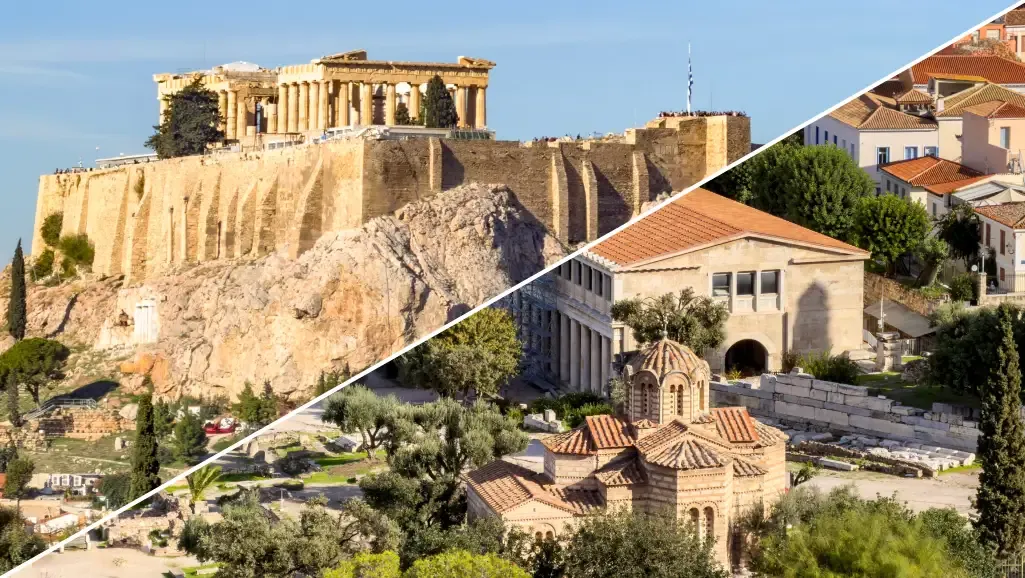
Yes. For anyone with an interest in how classical Athens actually governed itself, it is worth visiting the Ancient Agora, the excavated civic and commercial square that spread north-west of the Acropolis, below the hill of the Areopagus. The sections below set out the reasons, the parts of the site that carry them, what to expect at the gate, and the practical details that shape a visit.
Main reasons why visiting the Ancient Agora is worthwhile
Athenian democracy did not operate on the Acropolis. It operated on this open ground, and four separate arguments make it worth visiting the Ancient Agora rather than looking in over the railings.
The first is the layout itself. The west side of the square held the civic machinery of the classical city, the council house and the state archives among it, and the Monument of the Eponymous Heroes served as the public notice board, carrying new legislation, public events and military conscription lists. Walking that line places a visitor inside the working plan of a democracy rather than in front of architecture built to display power.
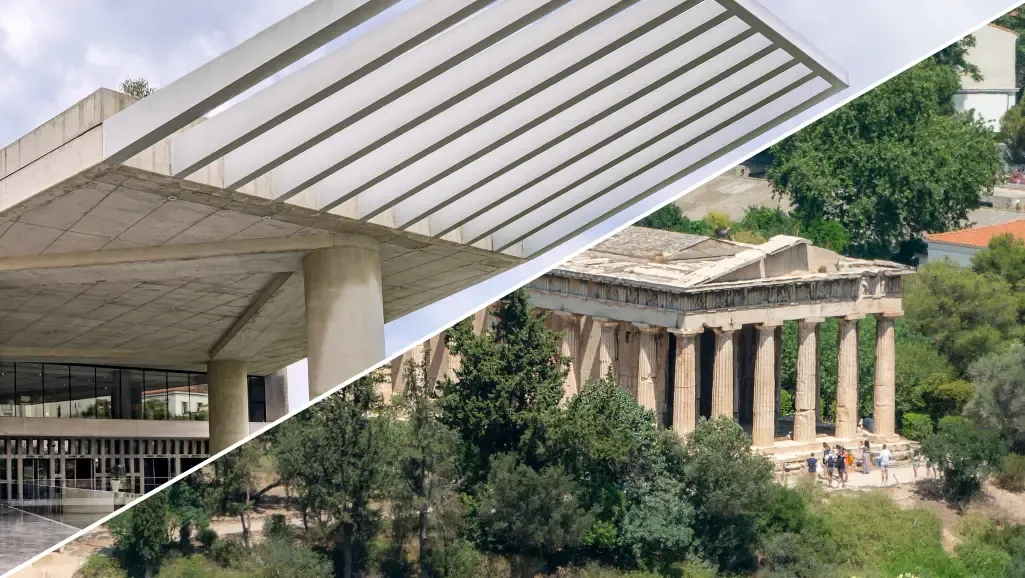
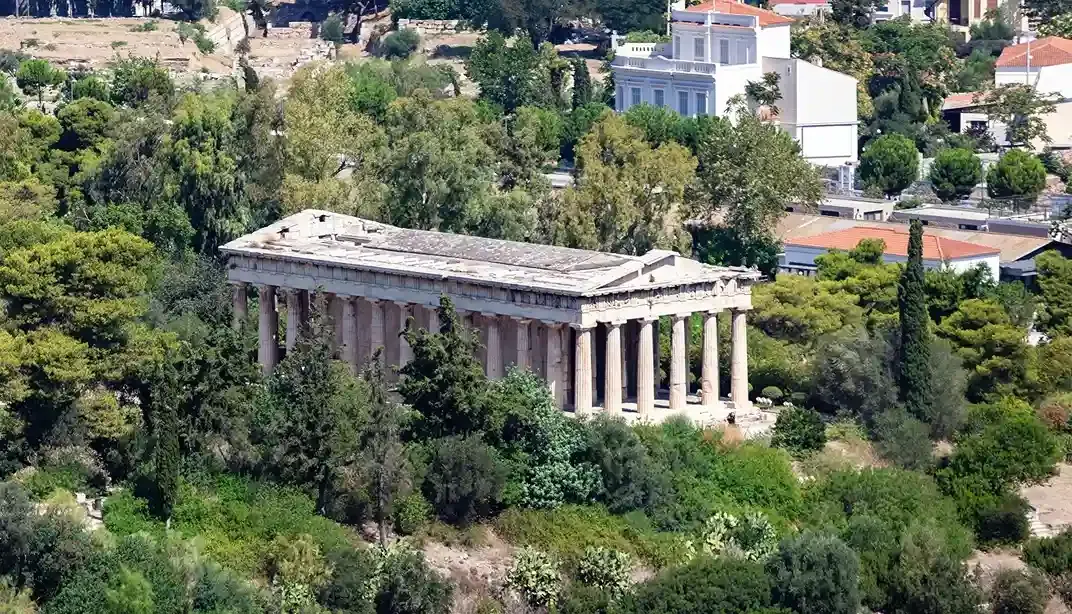
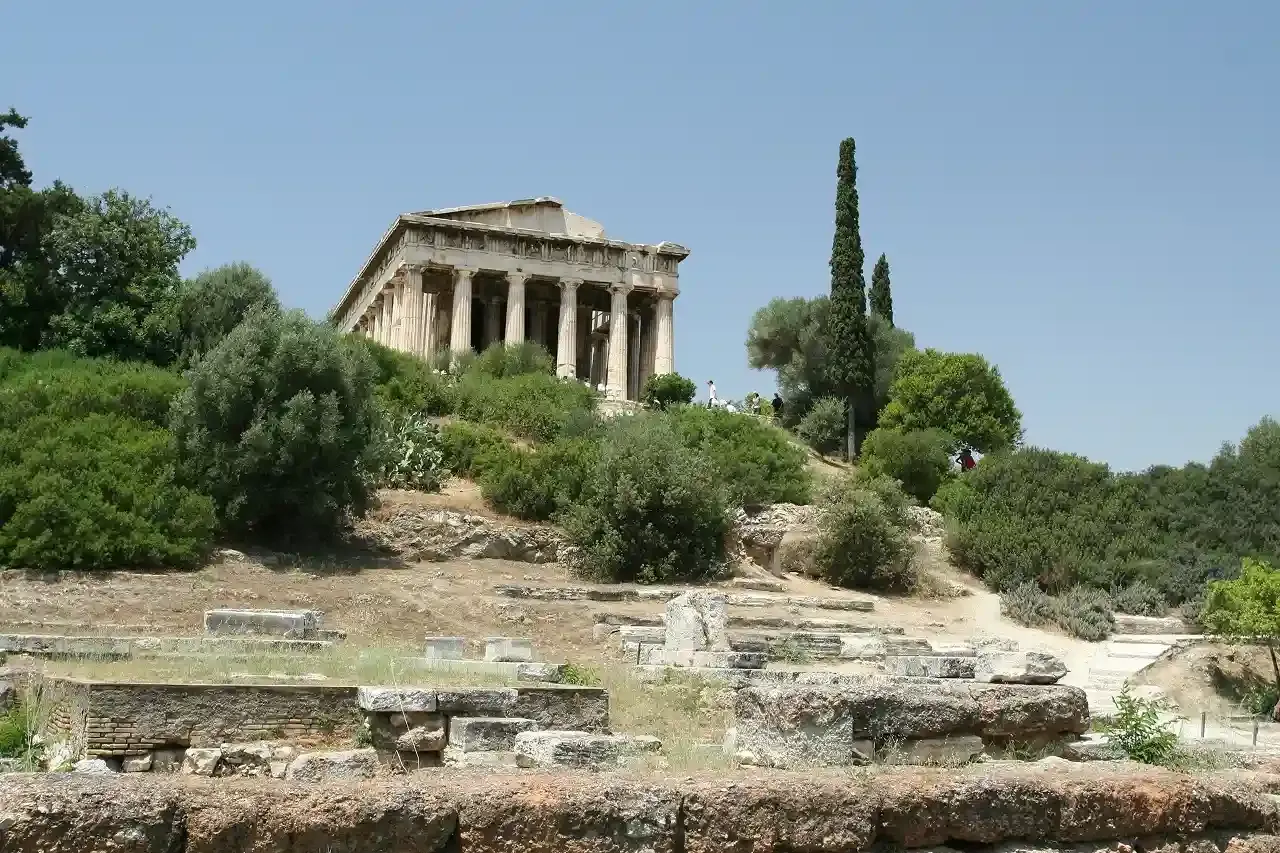
The second is the Temple of Hephaestus, the best-preserved Doric temple in the Greek world, which doubles as the viewpoint over the excavation. As one traveller puts it on the Tripadvisor Athens forum, "The Ancient Agora has the Temple of Hephaestus and from here you can get a good view across the full site."
Scale is the third. The site reads in a single visit, which the larger Roman complexes do not. Comparing Athens with Rome in another forum thread, a visitor notes that "The two in Athens are much smaller and easier to navigate."
Setting closes the list. Excavators replanted the square with antique flora from 1954, so the ruins stand among pines and shade rather than on bare gravel, a few minutes from the Roman Agora, which is a separate, later and much smaller ticketed site that visitors regularly mistake for this one.
Book your ticket to the Ancient Agora
Booking online asks for a date and an entry time, though the ticket stays valid from an hour before to an hour after it, and tickets are also sold at the gate. The same ticket opens the whole archaeological park, from the Temple of Hephaestus on its hill to the Odeon figures in the middle of the square. Visitors book the Ancient Agora entry ticket before arriving at the gate:
What makes the Ancient Agora so important?
The Agora is the one place in Athens where the civic city survives as ground rather than as monument. Its buildings housed the council, the courts and the market that made classical Athens function, and the American School of Classical Studies has been uncovering them since the 1930s. Four structures carry most of that story.
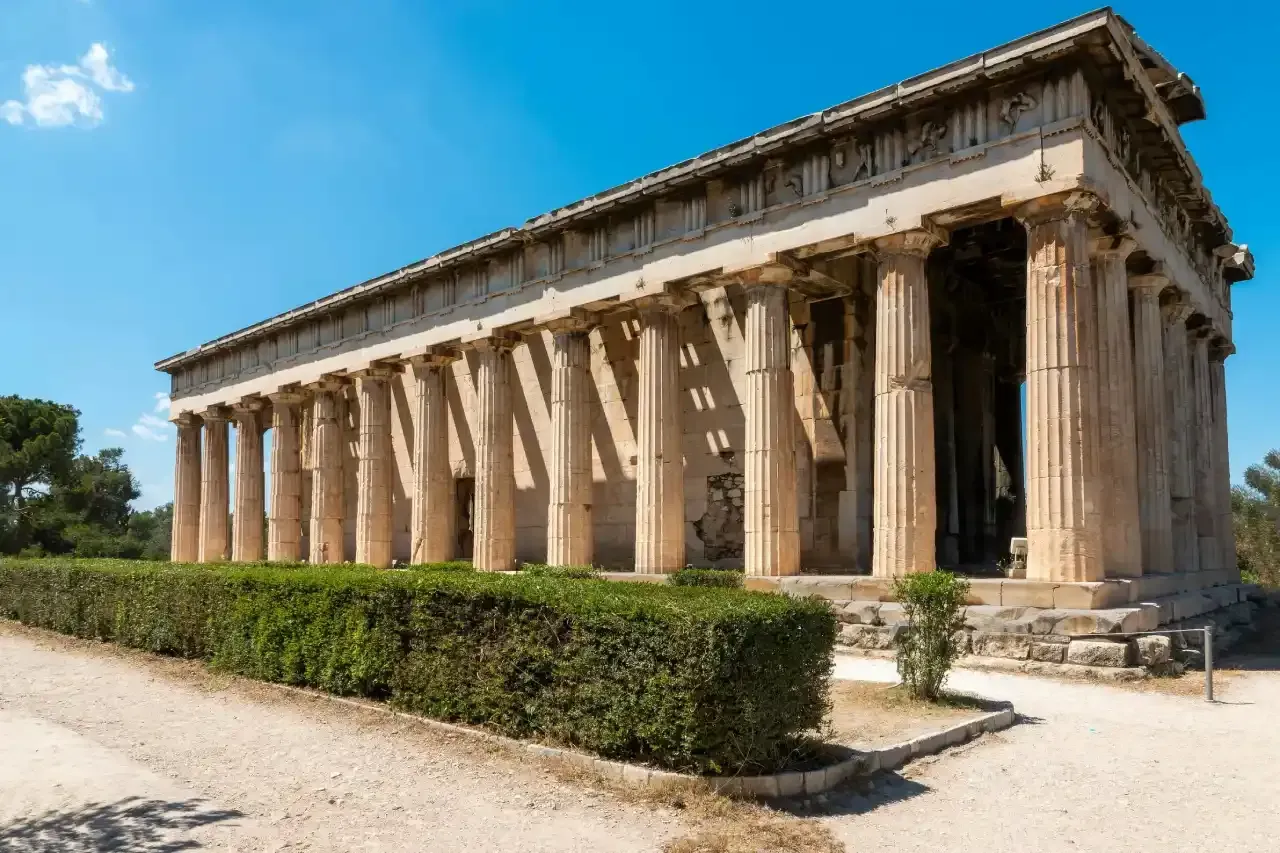
Temple of Hephaestus
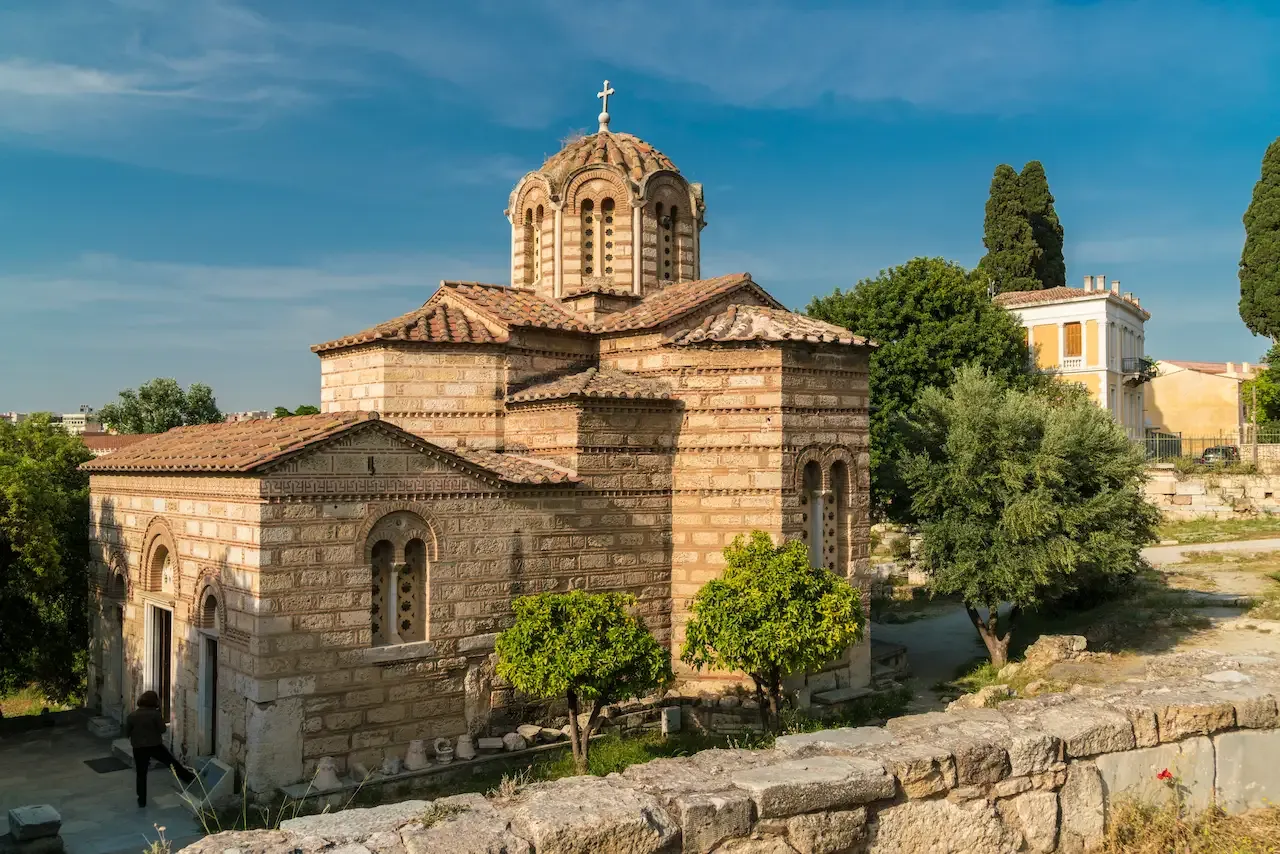
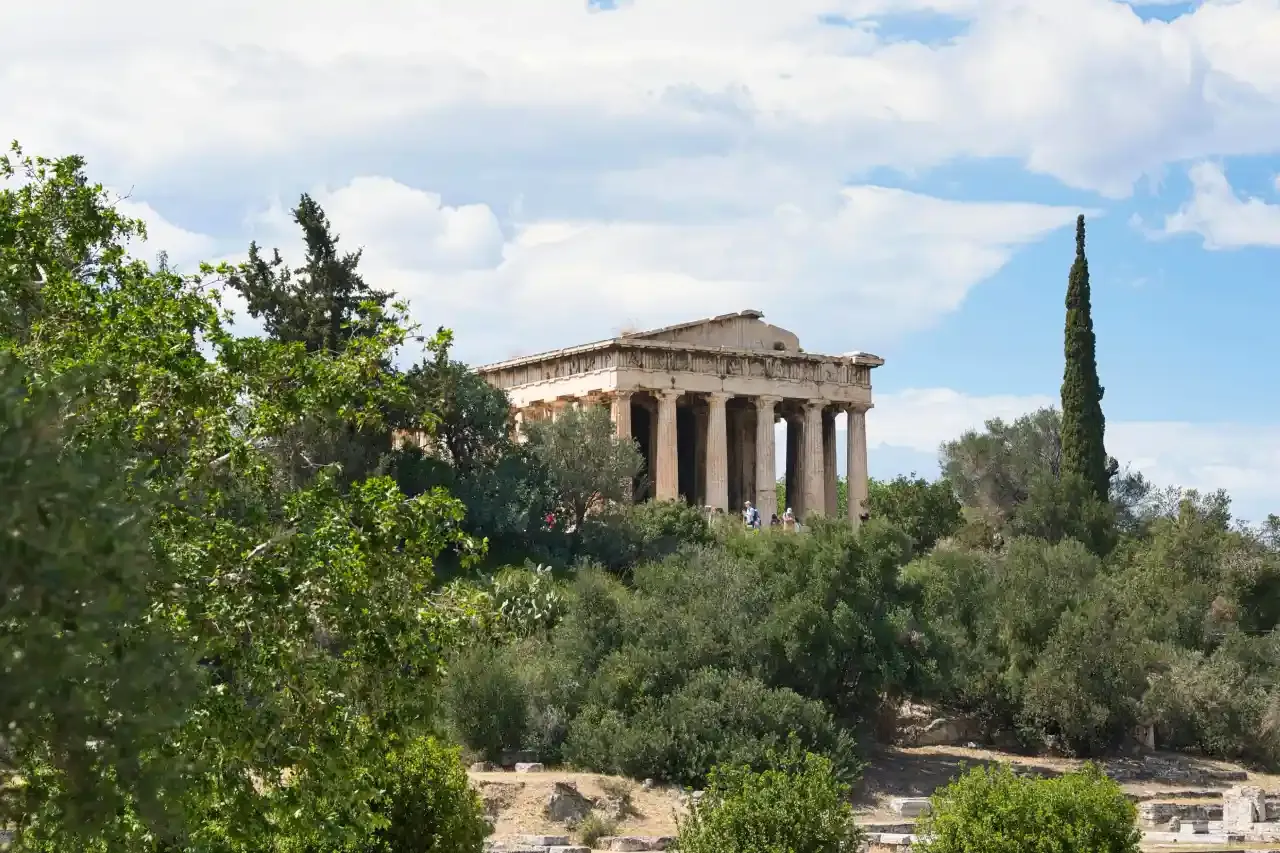
Work on the Hephaisteion began around 449 BC and continued into the 410s BC, inside the building programme Pericles drove across the city. It crowns Agoraios Kolonos, the low hill on the western edge of the site, and survives as the best-preserved Doric peripteral temple anywhere in the Greek world, with six columns across its short sides and thirteen along its flanks, all cut from Pentelic marble. Two craft deities shared it, Hephaestus for the metalworkers and Athena Ergane for the potters. From the seventh century until 1834 it served as the Greek Orthodox church of Saint George Akamates. Guidebooks still call it the Theseion, though it was never dedicated to Theseus, and the interior is not enterable.
How long are the queues?
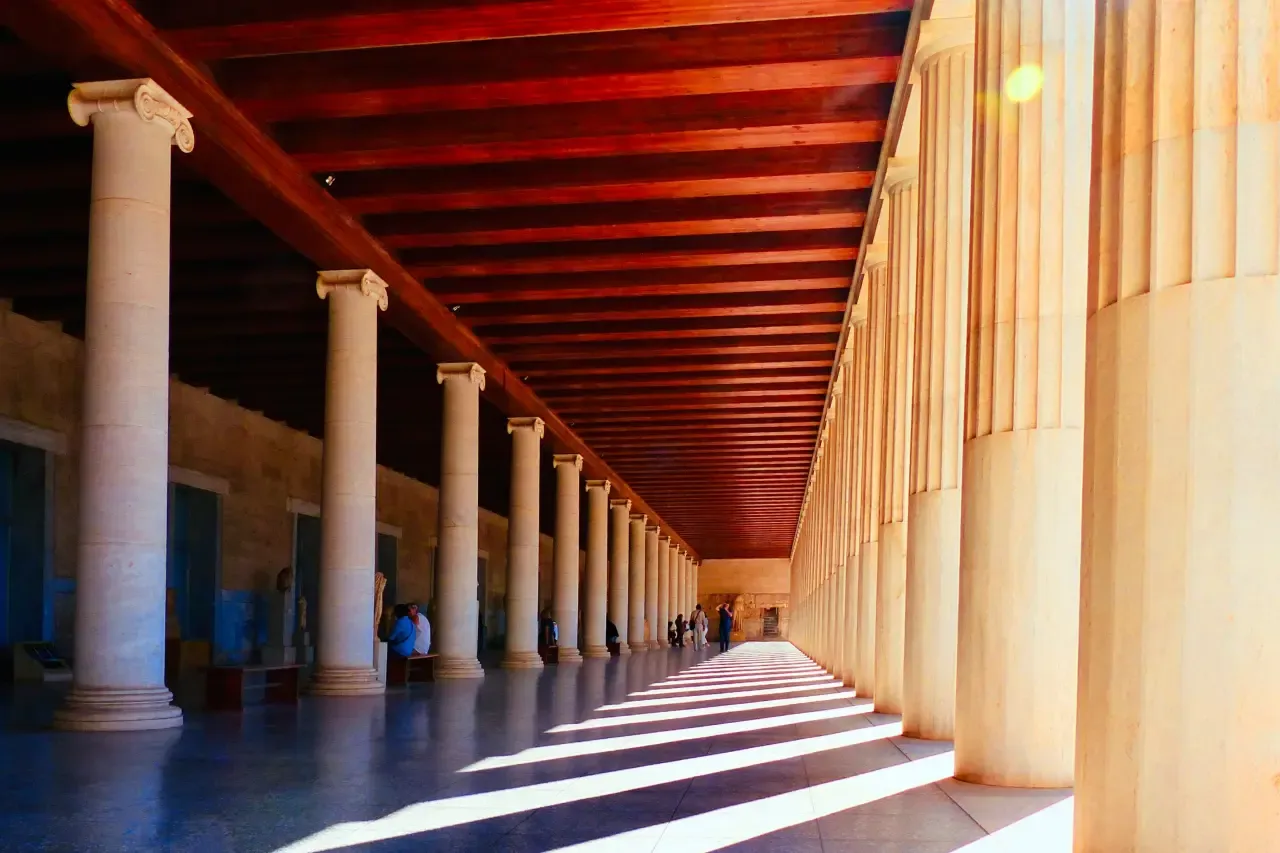
The Ancient Agora does not produce the queues the Acropolis does. One gate admits visitors, the archaeological site gate on Thiseio Square, and the ticket control there is the only point where a line can form. A Tripadvisor Destination Expert for Athens answers the question flatly: "There’s never long lines but can be a bit of a wait if you arrive at the same time as a tour group." The wait described there comes from coach arrivals rather than from a standing line.
Size is the reason the site takes its visitors so easily. On the attraction's question and answer page a reviewer explains that "The Ancient Agora is a large open space, so it is never crowded and you can definitely buy an entrance ticket on any day you want to visit it."
Booking online in advance still helps. It fixes the date, removes the desk step at the gate, and counts for most around the middle of the day and on Sundays, when the site is busiest and coaches arrive one after another.
Other tips to keep in mind
Other tips to keep in mind
A few practical points shape the visit at ground level:
- Terrain: gravel paths, original paving, and steps up to the Temple of Hephaestus.
- Shade: the site is open air with little cover, and it has a shop but no published cafe.
- Photography: handheld shots are fine, but drones need clearance from the aviation authority and the Ministry, and a tripod counts as professional equipment.
- Food, drink and smoking: the site rules prohibit consuming food or beverages, and smoking.
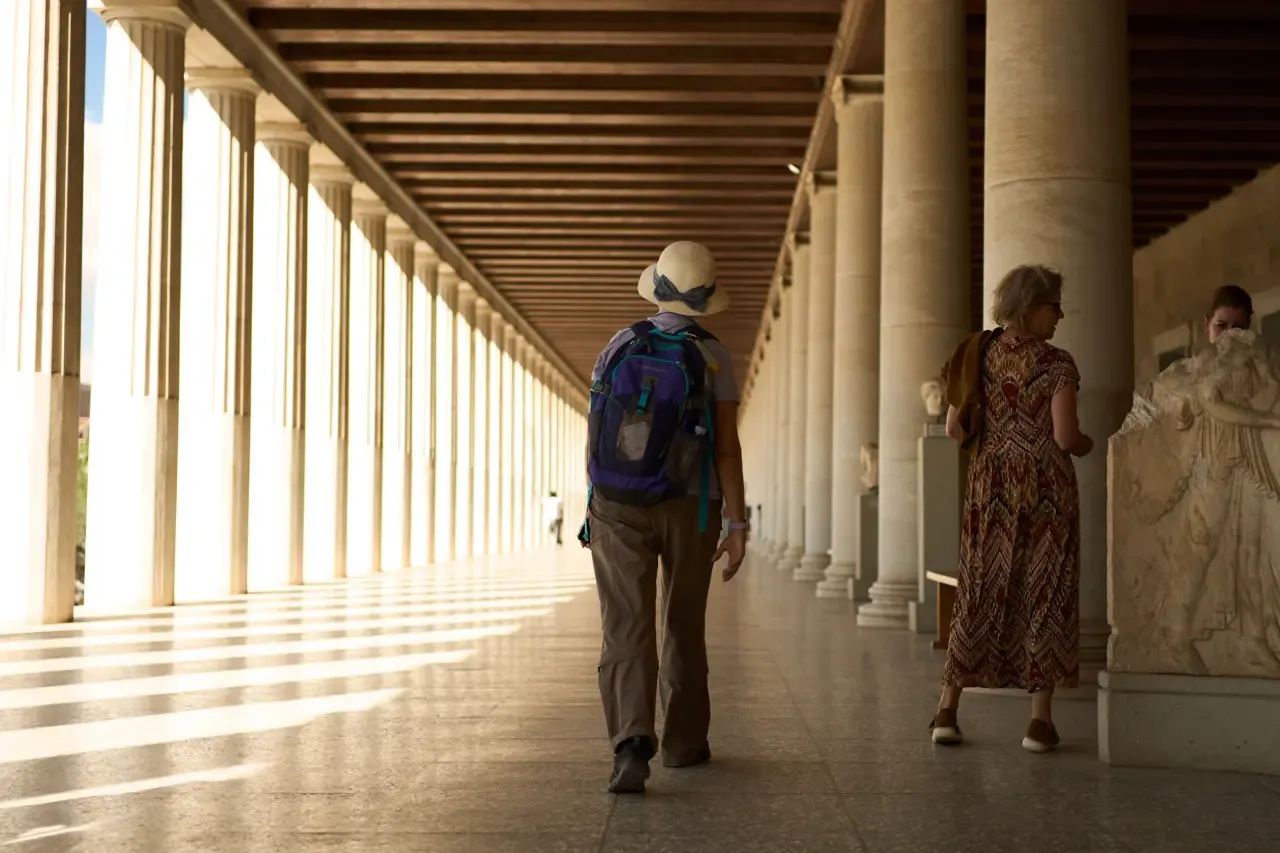
- Step-free access: arranged in advance through the Apostolou Pavlou gate; the Stoa museum has ramps, a lift and accessible restrooms.
- Time: ninety minutes to two hours suits most visits, though no official figure exists.
More information about the Ancient Agora
Opening hours
The site runs on a seasonal ladder rather than a plain summer and winter split, and the last admission moves with each period.
How to get
The postal address stays 24 Adrianou Street, Athens 105 55, though entry is through Thiseio Square. Two metro stations sit within a short walk.
Ancient Agora tickets
Every entry option for the archaeological site sits on one hub, where the date and entry time are chosen at booking.