Ancient Agora and Roman Agora
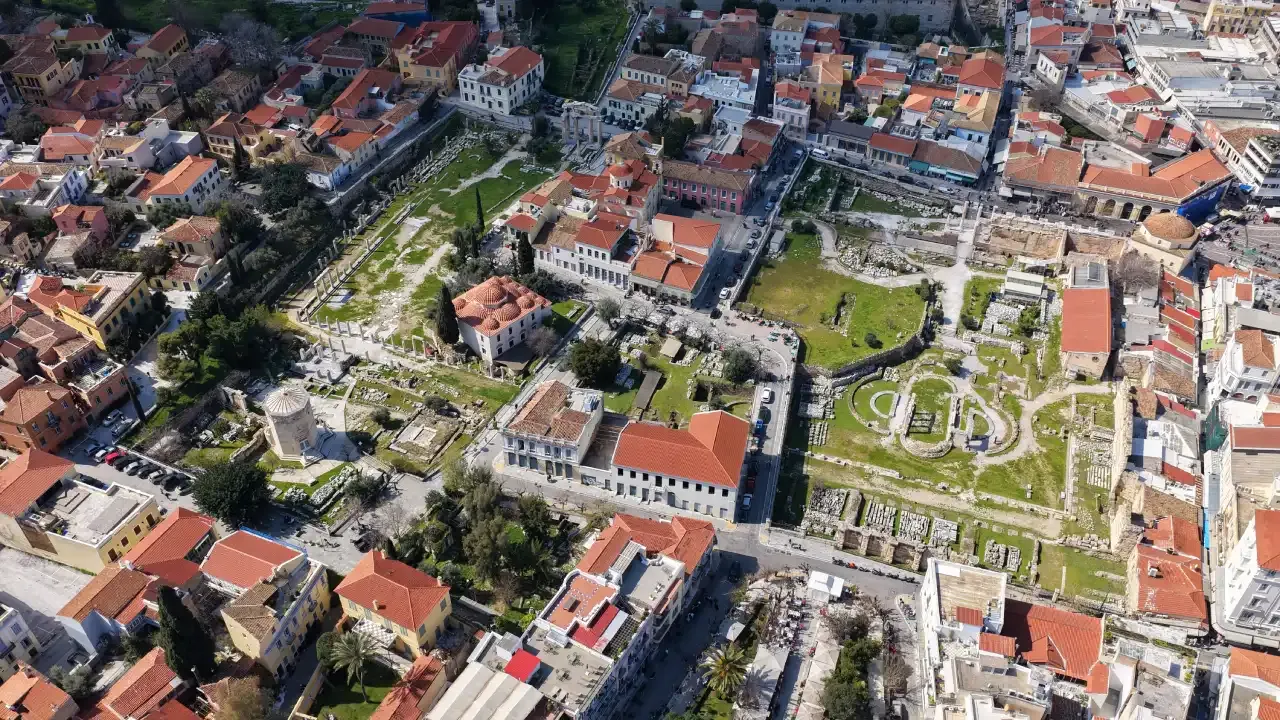
Athens houses two historical public spaces located near the Acropolis: the Ancient Agora and Roman Agora. These sites served as central hubs for civic, commercial, and political life during different eras of classical antiquity. Visiting both monuments allows travelers to observe the architectural and administrative evolution of Athens from the Greek Classical period through Roman rule.
Understanding the Agoras of Athens
What is the Agora and why was it important?
An agora served as the primary public gathering space in ancient Greek city-states, functioning as the political, commercial, administrative, and social heart of the municipality. Citizens gathered in these open spaces to trade goods, participate in democratic governance, attend judicial proceedings, and debate philosophy.
In Athens, the agora operated as the physical manifestation of democratic ideals. Government officials held meetings in dedicated buildings surrounding the square, while merchants set up temporary stalls to sell everyday items. Furthermore, religious festivals and athletic competitions took place within its boundaries. The space allowed individuals from different social classes to interact daily, making it the central engine that drove the civic and economic functions of the entire city-state.
Is the Roman Agora the same as the Ancient Agora?
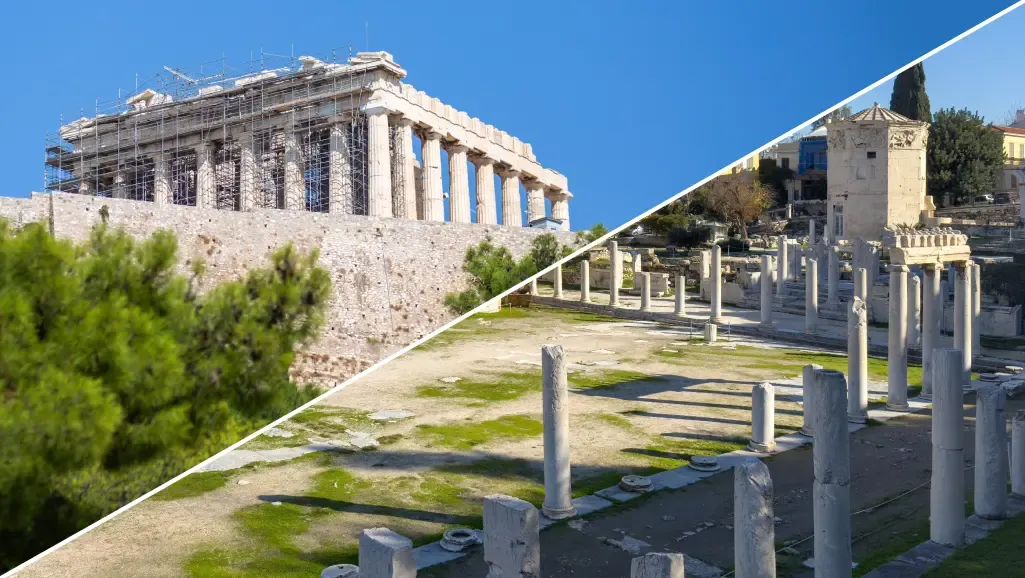
No, comparing the Ancient Agora and Roman Agora reveals 2 distinct archaeological sites separated by a few hundred meters and several centuries of history.
Classical Greeks established the Ancient Agora 1st during the 6th century BCE, developing it gradually over centuries into a sprawling complex for government and society. Conversely, the Romans constructed their own commercial market much later, beginning in the 1st century BCE, under Imperial Roman rule. The transition occurred because the original Greek site became too crowded with monuments and administrative buildings to function effectively as a marketplace. Consequently, Roman leaders financed a brand new, purpose-built structure exclusively for trade, leaving the older site primarily for civic and cultural activities.
Historical profiles
What is the Ancient Agora known for?
The Ancient Agora holds global recognition as the birthplace of Athenian democracy. Within this space, leaders like Pericles governed the state, and philosophers like Socrates engaged citizens in public debates.
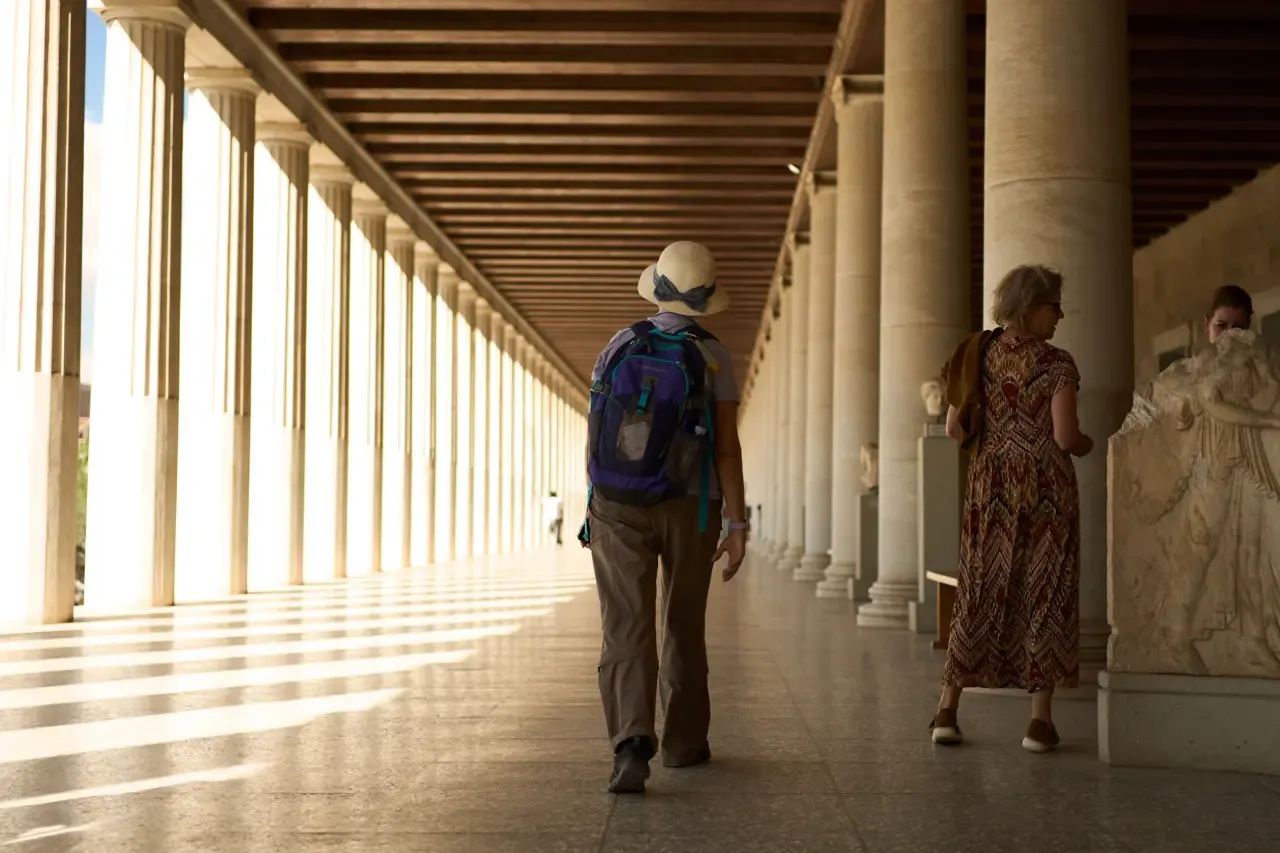
Today, the archaeological site features the Temple of Hephaestus, which stands as a remarkably intact Classical Greek temple due to its later conversion into a Christian church. Visitors also recognize the area for the fully restored Stoa of Attalos. Originally constructed in the 2nd century BCE by a Pergamene king, modern architects rebuilt the stoa in the 1950s using original materials and techniques. This impressive 2-story colonnade now houses the Museum of the Ancient Agora, displaying thousands of artifacts, including voting disks, ancient coins, and everyday pottery.
What is the Roman Agora in Greece?
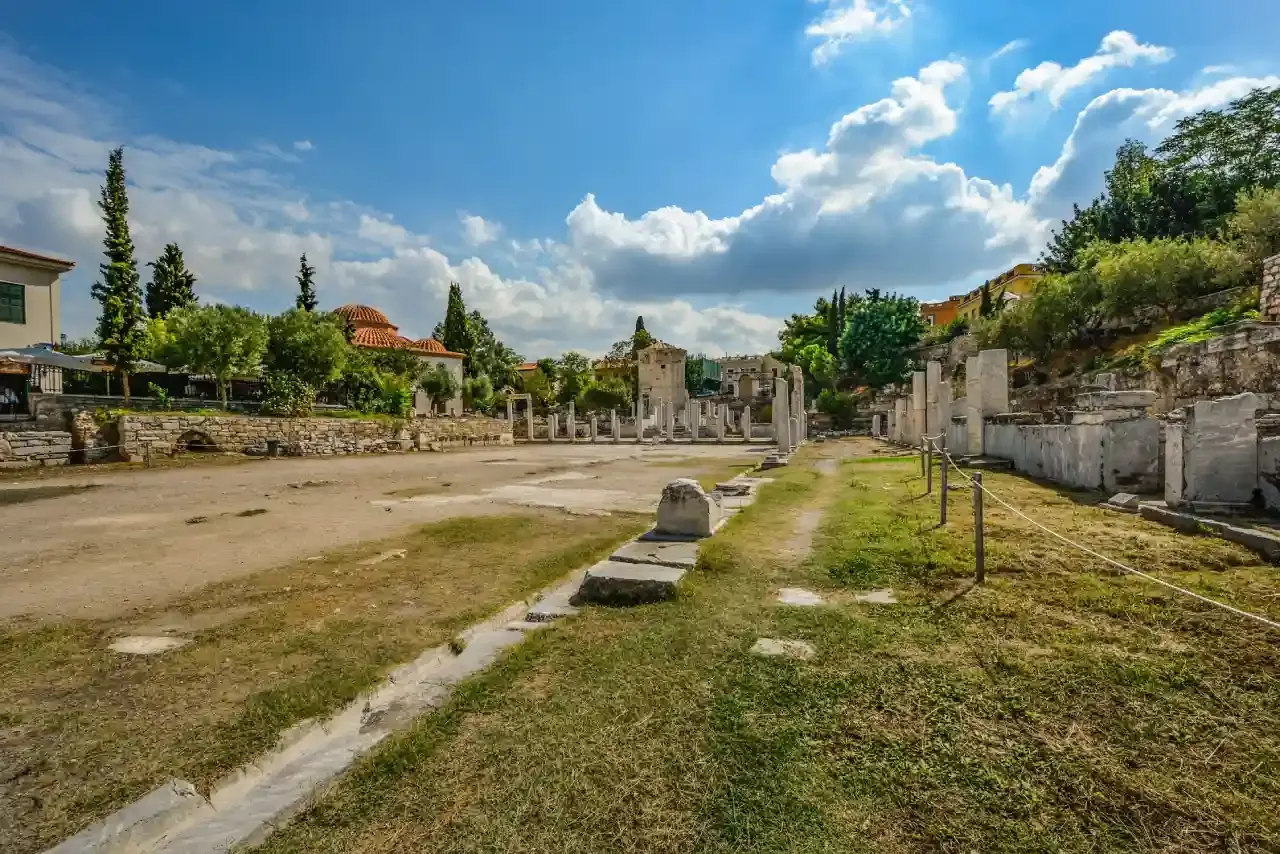
The Roman Agora in Greece exists as an architectural complex built between 19 BCE and 11 BCE with financial donations from Julius Caesar and Emperor Augustus. The complex served primarily as a dedicated commercial hub during the Imperial Roman period. As administrative activities filled the older Greek center, Roman authorities established this enclosed, open-air marketplace to concentrate merchant activity, regulate regional trade, and streamline tax collection.
Its design centered around an open courtyard encircled by covered stoas that housed private shops and storage units. This purpose-built infrastructure represents the architectural shift in Athens from traditional Greek civic life toward structured Roman commercial organization and municipal control.
Comparative overview
What is the difference between the Ancient Agora and the Roman Agora?
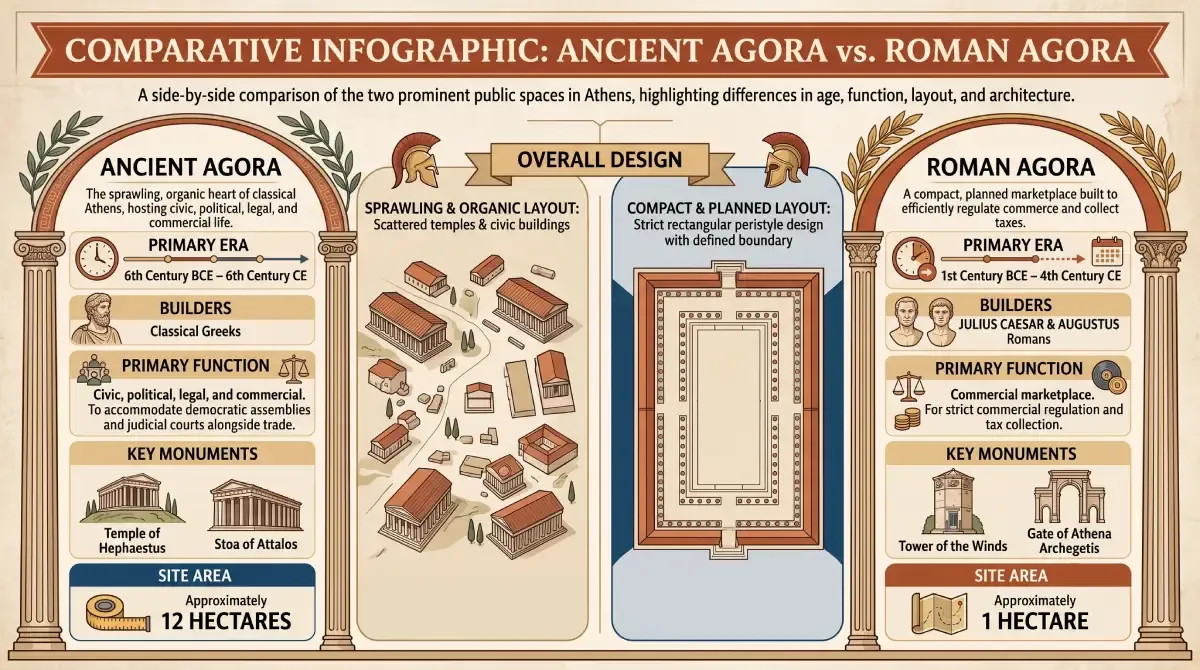
When evaluating the Ancient Agora vs. Roman Agora, primary differences center on age, size, function, and spatial layout. The Greek site covers a sprawling area of approximately 12 hectares, evolving organically over centuries to host diverse civic, religious, and political activities. In contrast, the Roman site functioned as a compact, planned commercial marketplace covering roughly one hectare.
The Greeks built the first space to accommodate democratic assemblies and judicial courts alongside trade. Later, the Romans built their enclosed square strictly to regulate commerce and collect taxes efficiently. Architecture also differs significantly; the older Greek space features scattered temples and civic buildings, whereas the Roman complex utilized a strict rectangular peristyle design to enclose merchants within a defined boundary.
| Feature | Ancient Agora | Roman Agora |
|---|---|---|
| Primary Era | 6th Century BCE – 6th Century CE | 1st Century BCE – 4th Century CE |
| Builders | Classical Greeks | Romans (Julius Caesar, Augustus) |
| Primary Function | Civic, political, legal, and commercial | Commercial marketplace |
| Key Monuments | Temple of Hephaestus, Stoa of Attalos | Tower of the Winds, Gate of Athena Archegetis |
| Site Area | Approximately 12 hectares | Approximately 1 hectare |
Is the Ancient Agora worth seeing?
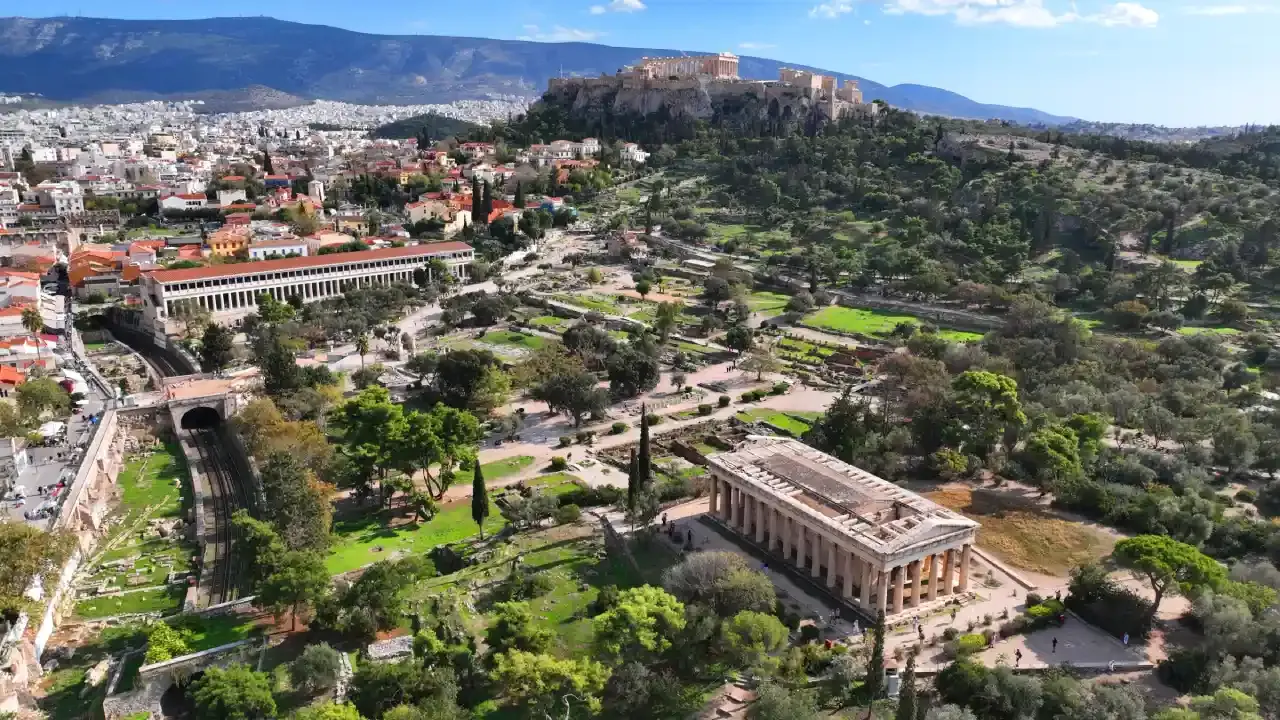
Yes, travelers find it exceptionally worth visiting the Ancient Agora due to its substantial historical and educational value. Visitors can walk through the fully reconstructed Stoa of Attalos, which offers a rare opportunity to experience a multi-story ancient building with its roof and colonnades intact. Guests also inspect original artifacts in the on-site museum, providing context for daily life in classical antiquity.
Furthermore, visitors can view 5th-century BCE stone masonry at the Temple of Hephaestus, considered the best-preserved Doric temple in Greece. The expansive, park-like setting offers a quiet retreat from the busy city streets. Exploring these grounds allows travelers to stand directly where fundamental concepts of Western philosophy and democratic governance originated, making it an essential historical destination.
How long does it take to walk around Ancient Agora?
Walking through the Ancient Agora requires between 2 and 3 hours for a comprehensive visit. This duration allows adequate time to navigate the expansive grounds and examine the multiple ruins scattered across the site.
Visitors typically spend at least 30 minutes climbing the hill to view the Temple of Hephaestus and photograph its well-preserved colonnades. Afterward, guests usually allocate another 45 minutes to explore the museum collection housed inside the 2-story Stoa of Attalos. The remaining time allows travelers to walk along the Panathenaic Way, inspect the foundations of various civic buildings, and read the informational plaques placed throughout the park. Those who prefer a hurried pace can complete the main circuit in approximately 90 minutes.
Book your Ancient Agora tickets
Is the Roman Agora worth seeing?
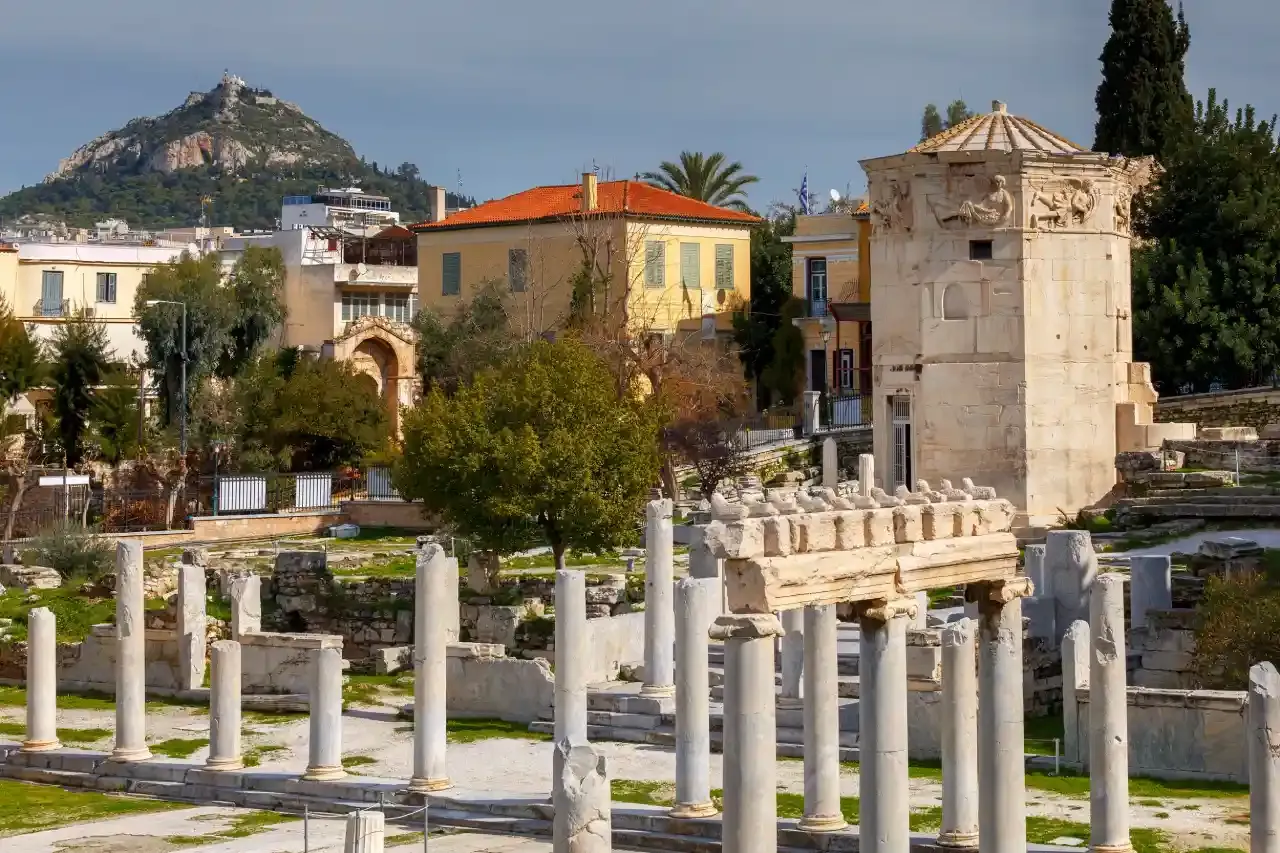
Yes, the Roman Agora offers valuable architectural insight into Roman-era Athens and warrants a visit. The site houses the Tower of the Winds, an exceptional ancient meteorological station that functioned simultaneously as a water clock, sundial, and weather vane. This octagonal marble structure remains almost completely intact, displaying intricate reliefs of 8 wind deities.
Visitors also observe the imposing Gate of Athena Archegetis, which stands supported by 4 massive Doric columns. Although much of the central marketplace exists now only as foundations and scattered columns, the site clearly demonstrates how Roman engineers organized urban commercial spaces. Its compact size makes it an easy addition to any itinerary, providing a quick but informative glimpse into the city's imperial past.
How long to spend at Roman Agora?
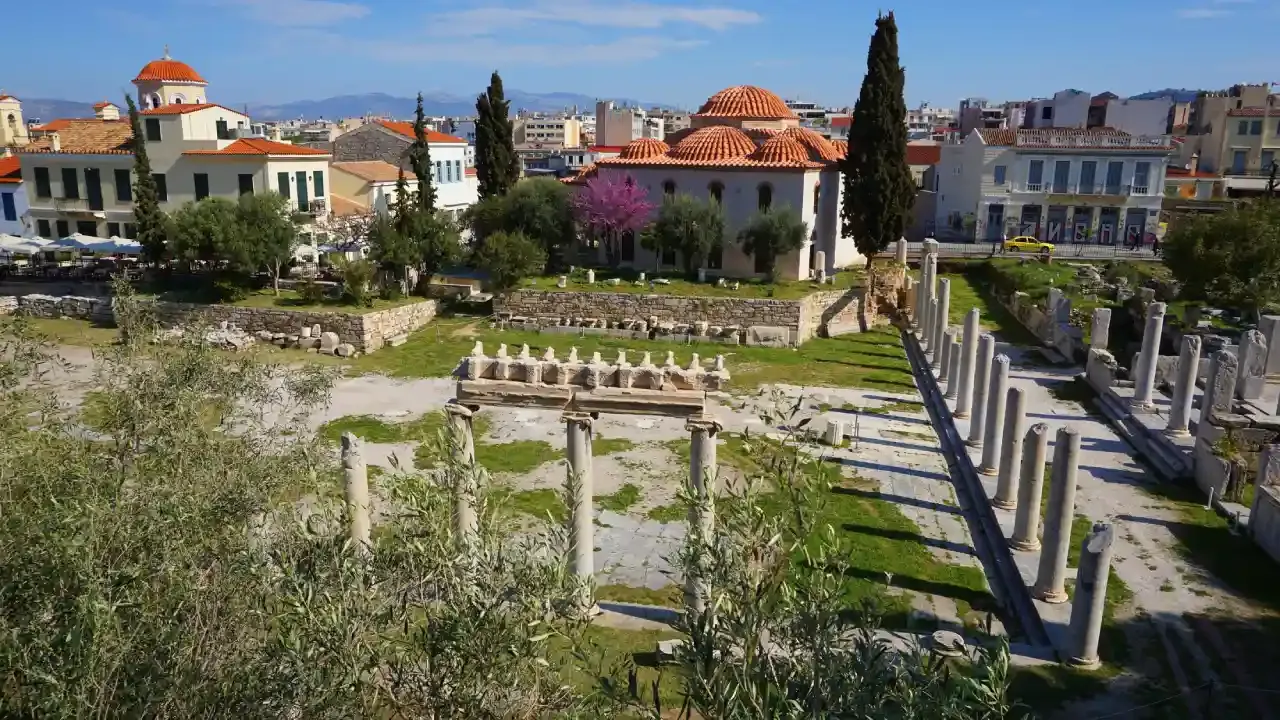
Visitors generally spend between 30 and 45 minutes exploring the Roman Agora. Because the site consists of a single, defined central courtyard, guests can view all the remaining ruins and architectural elements rather quickly. Unlike the sprawling Greek counterpart, the Roman marketplace presents a compact layout that requires minimal walking.
Most travelers use the first 10 minutes to photograph the monumental Gate of Athena Archegetis at the entrance. The majority of the visit then focuses on examining the intricate details of the Tower of the Winds at the eastern edge. Finally, visitors spend the remaining time walking along the perimeter to view the foundational remains of the colonnaded shops, the public latrines, and the old market offices.
Book your ticket to visit Roman Agora
Plan your visit in advance
Opening hours
Checking the Ancient Agora opening hours reveals seasonal shifts established by the Ministry of Culture. During summer, the site operates from 08:00 to 19:30, while winter operations run from 08:00 until 16:30. Autumn brings bi-weekly reductions in operating time through September and October.
Similarly, Roman Agora opening hours follow a seasonal schedule. Summer schedules extend from 08:00 to 20:00, whereas winter access reduces to 08:00 until 15:00.
Both locations implement gradual early closures during September and October due to decreasing daylight, ending operations between 17:30 and 19:30 depending on the specific date. Final admissions for both sites close 20 to 30 minutes prior to gate closures.