
What to see in Ancient Agora
The Ancient Agora of Athens served as the commercial, political, and social center of the classical city. Visitors exploring the archaeological site discover preserved temples, reconstructed colonnades, marble statues, and foundational ruins spread across a green landscape beneath the Acropolis. Knowing what to see in Ancient Agora helps travelers navigate the complex history of civic life, philosophy, and democracy in ancient Greece.
Inside the Ancient Agora
Key civic structures, religious monuments, and historical display spaces define the experience inside the Ancient Agora. The following locations represent the primary historic sites preserved within the grounds:
Temple of Hephaestus
Temple of Hephaestus
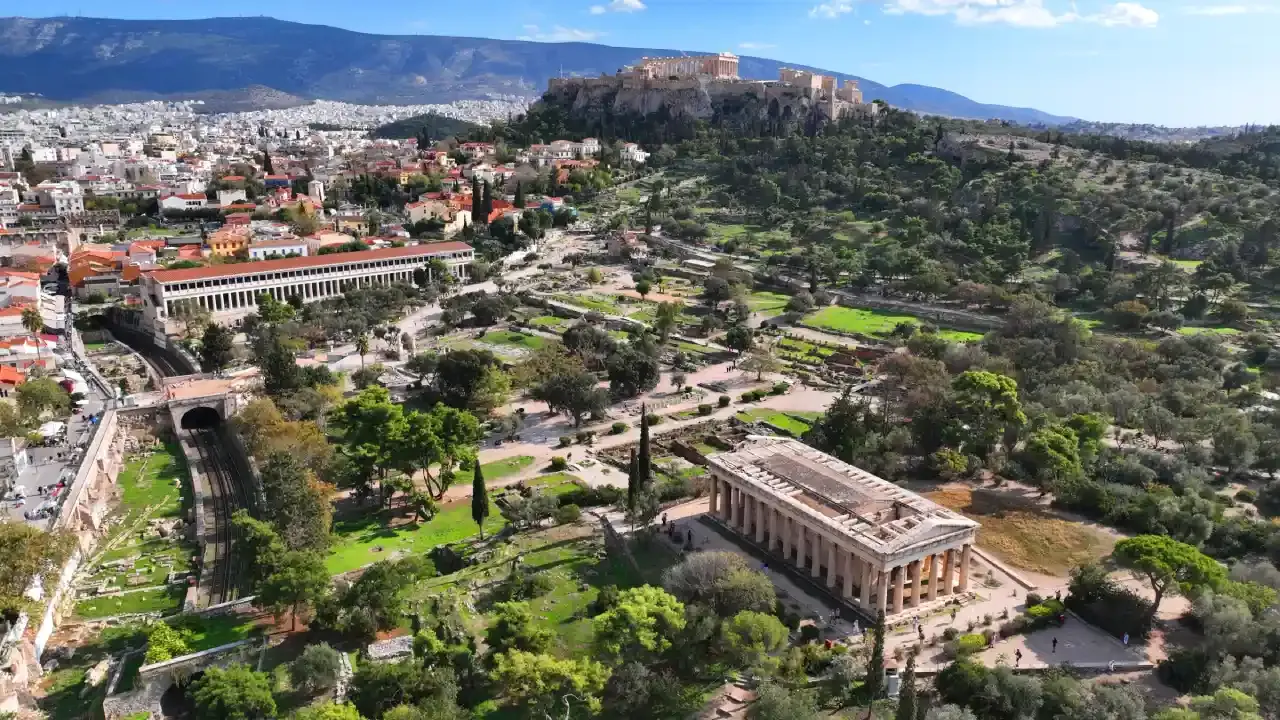
The Temple of Hephaestus stands on the Agoraios Kolonos hill as one of the best-preserved ancient Greek temples in existence. Built between 449 and 415 BC, this Classical Doric structure features intact marble columns, a complete frieze, and a roof structure.
Workers originally dedicated the monument to Hephaestus, the patron god of metalworking, and Athena Ergane, the patroness of crafts. Sculpted friezes along the exterior depict the exploits of Theseus and Heracles. As a primary highlight when deciding what to see in Ancient Agora, the temple provides visitors with architectural details that survived centuries of urban changes, church conversions, and natural disasters, offering a clear view of classical design.
Stoa of Attalos
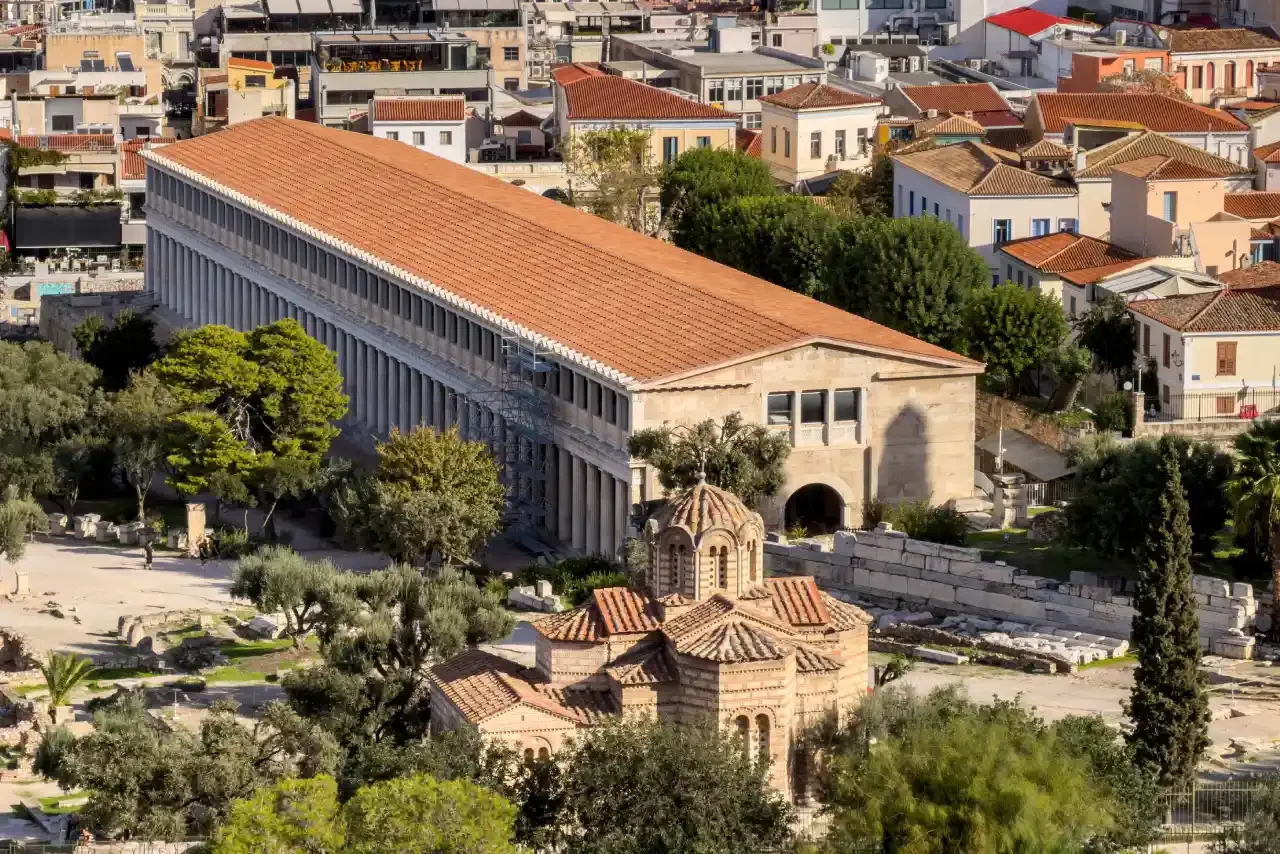
King Attalos II of Pergamon constructed the original Stoa of Attalos during the 2nd century BC as a gift to the city of Athens. The American School of Classical Studies reconstructed the two-story building in the 1950s using original foundations and limestone materials. Today, the facility houses the Museum of the Ancient Agora, displaying everyday artifacts, voting tokens, pottery, and marble busts uncovered during site excavation.
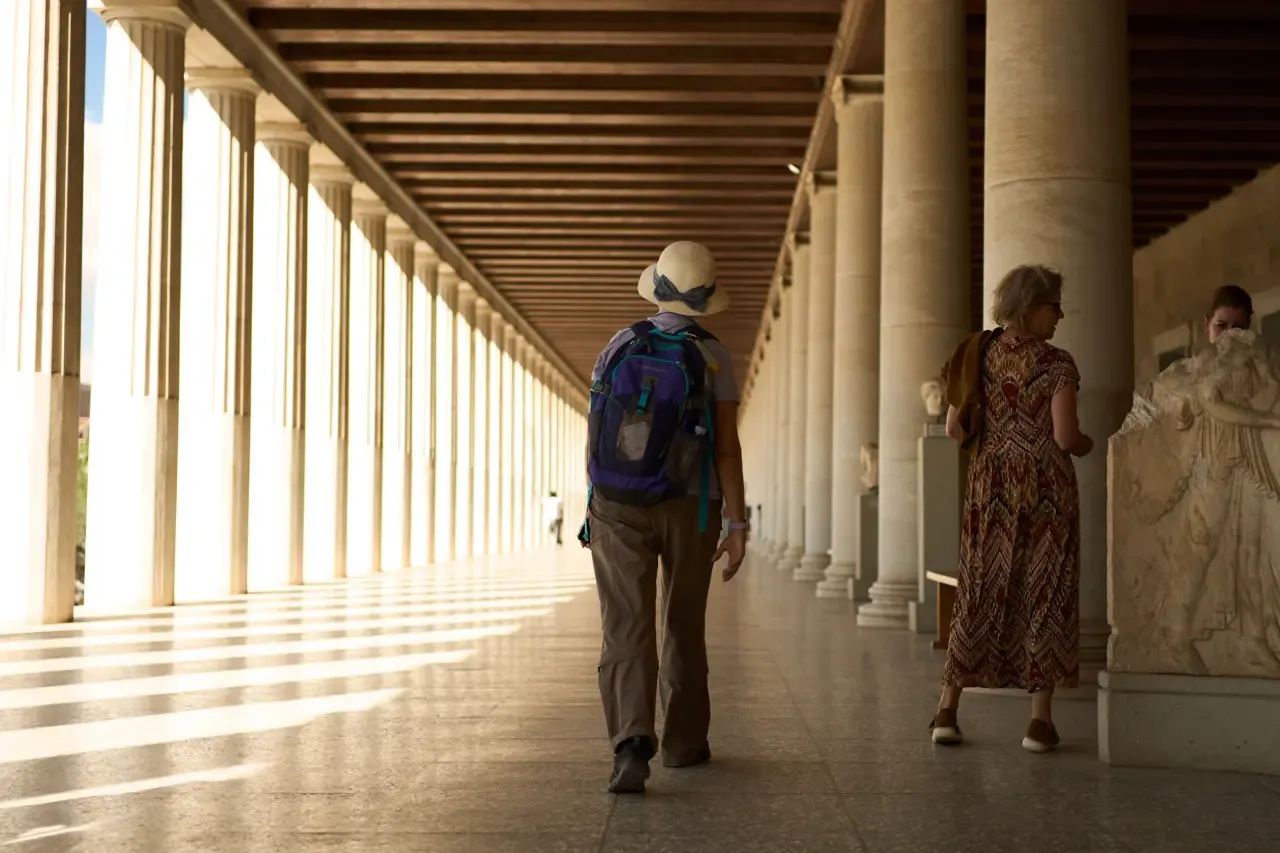
The wide shaded colonnades showcase classic Doric columns on the ground floor and Ionic columns on the upper level. Positioned inside the Ancient Agora, this reconstructed building provides visitors with direct insight into classical Athenian commerce, civic assemblies, and public shelters.
Church of the Holy Apostles
Church of the Holy Apostles
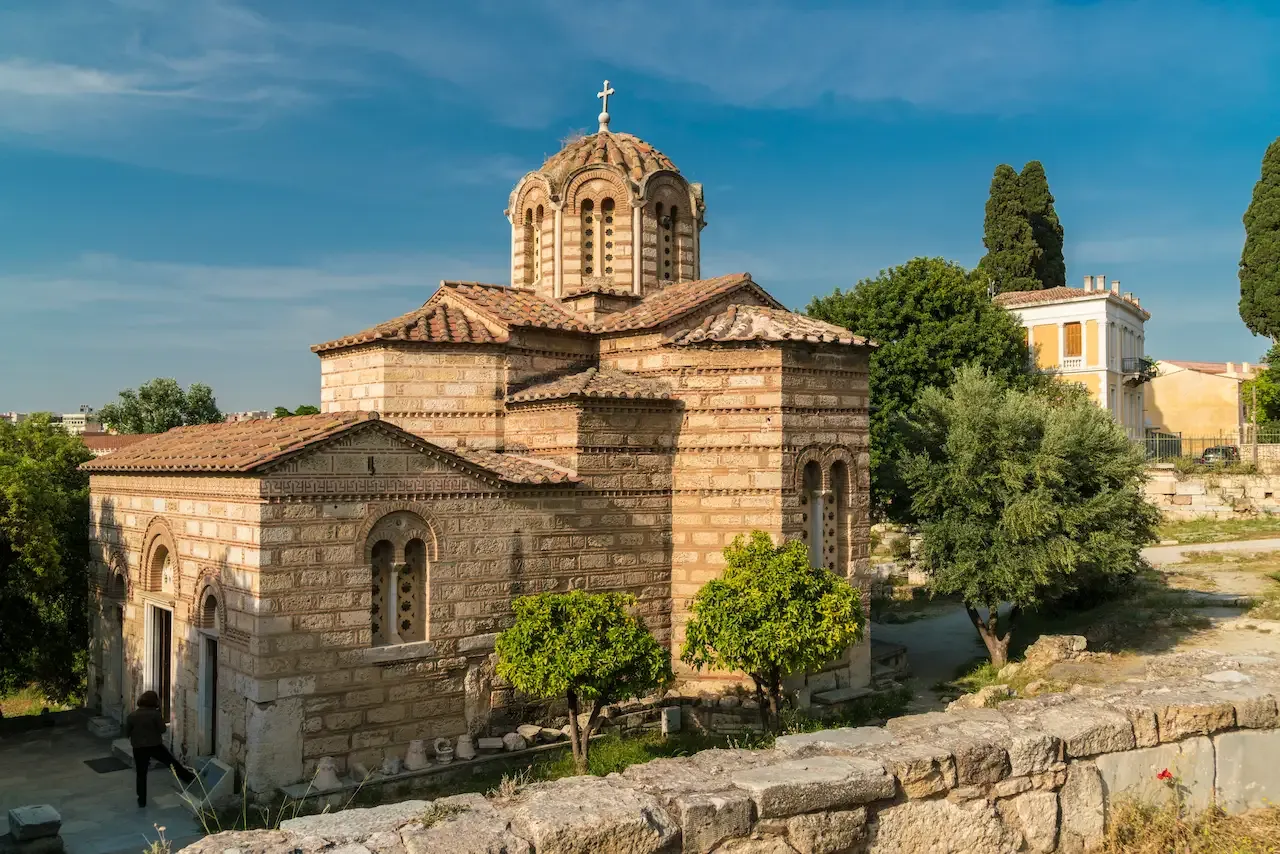
The Church of the Holy Apostles, built in the late 10th century, marks the Byzantine transformation of the historical site. Located in the southeastern corner, it stands as the only medieval building preserved entirely intact within the archaeological zone. The architectural design features a dome supported by four columns and an exterior wall pattern created through decorative brickwork.
Inside, restored 11th-century frescoes line the sanctuary walls, portraying biblical figures and saints. The church highlights the continuous urban evolution of Athens beyond the classical period, expanding the list of unique things to see in Ancient Agora and showing how medieval Christian communities repurposed classical building stones.
Odeon of Agrippa
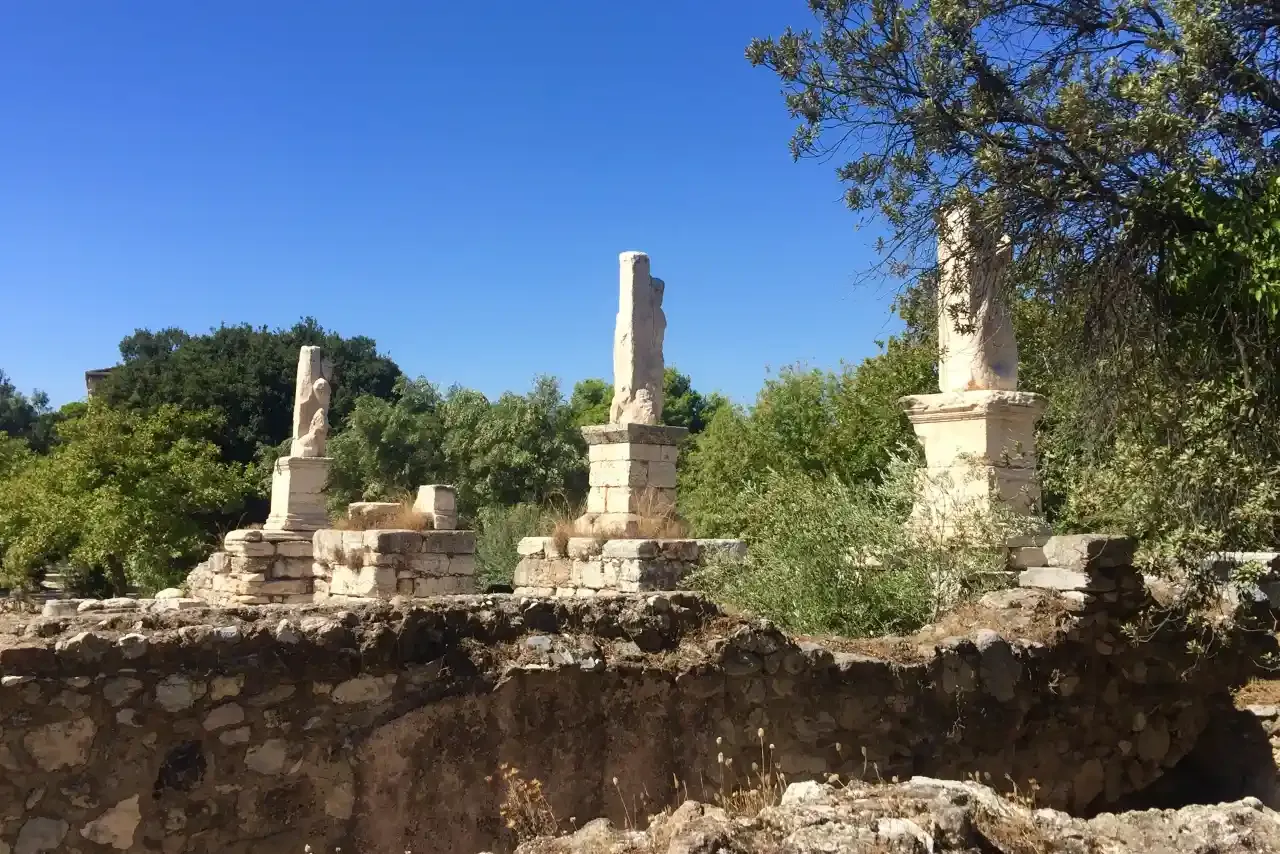
Marcus Vipsanius Agrippa commissioned the Odeon of Agrippa around 15 BC as a massive covered concert hall located at the center of the site. The original two-story auditorium seated roughly 1,000 spectators for musical performances and lectures. Structural issues caused the roof to collapse during the 2nd century AD, leading to subsequent renovations before Herulian invaders destroyed the building in 267 AD.
In the 5th century AD, local builders constructed a large gymnasium complex over the ruins, incorporating colossal carved statues of Giants and Tritons into the entrance facade. Today, these surviving stone figures serve as a striking landmark inside the Ancient Agora, illustrating Roman influences on Athenian civic architecture.
Architecture of Ancient Agora
The architecture of the Ancient Agora reflects the evolution of Greek building techniques from the Archaic to the Roman periods. Master builders utilized local Pentelic marble and limestone to construct long stoas, council chambers, and elevated temples. Colonnaded porticos provided functional public shelter, while Doric and Ionic orders dictated structural proportions throughout the complex. Layout planners arranged civic administrative buildings along the western perimeter of the Ancient Agora of Athens, creating an open central space for markets and democratic gatherings. Understanding these structural highlights gives context to what to see in Ancient Agora today.
The Panathenaic Way, a gravel road, intersected the central square diagonally to serve as the primary artery for religious processions and chariot races. Builders also incorporated public fountains, such as the Enneakrounos, to ensure a reliable water supply for the gathering crowds. To manage water runoff across the terrain, engineers installed interconnected stone drainage channels and terracotta pipes beneath the walkways.
Distinct structural shapes differentiated specific civic functions within the zone. The Tholos featured a circular floor plan to house the executive committee of the Senate, contrasting with the rectangular seating arrangements built inside the adjacent Bouleuterion. Early structures relied heavily on sun-dried mudbrick and timber, but Hellenistic and Roman sponsors later introduced extensive marble facades and stone archways. Reconstructed features, such as the Stoa of Attalos, demonstrate how ancient architects balanced open public space with shaded structural corridors, blending civic utility with classical geometric proportions.
Is it worth visiting the Ancient Agora?
.webp)
Is it worth visiting the Ancient Agora?
Yes, historical significance makes it worth visiting the Ancient Agora for travelers exploring central Athens. As the political and commercial center of the classical city, this site hosted early democratic assemblies, judicial trials, and public philosophical debates. Visitors walk along preserved stone pathways to observe the foundational ruins of law courts, civic administrative buildings, and former market stalls.
The open-air archaeological park offers lower visitor crowds than the neighboring Acropolis, allowing direct study of classical urban layout and civil engineering. Exploring these remaining physical features provides concrete historical context regarding ancient Athenian governance, trade, and social life inside the historic civic center.
Book your tickets to visit the Ancient Agora
FAQs about what to see in Ancient Agora
More information about Ancient Agora
Opening hours
Ancient Agora opening hours change between the summer and winter seasons, with earlier closing times during colder months.
How to get there
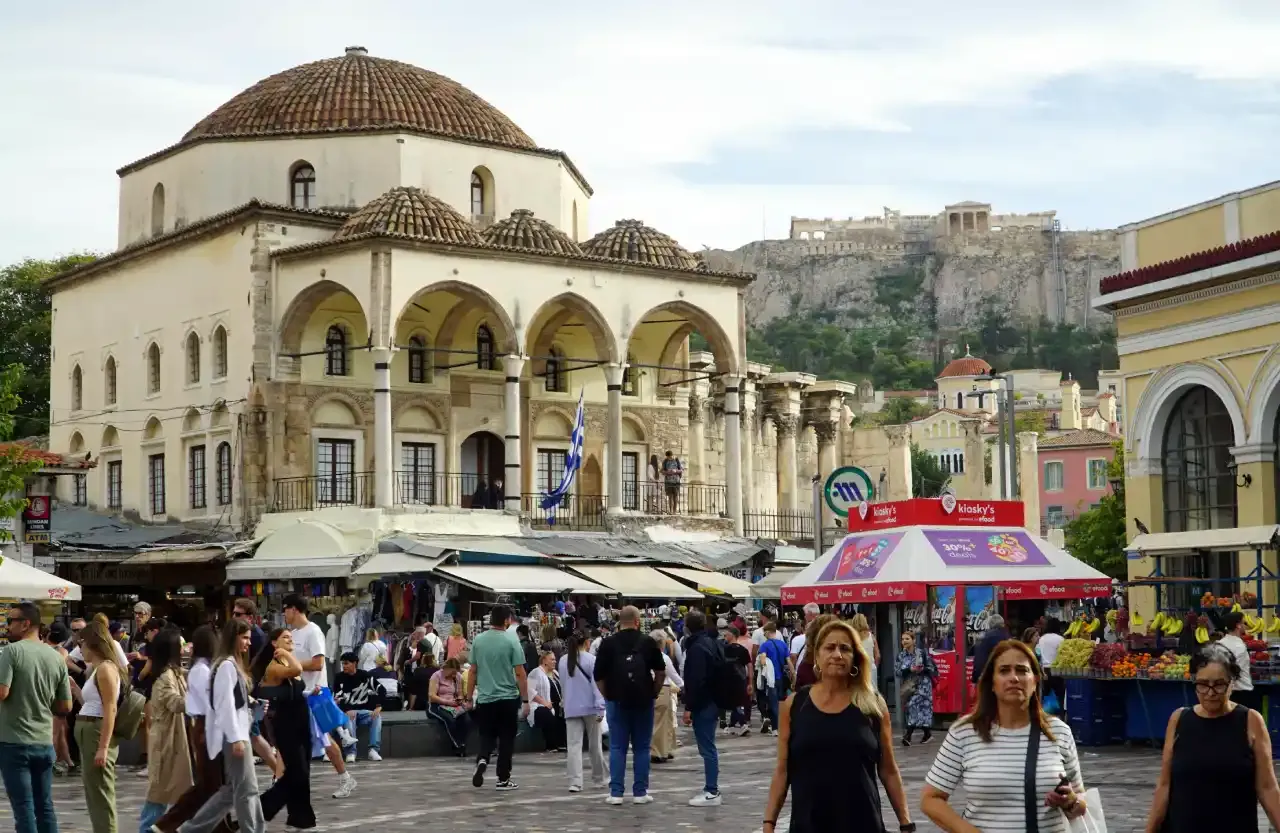
Travelers learn how to get to the Ancient Agora by taking Metro Line 1 or 3 to Monastiraki Station, or Line 1 to Thissio Station.
Map & entrances
The map & entrances of the Ancient Agora include the primary gate on Adrianou Street and a secondary access point on Apostolou Pavlou Street.