
Oxi Day 2026: Official schedule and commemorative events in Greece
Greece celebrates Oxi Day 2026, also known as Ohi Day, every October 28. This national holiday commemorates the Greek refusal of the 1940 Italian ultimatum during World War II. Public institutions, schools, and private businesses suspend operations nationwide while municipal authorities organize civic, religious, and military events in every major city. Below is a list of the most important events that will take place on October 28, 2026, in celebration of the national holiday.
What is Oxi Day in Greece?
Oxi Day serves as an official public holiday across Greece and the Republic of Cyprus. The Greek word "Oxi" translates directly to "No." The date honors the sovereign decision of the Greek government to reject foreign occupation demands during the Second World War.
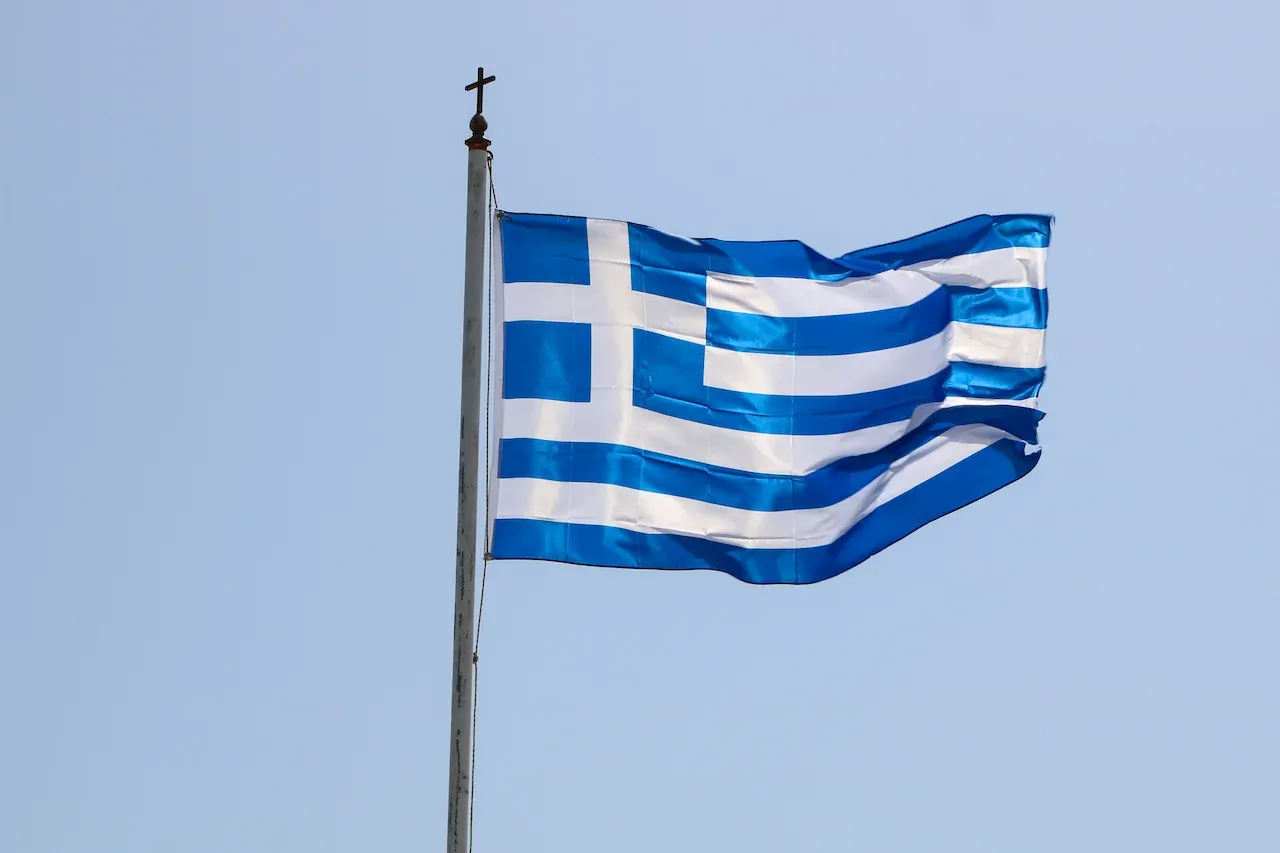
Municipalities display national flags across public administrative buildings, residential avenues, and private properties. State educational institutions, civil administrative offices, and commercial retail businesses suspend operations for the entire day. Local communities organize formal memorial services, lay commemorative wreaths at designated civic monuments, and gather in central public squares. The state observes the anniversary as a civic celebration of territorial sovereignty and collective national resistance.
Why do Greeks celebrate Oxi Day?
The Greeks celebrate Oxi Day (Επέτειος του Όχι) every October 28 to commemorate the moment in 1940, during World War II, when Greece refused to submit to the demands of Benito Mussolini’s Fascist Italy.
At approximately 3:00 a.m. on October 28, 1940, the Italian ambassador in Athens, Emanuele Grazzi, delivered an ultimatum to Greek Prime Minister Ioannis Metaxas. The document demanded permission for Italian troops to enter Greece and occupy unspecified strategic positions. Metaxas rejected the ultimatum, reportedly responding in French, “Alors, c’est la guerre” (“Then, it is war”). The Greek word “Oxi,” meaning “No,” subsequently became the enduring symbol of the country’s refusal to submit to the demands.
Italian forces invaded Greece from Albania later that morning. The Hellenic Army, supported by the mobilization of the Greek population, repelled the initial Italian offensive and launched a counteroffensive that pushed Italian troops back into Albanian territory. This unexpected Greek success dealt a significant blow to Italian military prestige and demonstrated that the Axis powers could be resisted.
The failure of Italy’s invasion contributed to Germany’s decision to intervene in the Balkans. In April 1941, German forces launched Operation Marita, invading Greece and Yugoslavia. The Balkan campaign contributed to the postponement of Operation Barbarossa, Germany’s invasion of the Soviet Union, although historians debate the extent to which it affected the timing and outcome of the Eastern Front campaign.
Greeks commemorate Oxi Day as a symbol of national dignity, resistance, and the determination to defend their independence against foreign aggression. Although Greece was subsequently occupied by Axis forces, the refusal of October 28, 1940, remains a defining moment in the country’s modern history.
How to celebrate Oxi Day in Greece?
Civic authorities and local communities coordinate public observances in metropolitan centers across Greece. The official schedule includes morning state ceremonies, religious services, educational processions, and military displays. The following scheduled activities permit public attendance on October 28:
Flag-raising ceremony at the Acropolis
Flag-raising ceremony at the Acropolis
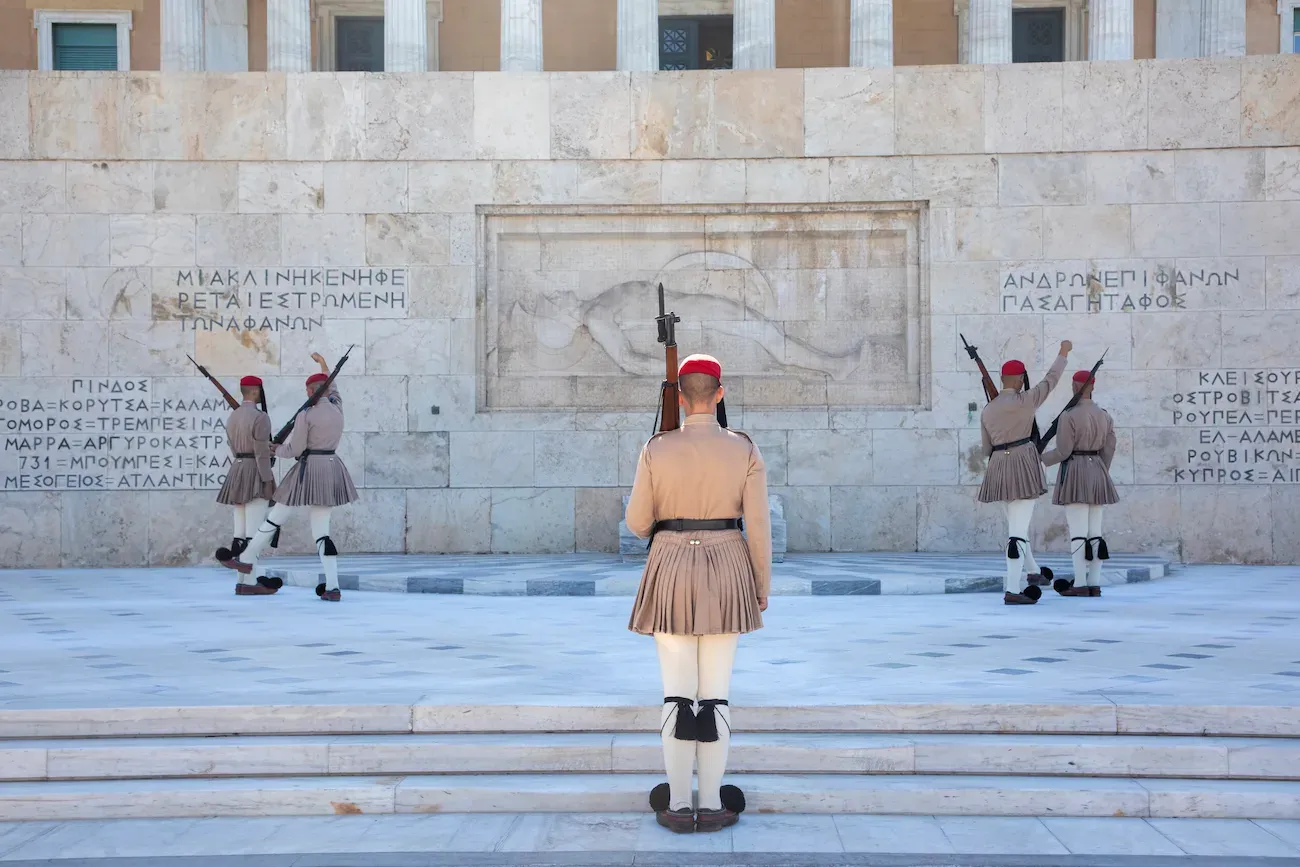
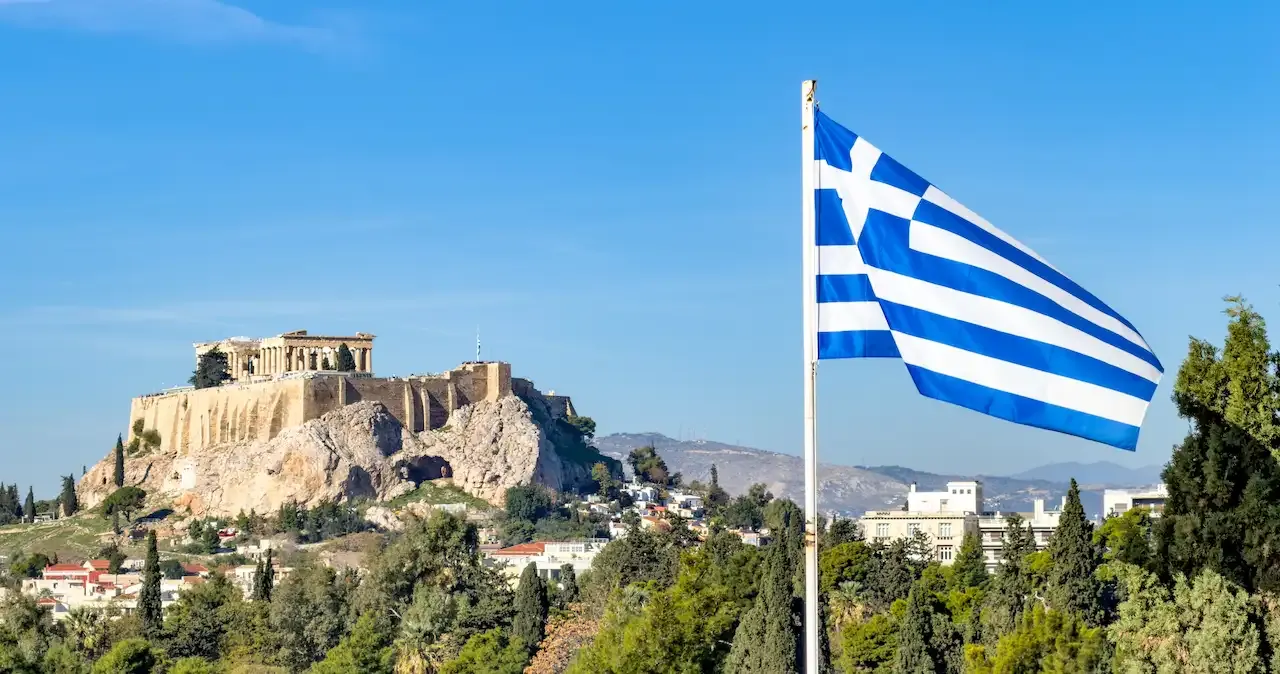
The Presidential Guard executes the formal national flag-raising ceremony atop the Acropolis hill at 08:00 on October 28. Evzones soldiers march to the eastern terrace of the site to hoist the national banner while a military band performs the national anthem.
Spectators view this ceremony from surrounding public areas, including the Dionysiou Areopagitou pedestrian promenade and the slope of Philopappos Hill. Attending this event requires no admission fee because the Ministry of Culture provides free public entry to archaeological sites on this holiday. Spectators should arrive before 07:45 to pass security gates before flag operations commence.
Student Parade at Syntagma Square
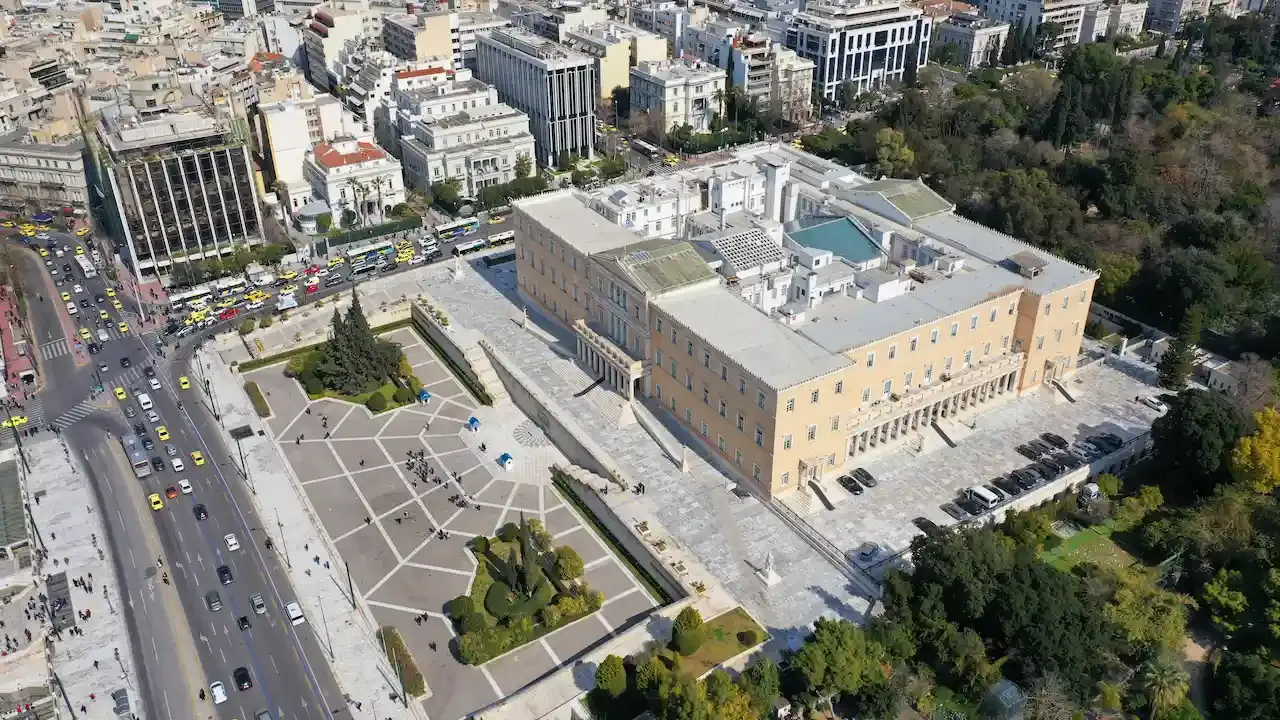
The municipality of Athens hosts the official student parade in front of the Hellenic Parliament building at Syntagma Square. The event begins at 11:00 and concludes around 12:30. Students from local primary and secondary schools march along Vasilissis Amalias Avenue and Panepistimiou Street, accompanied by municipal brass bands and traditional regional flags.
Viewing this commemorative civic parade is entirely free of charge for the public from the sidewalks lining the central route. Police authorities implement extensive street closures to vehicular traffic from 09:00 onward, necessitating pedestrian travel to the perimeter.
National Military Parade in Thessaloniki
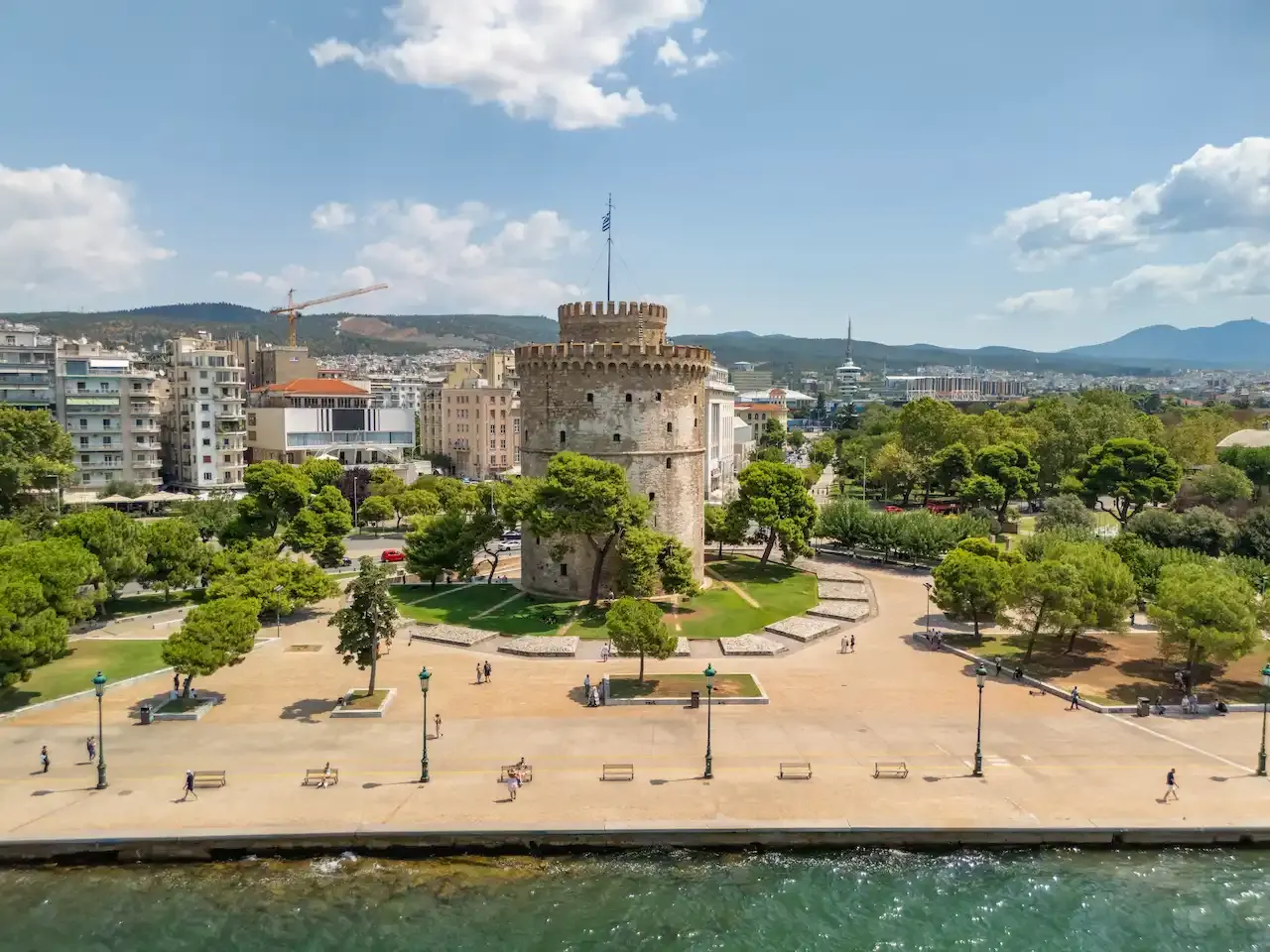
National Military Parade in Thessaloniki
The city of Thessaloniki conducts the official national military parade along Megalou Alexandrou Avenue on the waterfront. The procession starts at 11:00 following a ceremonial wreath placement at the Third Army Corps memorial at 10:30. The parade displays mechanized infantry, armored units, special forces divisions, and historical military regiments. Hellenic Air Force aircraft, including fighter jets from the F-16 Zeus team, execute low-altitude flybys across the Thermaic Gulf during the event.
The public views this extensive military presentation free of charge from the coastal promenade. Regional traffic services restrict vehicular access along the waterfront corridor starting at 05:00.
Visit the main monuments of Greece for free
In addition to the public events, travelers can explore major historical landmarks across Athens. Greek statutory regulations provide free admission to state archaeological sites and national museums on October 28. Visitors can access prominent destinations, such as the Acropolis, the Ancient Agora, the Temple of Olympian Zeus, and Hadrian's Library, without buying entry tickets.
The Hellenic Ministry of Culture coordinates these free public access days across all its affiliated institutions. These locations open at 08:00 and admit guests until standard afternoon closing hours. Because free access attracts heavy visitor volumes, arriving at site ticket gates early in the morning prevents long waiting lines.
Athens sightseeing passes and ticket bundles
Travelers visiting the capital around Oxi Day frequently extend their stay beyond the single holiday date. Because standard admission fees apply on the days before and after October 28, visitors purchase sightseeing passes to manage their itineraries efficiently.
Transportation guidelines for Oxi Day
Municipal authorities implement extensive traffic modifications during the October 28 celebrations. Commuters and visitors must plan their transit routes carefully to navigate the urban centers:
- Subway network operations: The Athens Metro provides the most reliable transportation option. However, security protocols require the closure of the Syntagma Metro station starting early in the morning. Trains pass through the station without stopping until the student parade concludes.
- Surface transit suspensions: Transport authorities suspend bus and tram services operating along central avenues in both Athens and Thessaloniki. Normal routes resume operations during the mid-afternoon hours once municipal crews clear the parade corridors.
- Vehicular traffic restrictions: Traffic police enforce road closures in central districts, including the perimeters around Syntagma Square in Athens and the coastal promenade in Thessaloniki. Drivers must avoid central zones from 08:00 until 14:00.
- Pedestrian access corridors: Authorities establish pedestrian corridors near the parade routes. Walking remains the most effective method for reaching viewing areas and historical sites.
- Airport connections: Travelers heading to the airport should utilize the metro lines from operating stations (such as Monastiraki or Evangelismos) or book taxis via peripheral ring roads to avoid central congestion.